ASO course · lesson 41 of 60
ASO testing for apps with low traffic
Select useful low-traffic research without inventing statistical certainty.
By Gabriel Machuret · Editorial methodology
Before you start: A proposed experiment and realistic eligible-traffic context.
Module 7: Experiment design and interpretation
Plan about 50 minutes for reading, practice and review
You will produce: A low-traffic learning plan with method choice, limitations and review triggers.
Understand the decision
Check feasibility before committing
A small daily audience can make a subtle effect difficult to distinguish within a useful period. Consider eligible traffic after filters and allocation, not total app downloads. Review native planning guidance and ask whether the expected learning justifies the delay. Simply running longer does not solve every problem, especially when the product and acquisition environment keep changing.
Use other methods for other questions
Qualitative comprehension reviews, product walkthroughs, accuracy audits and customer interviews can answer important questions with limited traffic. They do not estimate a causal population-level conversion uplift. Choose the method based on the decision: fix a known false claim, investigate a misunderstanding or prepare a more differentiated concept for a later experiment when sufficient evidence is possible.
Make reversible decisions honestly
Sometimes the team must choose without a decisive experiment. Use the best available evidence, state the uncertainty and prefer a reversible change with clear monitoring. Do not rebrand an editorial judgment as a statistically proven winner. Record what would trigger reconsideration and separate the operational need to ship from the strength of the performance claim.
Apply the method in practice
Estimate whether the experiment can answer the question
Start with eligible traffic, baseline rate, the size of change that would matter and the platform's method. Low traffic may make a small effect difficult to distinguish within a useful period. Do not promise that running indefinitely will solve every design problem: seasonality, releases and audience shifts can change the context. If the required learning horizon is impractical, choose a different question or evidence method. The objective is a better decision, not launching an experiment because experimentation sounds professional.
Use qualitative methods for the questions they can answer
Comprehension interviews, product walkthroughs and message reviews can reveal why a promise is misunderstood. They do not estimate conversion lift. Technical and factual checks can identify corrections without randomized testing. A focused prototype review may help select a clearer concept for a future test. Keep the type of evidence explicit: observed behavior in a small study, verified product error or controlled performance estimate. Combining them can improve judgment as long as their limits are not erased.
Make reversible decisions with a learning plan
When uncertainty remains, consider the cost and reversibility of the change. A truthful clarity improvement may be reasonable to ship with monitoring even without causal proof of uplift. Record the rationale, expected signal and conditions for revisiting it. Keep the previous version and avoid presenting an observational result as an experiment. Low traffic is not permission to invent confidence; it is a reason to choose proportionate evidence and to preserve the distinction between a practical decision and a proven effect.
Platform references for this work: Google Play — Run store listing experiments · Apple — Product page optimization results
Your step-by-step procedure
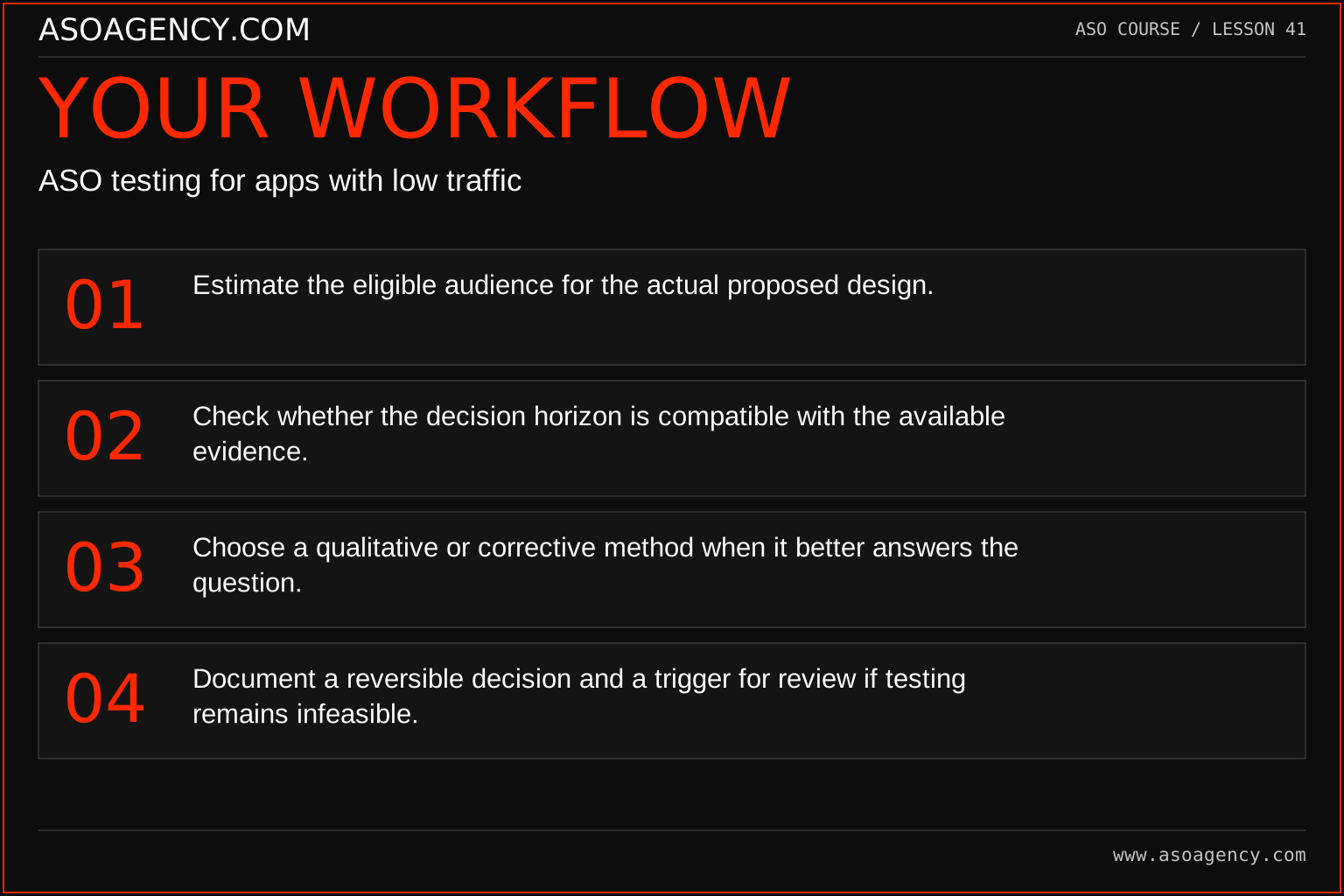
- Estimate the eligible audience for the actual proposed design.
- Check whether the decision horizon is compatible with the available evidence.
- Choose a qualitative or corrective method when it better answers the question.
- Document a reversible decision and a trigger for review if testing remains infeasible.
Worked example and interpretation
Trail Notes and numerical research scenarios are fictional teaching examples. Platform limits, where shown, come from the linked official references.
Trail Notes receives only a small stream of eligible visitors in a new market. Testing four subtly different headlines would divide that stream further. The team instead corrects a mistranslated claim, runs a comprehension review and prepares one clearly differentiated concept. They describe the release as an evidence-informed editorial choice and reserve any uplift claim until an appropriate comparison becomes possible.
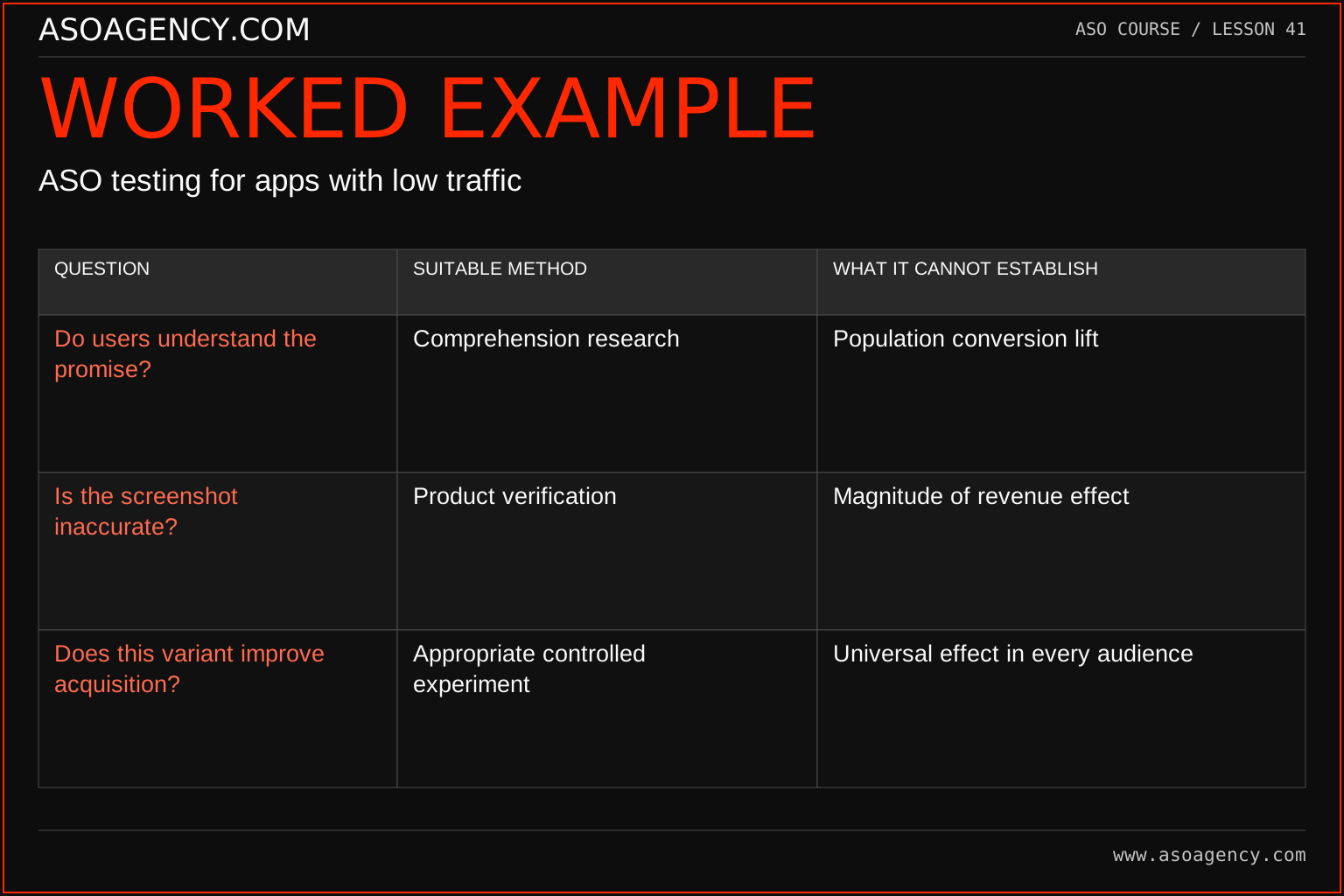
| Question | Suitable method | What it cannot establish |
|---|---|---|
| Do users understand the promise? | Comprehension research | Population conversion lift |
| Is the screenshot inaccurate? | Product verification | Magnitude of revenue effect |
| Does this variant improve acquisition? | Appropriate controlled experiment | Universal effect in every audience |
The method should follow the question. If a small study reveals that people consistently mistake the journal for navigation, the team can improve clarity and document the rationale. It should not label the study a 40% conversion win. If the important question is a small acquisition difference, the team may need more traffic, a larger meaningful contrast or acceptance that the current evidence is insufficient.
Build a handover someone can use
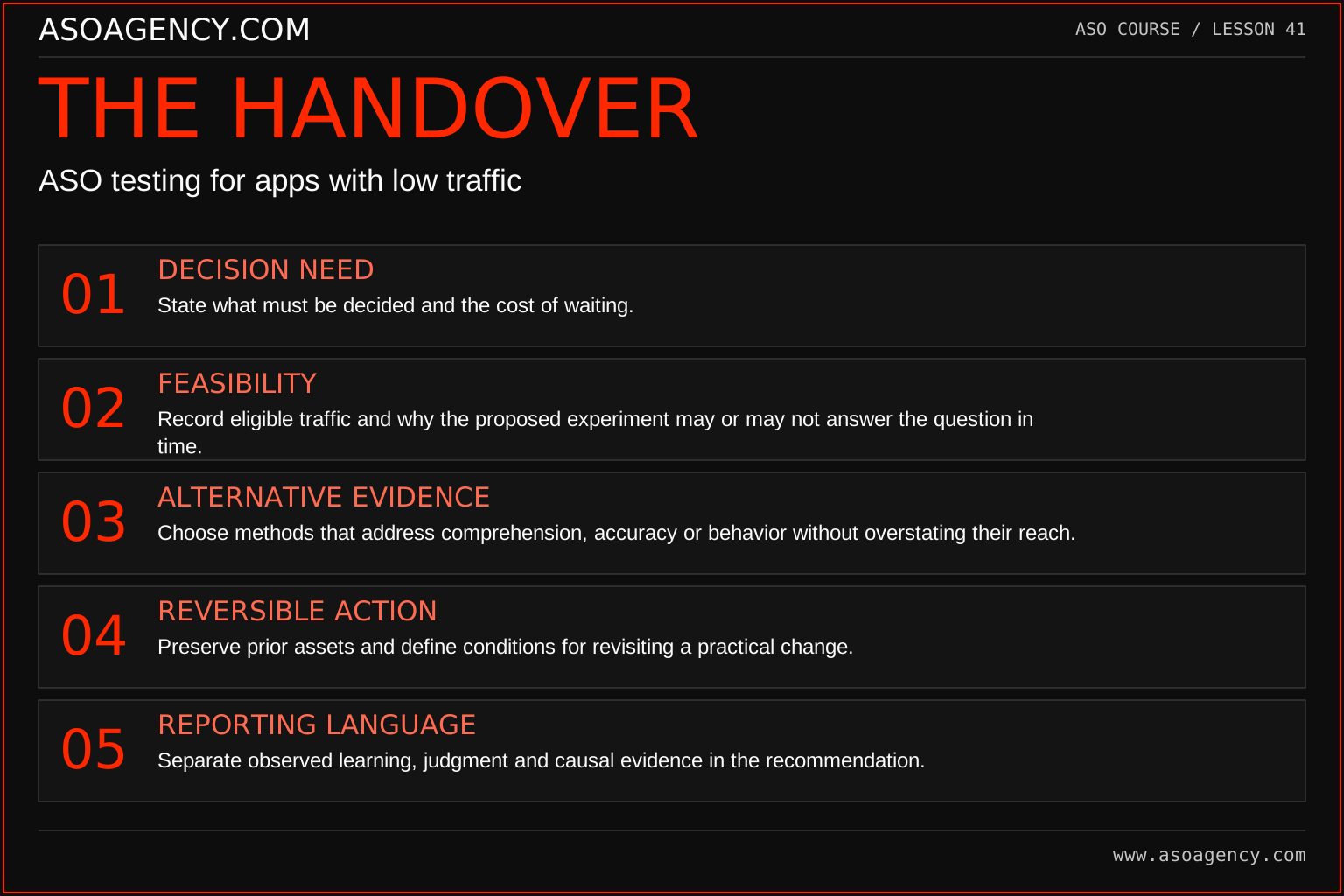
Decision need
State what must be decided and the cost of waiting.
Feasibility
Record eligible traffic and why the proposed experiment may or may not answer the question in time.
Alternative evidence
Choose methods that address comprehension, accuracy or behavior without overstating their reach.
Reversible action
Preserve prior assets and define conditions for revisiting a practical change.
Reporting language
Separate observed learning, judgment and causal evidence in the recommendation.
Your ASO assignment
Use your own app and evidence, or work through the teaching case. Keep your observations separate from assumptions and explain the reasoning behind your decisions.
- Create a feasibility note for your proposed test.
- Choose one non-experimental method and the question it can answer.
- Write a reversible rollout decision with explicit uncertainty.
Scenario challenge
Your app has too little eligible traffic to evaluate a subtle color change promptly. Propose a useful next step focused on a genuine communication uncertainty and explain what the resulting evidence will and will not support.
Assess your work
- Traffic estimates reflect the actual eligible population.
- Qualitative evidence is not presented as conversion proof.
- The decision remains reviewable and reversible where possible.
Common mistakes to catch
- Promising that every small app will reach a reliable result in a fixed number of weeks.
- Treating an inconclusive test as a reason to keep testing indefinitely.
Knowledge check
A clearly misleading screenshot is found on a low-traffic app. Must you wait for an experiment?
Read the answer and reasoning
No. Correct the inaccuracy through the approved release process. Experimentation is for uncertain behavioral hypotheses, not for deciding whether to retain a false product claim. Record the correction and its timing so later performance analysis has the right context.
Sources and further reading
Platform references reviewed 29 September 2026. These sources support platform capabilities and constraints; the teaching frameworks, assignments and illustrative cases are original course material.
- Google Play — Run store listing experiments — Experiment configuration and native interpretation guidance.
- Apple — Product page optimization results — Native result interpretation and Bayesian analysis.
Your ASO lesson notes
Use this space for your assignment, evidence and handover. Select Save to keep a draft in this browser, or download a copy to take with you.
Notes stay on this device and are not submitted to ASO Agency.
Complete your assignment with the ASO experiment planner.
Loading your progress…
Progress is saved only in this browser. It does not sync across devices. Mark a lesson complete after doing its exercise.