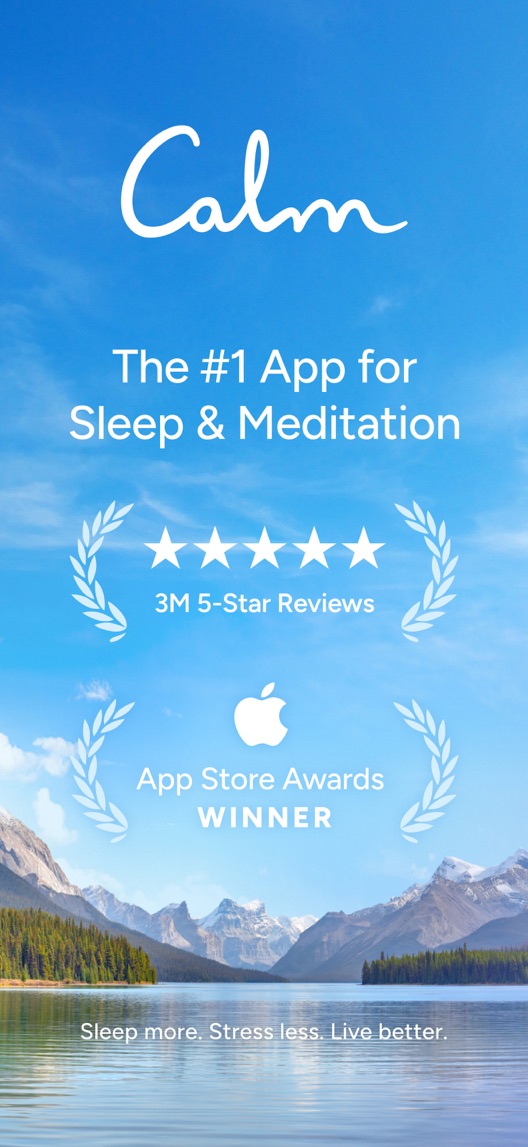
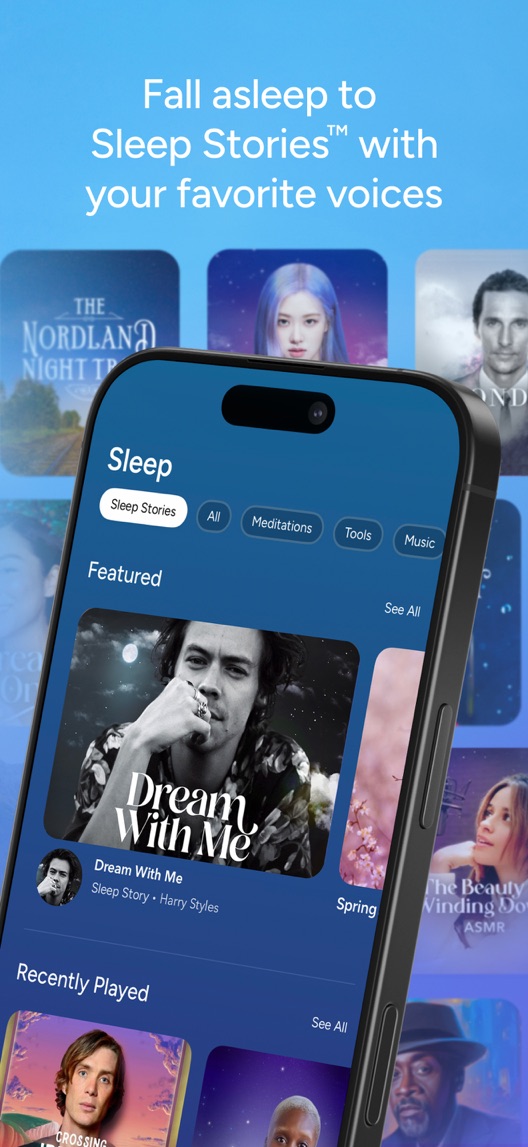
Calm opens with awards, follows with more awards and finally shows a Sleep Story. That is two screenshots congratulating the brand before helping the visitor choose tonight's experience. Very soothing for the trophy cabinet.
By Gabriel MachuretVerdict revised Evidence captured
One storefront, one language and a dated capture. This is an independent editorial audit, not a client case study.
Store & market
Apple App Store · United States
Language & device
en-US · iPhone
Captured
30 September 2026
Creative reviewed
First 3 still screenshots; video and other devices excluded
Observed app name · 4/30 characters
Calm
Observed subtitle · 29/30 characters
Sleep, Meditation, Relaxation
Gab’s take · Five criteria. Two points each.
Why this gets 2/10
The creative spends too much of its opening borrowing credibility. Rebuild around a specific supported bedtime choice, readable content and the way to start listening. Keep one accurately attributed proof cue. Repeated recognition is not a substitute for a differentiated product demonstration.
Hook & benefit
0/2
A number-one claim introduces reputation rather than a bedtime benefit.
Product proof
1/2
The first tangible listening experience appears in frame three.
Visual hierarchy
1/2
Repeated blue layouts and small pale headings reduce useful contrast.
Story & momentum
0/2
Two credibility frames repeat the same persuasion job.
Reason to choose
0/2
Awards and media logos do not demonstrate the listening experience.
0: not earned · 1: useful but incomplete · 2: clearly demonstrated. Judged on the captured opening and public metadata. These points assess creative execution, not private conversion or ranking performance. Read the scoring criteria · See all ten verdict levels
Three changes I would brief today
01
The awards take the user's place
What I saw. The first frame uses most of its space for category and credibility claims rather than an app interface.
The problem. Category leadership and badges dominate without a listening action.
What I’d do. Lead with one actual Sleep Story or practice and a concrete experience benefit.
02
More proof repeats the same job
What I saw. The second frame continues the proof message with endorsements and media logos.
The problem. Recommendations and publication marks postpone the product again.
What I’d do. Replace this frame with readable content selection or supported playback detail.
03
The experience arrives late and tilted
What I saw. The third frame shows an identifiable content destination and a specific listening format.
The problem. The useful content screen is angled and busy.
What I’d do. Move it forward and enlarge one authentic choice with accurate access context.
Figure 1. First three still screenshots from the US iPhone listing, captured 30 September 2026. Creative belongs to the app publisher and is reproduced for analysis. Publisher claims inside screenshots are not independently verified.
Proposed copy for discussion. These are not current listing fields or tested winners.
Observed listing
Calm
Sleep, Meditation, Relaxation
Proposed alternative
Calm: Sleep & Meditation
Stories, sounds & daily calm
Name 24/30 · Subtitle 28/30 characters
Figure 3. A metadata alternative to review against the current listing.
The proposed name gives an unfamiliar shopper a category cue. The subtitle introduces formats rather than repeating the same category nouns.
The tradeoff: This spends brand space on explanation and changes more than one field. Treat it as a draft for review, not a simultaneous change during the screenshot-order experiment. Search demand and the private keyword field remain unknown.
A three-frame creative brief
Proposed frame 01
Find your way to wind down
Show: One genuine app screen with a bedtime listening choice and one compact trust cue.
Start with the use case rather than a wall of proof.
Proposed frame 02
Choose a story for tonight
Show: The existing Sleep Stories screen, using licensed content and current entitlement labels.
Turn a general promise into a recognizable next action.
Proposed frame 03
Make room for a daily pause
Show: A current meditation session screen, verified by the product team.
Keep meditation visible instead of making the whole app appear sleep-only.
Figure 4. A proposed storyboard, not a fabricated screenshot or a launched treatment. Validate features and access before production.
What three reviewers can teach us
Three examples selected from the eight reviews displayed on the captured page: a broad positive experience, a routine-focused account and the newest displayed complaint. This is a purposive sample, not a sentiment estimate.
Sample: 3 selected accounts from 8 displayed reviews. Dates: 13 January 2021–16 September 2026. No sentiment percentage is calculated.
2 July 2025 · 5/5 stars
“soundscapes”
This reviewer describes using several content formats, including stories and background audio.
What I’d investigate: The listing could show the different ways someone uses audio, but this one account does not establish which format is most popular.
A recent displayed reviewer reports difficulty with story chapters and repeated music playback after an update.
What I’d investigate: Verify current playback before promising a seamless long listening session. The report is a research lead, not a confirmed defect.
Category leadership and badges dominate without a listening action.
Deliverable: Lead with one actual Sleep Story or practice and a concrete experience benefit.
Creative brief and current-product check
02
More proof repeats the same job
Recommendations and publication marks postpone the product again.
Deliverable: Replace this frame with readable content selection or supported playback detail.
Creative brief and current-product check
03
The experience arrives late and tilted
The useful content screen is angled and busy.
Deliverable: Move it forward and enlarge one authentic choice with accurate access context.
Creative brief and current-product check
One test worth running
Does showing a Sleep Stories screen earlier help eligible visitors understand the app better?
Audience
US English iPhone visitors eligible for the default product-page test. Record acquisition mix; do not label them sleep seekers without supporting data.
Control
The captured screenshot order.
Treatment
Swap screenshots two and three; retain artwork, metadata, pricing and the remaining order.
Method
Use App Store product page optimization if the current assets and audience are eligible. Confirm platform rules and experiment setup before launch.
Primary measure
The platform-reported download conversion metric for the eligible test audience.
Guardrails
Monitor changes in source mix and, where attribution supports it, first-session listening behavior. Do not claim downstream causality if variant attribution is unavailable.
Decision rule
Set a meaningful effect threshold and sample requirement from the real baseline before launch. Review uncertainty; retain the control if the result is inconclusive.
What could muddy the result
A release, subscription change or campaign launch could change visitor behavior. Log them and avoid mixing a metadata rewrite into this test.
The creative spends too much of its opening borrowing credibility. Rebuild around a specific supported bedtime choice, readable content and the way to start listening. Keep one accurately attributed proof cue. Repeated recognition is not a substitute for a differentiated product demonstration.
1–3: thumbs down · 4–6: thumbs up and down · 7–10: thumbs up
1/10👎
Yeah. It really does!
The basics need a serious rethink.
2/10Calm is here👎
I hope no agency is getting paid for this.
Too many obvious things have been left unfinished.
3/10👎
The app deserves better.
There is a useful product here. The listing needs to show it.
4/10👍 👎
Recognisable. Not convincing.
Some basics work, but the opening wastes attention and under-explains the benefit.
5/10👍 👎
Fine. A dangerous place to stop.
There is usable creative here, but too much of the sales argument is left to the visitor.
6/10👍 👎
Useful. Still leaving too much unsaid.
Real strengths, undermined by meaningful gaps in the opening story or execution.
7/10👍
Good. The product proof earns it.
A clear, useful demonstration with specific refinements still needed.
8/10👍
Good. Now sweat the details.
The main promise is clear and supported. Refinement matters more than reinvention.
9/10👍
Whoever did this knows their stuff.
Clear positioning, thoughtful choices and very few loose ends.
10/10👍
Okay, now you’re showing off.
An unusually clear, convincing storefront worth learning from.
An editorial verdict on the captured storefront, not a measured ASO score or an assessment of an agency’s private work.
Your ASO assignment
Lead with one actual Sleep Story or practice and a concrete experience benefit.
Replace this frame with readable content selection or supported playback detail.
Move it forward and enlarge one authentic choice with accurate access context.
No private analytics, search-rank dataset or internal keyword field was supplied. Review quotations are short excerpts; explanations are our summaries. App names and screenshots belong to their respective owners. We are not affiliated with Calm. Read our editorial methodology.
Send your listing and the question you need answered. I’ll scope an ASO audit with annotated findings, priorities and a clear handover. Your budget should buy decisions, not a longer PDF.