ASO course · lesson 60 of 60
How to build a 90-day ASO strategy and action plan
Combine the course artifacts into a feasible 90-day plan with evidence, owners, dependencies and review gates.
By Gabriel Machuret · Editorial methodology
Before you start: Your completed audit, research map, approved metadata, creative brief and measurement records.
Module 10: Professional practice and capstone
Plan about 90 minutes for reading, practice and review
You will produce: Capstone: a reviewed 90-day operating plan with evidence, resources, decision gates and maintenance ownership.
Understand the decision
Return to the business objective
Review whether the original growth diagnosis still holds after the research. Update the objective only with a documented reason. Choose a small set of priorities that address the strongest supported constraints. The capstone should connect the work, not merely collect every exercise into one large folder.
Sequence learning and production
Use the first phase to resolve critical evidence and accuracy issues, the next to execute focused work and the final phase to evaluate and choose the next cycle. These are planning phases, not guaranteed ranking timelines. Respect product releases, traffic and reviewer capacity. Keep explicit decision gates between dependent tasks.
Defend the tradeoffs
Explain why selected work matters, why other ideas wait and what evidence would change the sequence. Assign owners and acceptance conditions. Include a plan for uncertainty and incidents. A professional plan remains useful when a test is inconclusive or a dependency slips because it contains alternative actions rather than one optimistic forecast.
Apply the method in practice
Assemble an evidence chain, not a folder of exercises
Connect the diagnosis to the audience, research map, metadata, creative and measurement plan. Each artifact should explain a decision in the next one. If the audit identifies navigation confusion but the proposed screenshots still lead with a map, resolve that contradiction before scheduling production. Revisit the business objective using what the course work revealed. Keep the original objective and the reason for any change so the plan's history remains intelligible.
Use phases with explicit exit conditions
A first phase can establish trustworthy evidence and correct inaccurate claims. Its exit condition is not simply day 30; it is that the key baseline and release dependencies are ready. A second phase can implement or test focused changes. A third can interpret results and choose the next cycle. The phases may overlap when dependencies permit. Traffic, review timing and product releases can change the calendar, so define alternative actions instead of treating the horizon as a guaranteed growth deadline.
Defend capacity and opportunity cost
Assign a real role to every action and include review, release and analysis time. Name what will not be done this cycle and why. If a test is inconclusive, state whether the next step is a stronger concept, more observation or another method. If localization readiness slips, identify useful work that can continue. A professional plan remains actionable under uncertainty because it describes decisions and dependencies, not only dates and optimistic outcomes.
Platform references for this work: Apple — Creating your product page · Google Play — Create and set up your app · Apple — Acquisition analytics
Your step-by-step procedure
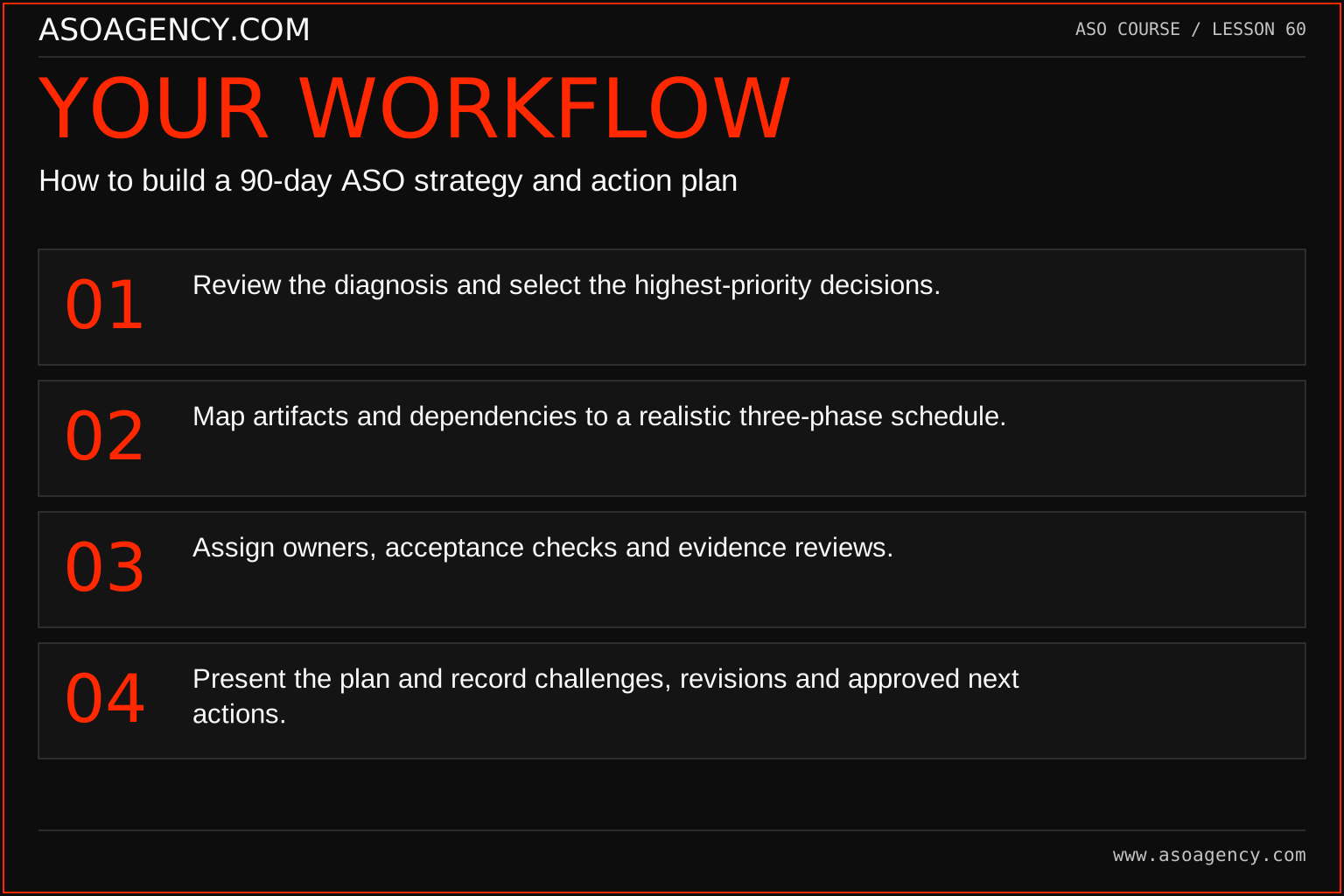
- Review the diagnosis and select the highest-priority decisions.
- Map artifacts and dependencies to a realistic three-phase schedule.
- Assign owners, acceptance checks and evidence reviews.
- Present the plan and record challenges, revisions and approved next actions.
Worked example and interpretation
Trail Notes and numerical research scenarios are fictional teaching examples. Platform limits, where shown, come from the linked official references.
Trail Notes first corrects inaccurate offers and validates activation data, then develops a clearer journal-focused listing and a scoped creative experiment. Localization remains gated by product readiness. The final review decides whether to expand, revise the message or investigate onboarding rather than automatically launching the next market.
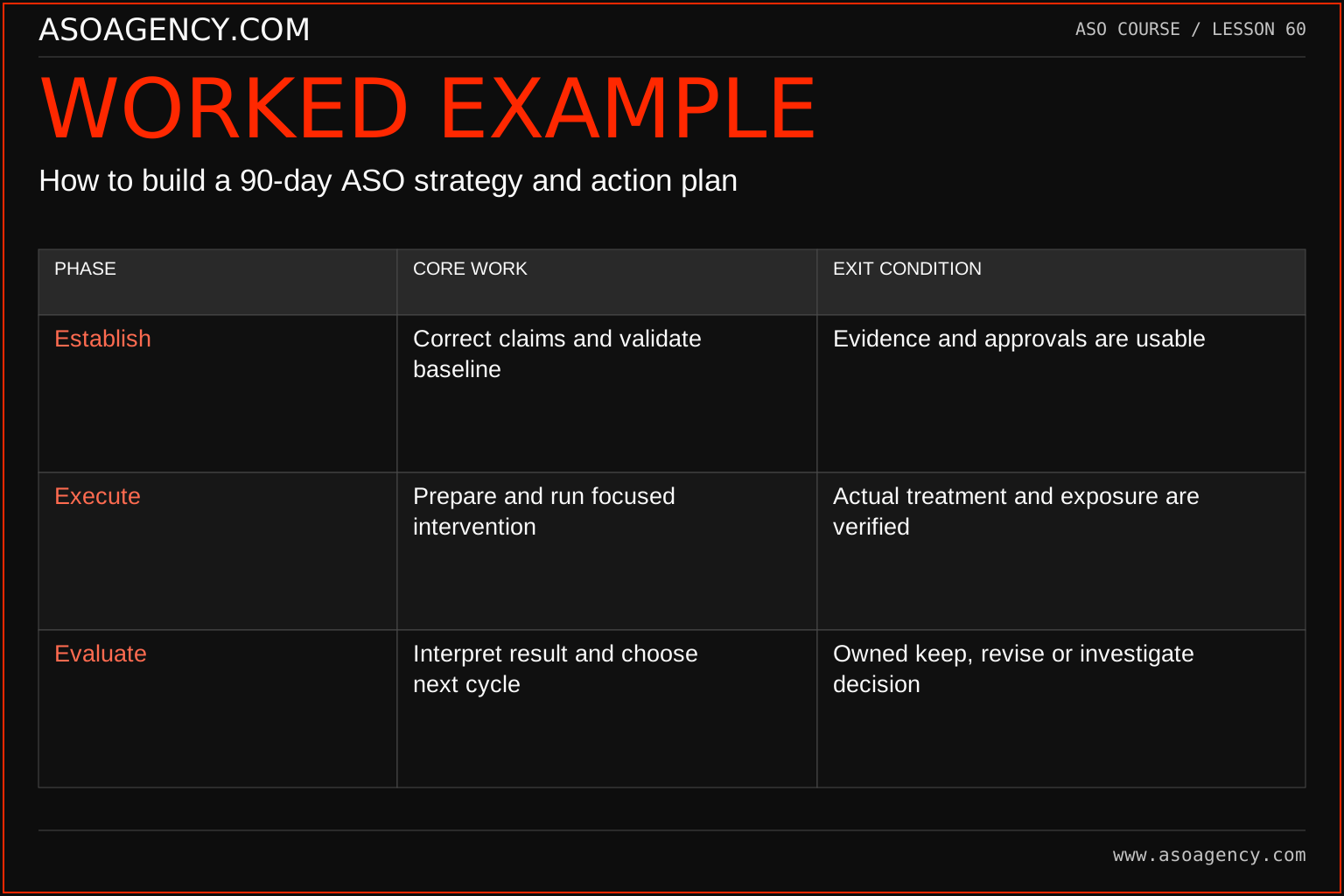
| Phase | Core work | Exit condition |
|---|---|---|
| Establish | Correct claims and validate baseline | Evidence and approvals are usable |
| Execute | Prepare and run focused intervention | Actual treatment and exposure are verified |
| Evaluate | Interpret result and choose next cycle | Owned keep, revise or investigate decision |
The three phases are an organizational scaffold, not a ranking forecast. For Trail Notes, a tracking defect could extend the establish phase while customer-language research proceeds independently. A creative experiment might finish without a clear winner, yet still produce a documented decision and better next hypothesis. The capstone should show those alternatives so a missed assumption does not collapse the entire plan.
Build a handover someone can use
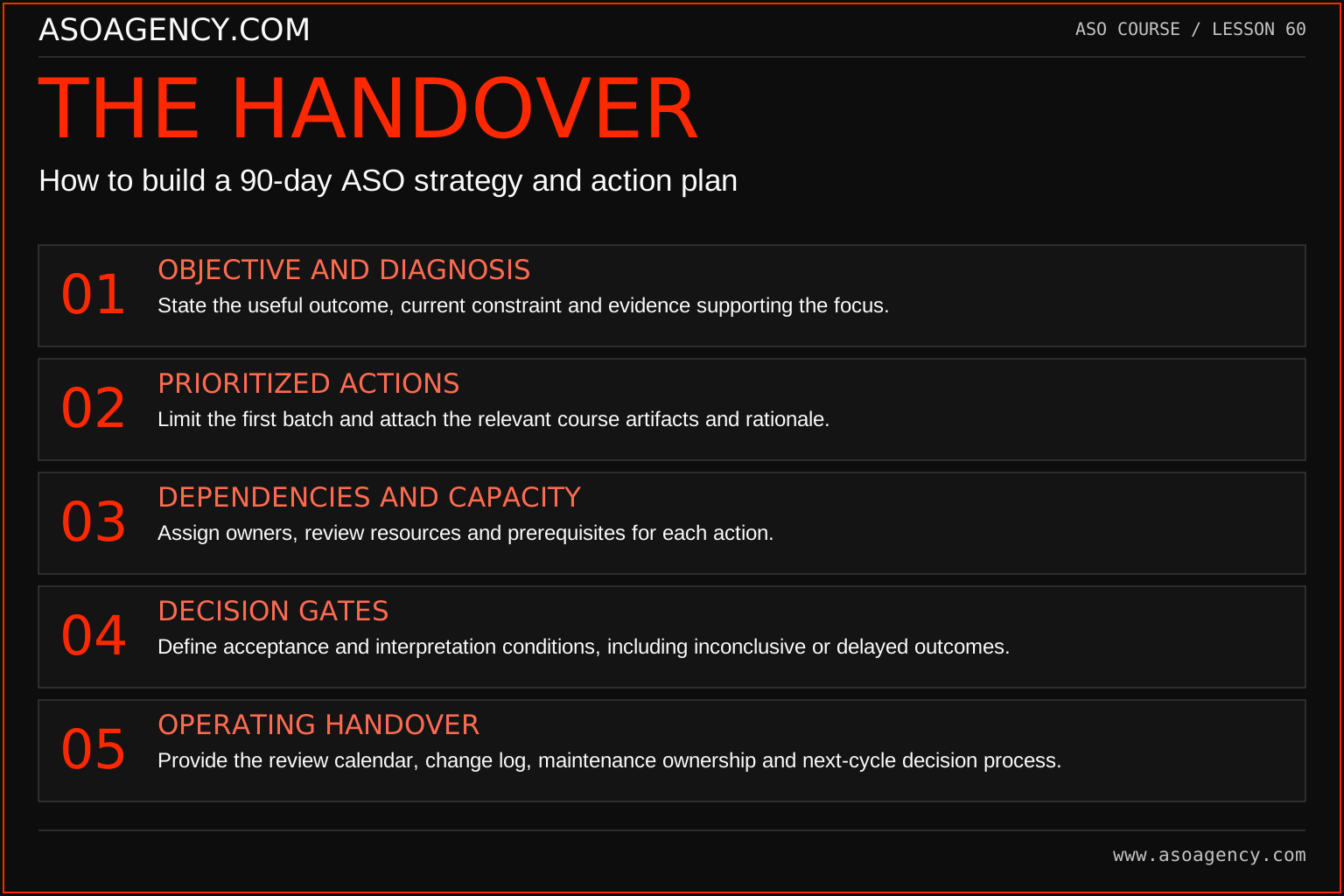
Objective and diagnosis
State the useful outcome, current constraint and evidence supporting the focus.
Prioritized actions
Limit the first batch and attach the relevant course artifacts and rationale.
Dependencies and capacity
Assign owners, review resources and prerequisites for each action.
Decision gates
Define acceptance and interpretation conditions, including inconclusive or delayed outcomes.
Operating handover
Provide the review calendar, change log, maintenance ownership and next-cycle decision process.
Your ASO assignment
Use your own app and evidence, or work through the teaching case. Keep your observations separate from assumptions and explain the reasoning behind your decisions.
- Build a five-action plan covering evidence, production and evaluation.
- Attach the supporting course artifacts and a dependency map.
- Defend two exclusions and one alternative plan if a dependency fails.
Scenario challenge
Present your plan in ten minutes. Defend two priorities, two exclusions and one contingency. A reviewer should be able to identify tomorrow's action and explain what changes if your leading hypothesis is wrong.
Assess your work
- Every action serves the stated objective and has a reason.
- Dependencies and capacity make the sequence feasible.
- Uncertainty leads to explicit alternative actions rather than unsupported guarantees.
Common mistakes to catch
- Scheduling every course technique whether or not the app needs it.
- Treating the 90-day horizon as a promise of ranking or revenue outcomes.
Knowledge check
What proves that the capstone is operationally complete?
Read the answer and reasoning
Another person can identify the next action, its owner, evidence, dependencies and completion check, and can explain what happens if the expected result does not occur. A polished calendar without those decisions is incomplete.
Sources and further reading
Platform references reviewed 29 September 2026. These sources support platform capabilities and constraints; the teaching frameworks, assignments and illustrative cases are original course material.
- Apple — Creating your product page — Product-page fields and presentation guidance.
- Google Play — Create and set up your app — Listing fields, language and text limits.
- Apple — Acquisition analytics — Acquisition metric definitions and source attribution.
Your ASO lesson notes
Use this space for your assignment, evidence and handover. Select Save to keep a draft in this browser, or download a copy to take with you.
Notes stay on this device and are not submitted to ASO Agency.
Complete your assignment with the ASO experiment planner.
Loading your progress…
Progress is saved only in this browser. It does not sync across devices. Mark a lesson complete after doing its exercise.