ASO course · lesson 55 of 60
ASO roadmap: prioritize your optimization backlog
Select a feasible first batch of work and explain what the team will defer.
By Gabriel Machuret · Editorial methodology
Before you start: Your audit, keyword strategy, experiment history and available team capacity.
Module 10: Professional practice and capstone
Plan about 55 minutes for reading, practice and review
You will produce: A prioritized backlog with evidence, ownership, dependencies and explicit deferrals.
Understand the decision
Start with the objective
A backlog is a set of choices under constraints. Connect each item to the useful customer or business outcome from the project brief. Separate verified corrections, evidence collection and experiments because they have different completion conditions. A large list is not a strategy until the team decides what should happen first and why.
Compare evidence and dependencies
Estimate the audience affected, plausible value, confidence and effort using explicit reasoning. Product truth and urgent defects should not be traded away by a convenient numerical score. Keep dependencies visible: an asset test may need approved copy, while localization may need a product release and native reviewer.
Limit work in progress
Choose a batch the available people can finish and verify. Reserve capacity for review and analysis rather than allocating every hour to production. Keep deferred items with a reason and a condition for reconsideration. Revisit priorities when evidence changes, not simply when a stakeholder repeats a request more loudly.
Apply the method in practice
Make the unit of work small enough to finish
Split vague items such as improve screenshots into a brief, production pack, review, experiment setup and readout when those have different owners or dependencies. Preserve the parent objective so the pieces do not become disconnected tasks. Each item needs a completion condition that can be inspected. “Research localization” is incomplete until it specifies the markets, questions and decision output. Small, well-defined work makes capacity and blocked dependencies visible before the schedule becomes unrealistic.
Use scoring as a conversation aid
A weighted rubric can expose assumptions, but its output is only as credible as the judgments entered. Keep evidence confidence, effort and dependencies visible beside any score. Do not multiply guessed impact by guessed reach and present the result as a revenue forecast. Compare scenarios when uncertainty could reverse the order. Mandatory accuracy corrections and critical product defects may need a separate lane because their priority is not adequately represented by a speculative growth score.
Choose what stops or waits
Every new priority consumes capacity that could serve another task. Record the deferred item and the condition that would bring it back. If a design resource can complete only one treatment this cycle, selecting three creative experiments is not a plan. Reserve time for approval, publication and interpretation. At the review, update priorities based on new evidence and actual capacity rather than treating the original order as a commitment that cannot change.
Platform references for this work: Apple — Creating your product page · Google Play — Metadata policy
Your step-by-step procedure
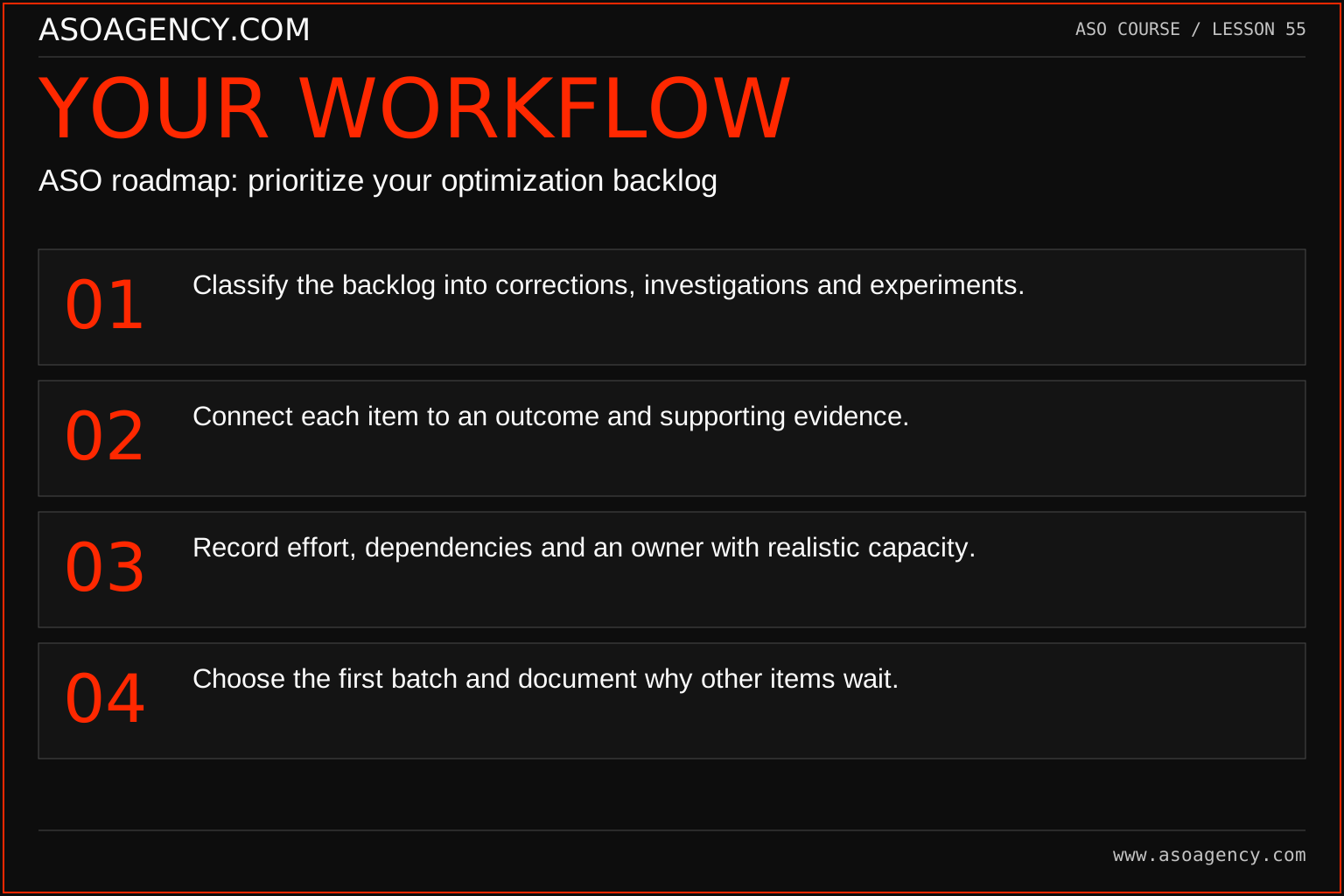
- Classify the backlog into corrections, investigations and experiments.
- Connect each item to an outcome and supporting evidence.
- Record effort, dependencies and an owner with realistic capacity.
- Choose the first batch and document why other items wait.
Worked example and interpretation
Trail Notes and numerical research scenarios are fictional teaching examples. Platform limits, where shown, come from the linked official references.
Trail Notes corrects an outdated offer, validates activation tracking and briefs a clearer opening screenshot. A second-market rollout waits for product-language readiness. The team does not claim that these three tasks have the highest numerical return; it explains their evidence and dependencies.
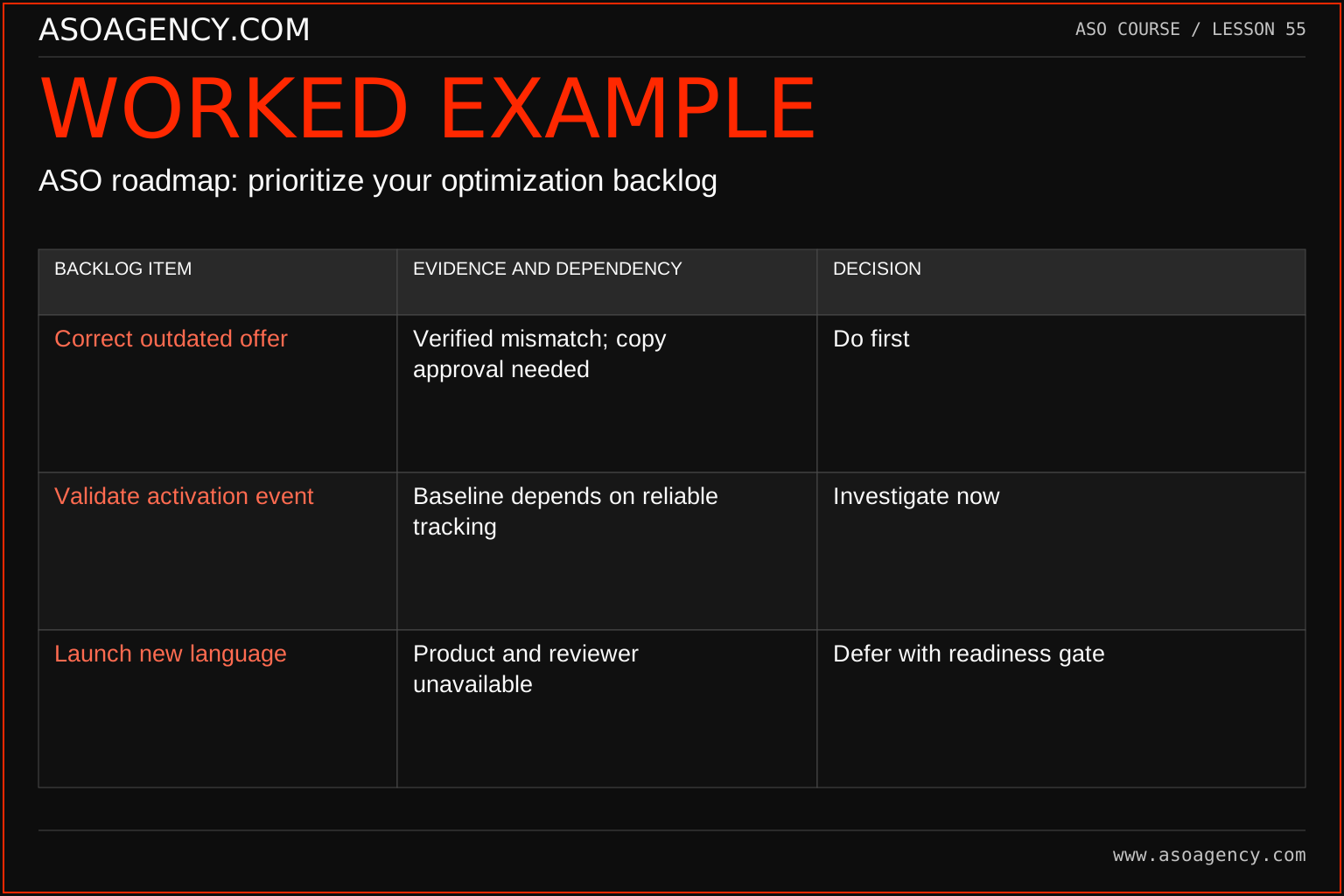
| Backlog item | Evidence and dependency | Decision |
|---|---|---|
| Correct outdated offer | Verified mismatch; copy approval needed | Do first |
| Validate activation event | Baseline depends on reliable tracking | Investigate now |
| Launch new language | Product and reviewer unavailable | Defer with readiness gate |
The first two items enable trustworthy acquisition work. The localization idea may have high potential but is not executable under current conditions. The decision record should state what would change that: a supported local experience, reviewer capacity and a clear pilot objective. Deferral is not rejection. It protects the team from starting work that cannot reach a valid release or produce interpretable learning.
Build a handover someone can use
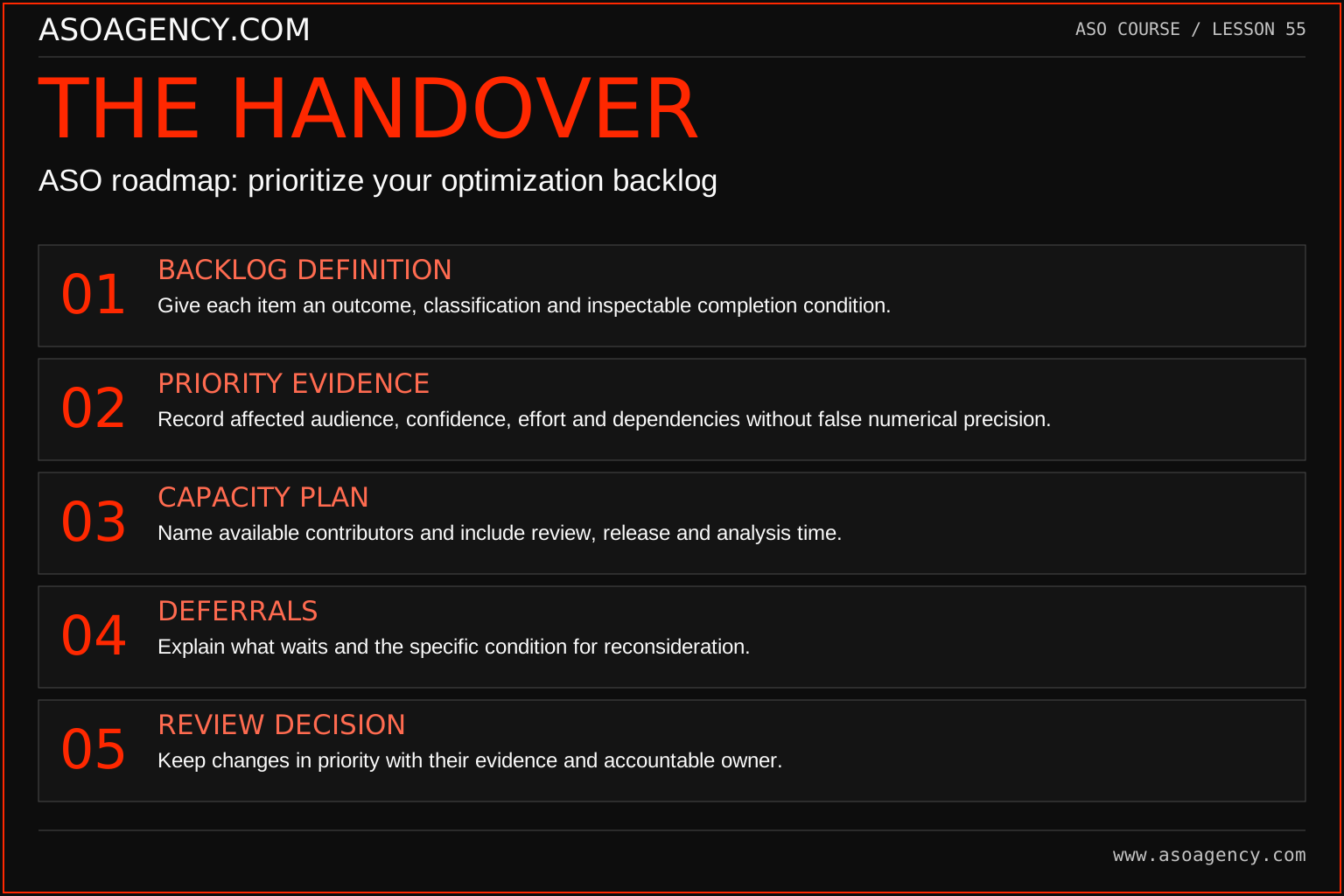
Backlog definition
Give each item an outcome, classification and inspectable completion condition.
Priority evidence
Record affected audience, confidence, effort and dependencies without false numerical precision.
Capacity plan
Name available contributors and include review, release and analysis time.
Deferrals
Explain what waits and the specific condition for reconsideration.
Review decision
Keep changes in priority with their evidence and accountable owner.
Your ASO assignment
Use your own app and evidence, or work through the teaching case. Keep your observations separate from assumptions and explain the reasoning behind your decisions.
- Create six backlog items with classification and evidence.
- Choose three for the first batch and identify the limiting resource.
- Write the condition that would reopen two deferred items.
Scenario challenge
You have one designer and six proposed tests. Select one treatment using evidence and dependencies, then explain which research can proceed without that designer and which work should wait.
Assess your work
- Priorities serve a defined outcome.
- Uncertain impact estimates remain labeled as judgments.
- The first batch fits real production and review capacity.
Common mistakes to catch
- Using a precise score to hide unsupported assumptions.
- Starting everything and leaving no capacity to review results.
Knowledge check
Should a speculative high-impact idea outrank a verified misleading offer?
Read the answer and reasoning
Correct the inaccurate offer through the appropriate process. Then compare the speculative idea with other learning opportunities using evidence, effort and dependencies. A score should not make a known false promise acceptable.
Sources and further reading
Platform references reviewed 29 September 2026. These sources support platform capabilities and constraints; the teaching frameworks, assignments and illustrative cases are original course material.
- Apple — Creating your product page — Product-page fields and presentation guidance.
- Google Play — Metadata policy — Accurate, relevant metadata and prohibited presentation.
Your ASO lesson notes
Use this space for your assignment, evidence and handover. Select Save to keep a draft in this browser, or download a copy to take with you.
Notes stay on this device and are not submitted to ASO Agency.
Complete your assignment with the Interactive ASO audit checklist.
Loading your progress…
Progress is saved only in this browser. It does not sync across devices. Mark a lesson complete after doing its exercise.