ASO course · lesson 59 of 60
ASO reporting: explain results and recommendations
Write an executive report that separates activity, observed outcomes, causal evidence and next decisions.
By Gabriel Machuret · Editorial methodology
Before you start: The metric dictionary, change log, experiment readouts and current backlog.
Module 10: Professional practice and capstone
Plan about 60 minutes for reading, practice and review
You will produce: A stakeholder readout with evidence, limitations, recommendation and a recorded decision request.
Understand the decision
Lead with the decision
State what the stakeholder needs to decide and the evidence that matters. A list of completed tasks is useful context but not the result. Explain whether useful acquisition changed, what is known about the cause and what action follows. Keep technical detail available without burying the main point.
Report uncertainty in useful language
Use counts and correctly labeled rates. Distinguish controlled results from observational changes and identify important alternative explanations. Avoid vague caveats that say everything might be wrong; name the limitation and how it affects the decision. An uncertain result can still justify a focused investigation.
Connect recommendations to resources
Every recommended action needs an owner, dependency and expected learning or outcome. Explain what will be deferred. If more budget is requested, show what decision or capability it enables rather than promising an unsupported growth number. Preserve the report and the stakeholder's decision in the operating record.
Apply the method in practice
Write a headline that survives scrutiny
The headline should reflect the strongest supported conclusion. “Downloads rose 50%; activation stayed flat” is more informative than “ASO delivered exceptional growth” when useful users did not increase. State the objective and comparison context early. Keep the original counts and definitions accessible. A stakeholder should understand whether the report describes activity, an observed outcome or a controlled estimate before being asked to approve the next investment.
Explain limitations through their decision impact
Avoid a generic paragraph saying results may vary. Name the issue: paid traffic changed, the cohort is immature, attribution is incomplete or the experiment is inconclusive. Then explain what claim that prevents and what decision remains possible. For example, an audience-mix change may prevent attributing the total lift to screenshots while still justifying further investment in a productive channel. This makes uncertainty useful rather than evasive. Include unfavorable and neutral evidence that materially affects the recommendation.
Ask for a specific next decision
End with a recommendation, owner, required resource and review point. If asking for another test, explain how it differs from the last one and why the expected learning is worth the effort. If recommending no change, state the evidence needed to revisit that choice. Separate completed work from pending approval. Record the stakeholder's decision afterward so the report becomes part of the operating history rather than a presentation that is forgotten once delivered.
Platform references for this work: Apple — Acquisition analytics · Google Play — Understand and grow your user base
Your step-by-step procedure
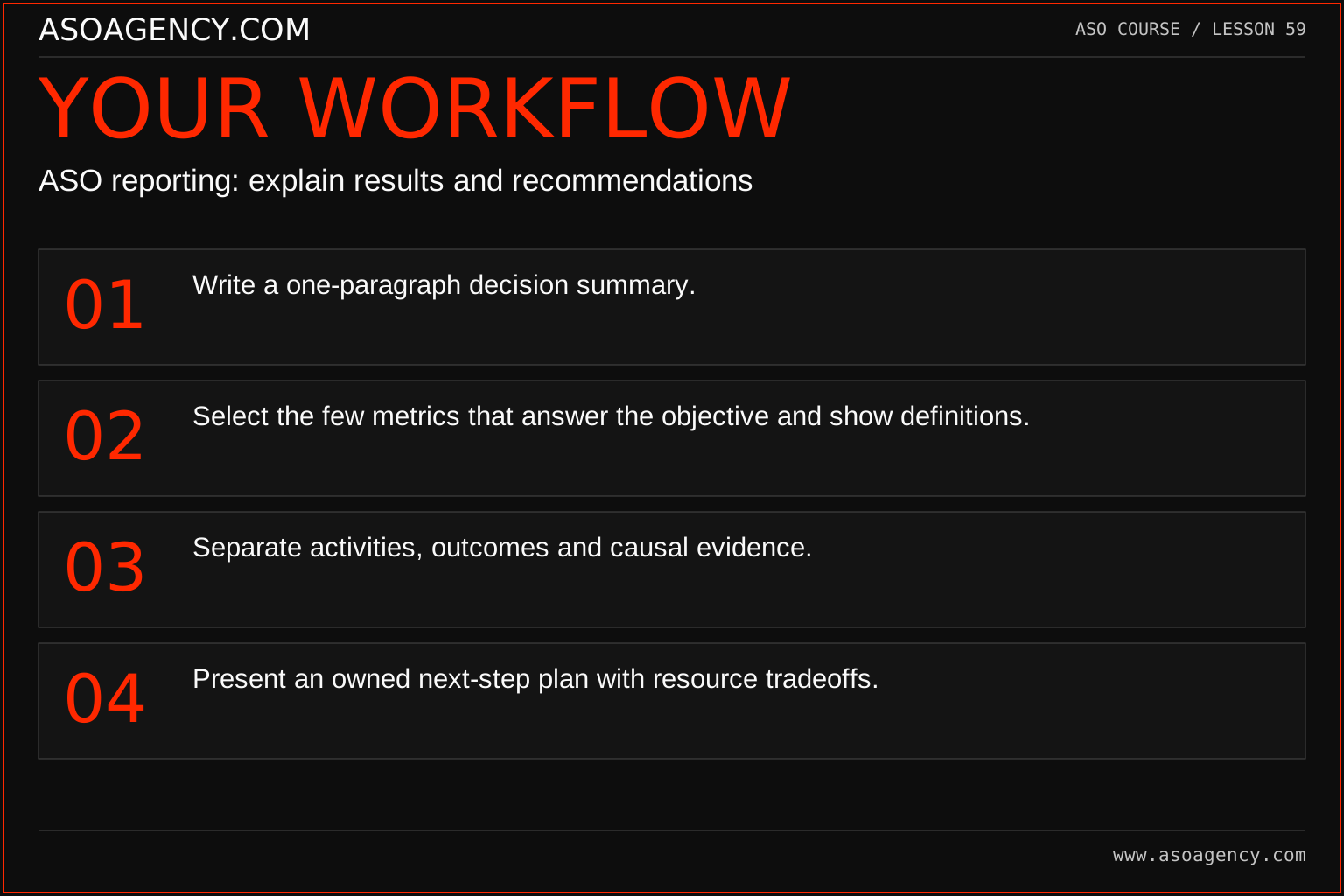
- Write a one-paragraph decision summary.
- Select the few metrics that answer the objective and show definitions.
- Separate activities, outcomes and causal evidence.
- Present an owned next-step plan with resource tradeoffs.
Worked example and interpretation
Trail Notes and numerical research scenarios are fictional teaching examples. Platform limits, where shown, come from the linked official references.
A report says downloads rose while activated users stayed flat and the paid mix changed. It recommends validating audience expectations before expanding spend. It does not describe the screenshot refresh as a proven growth win simply because it shipped during the same period.
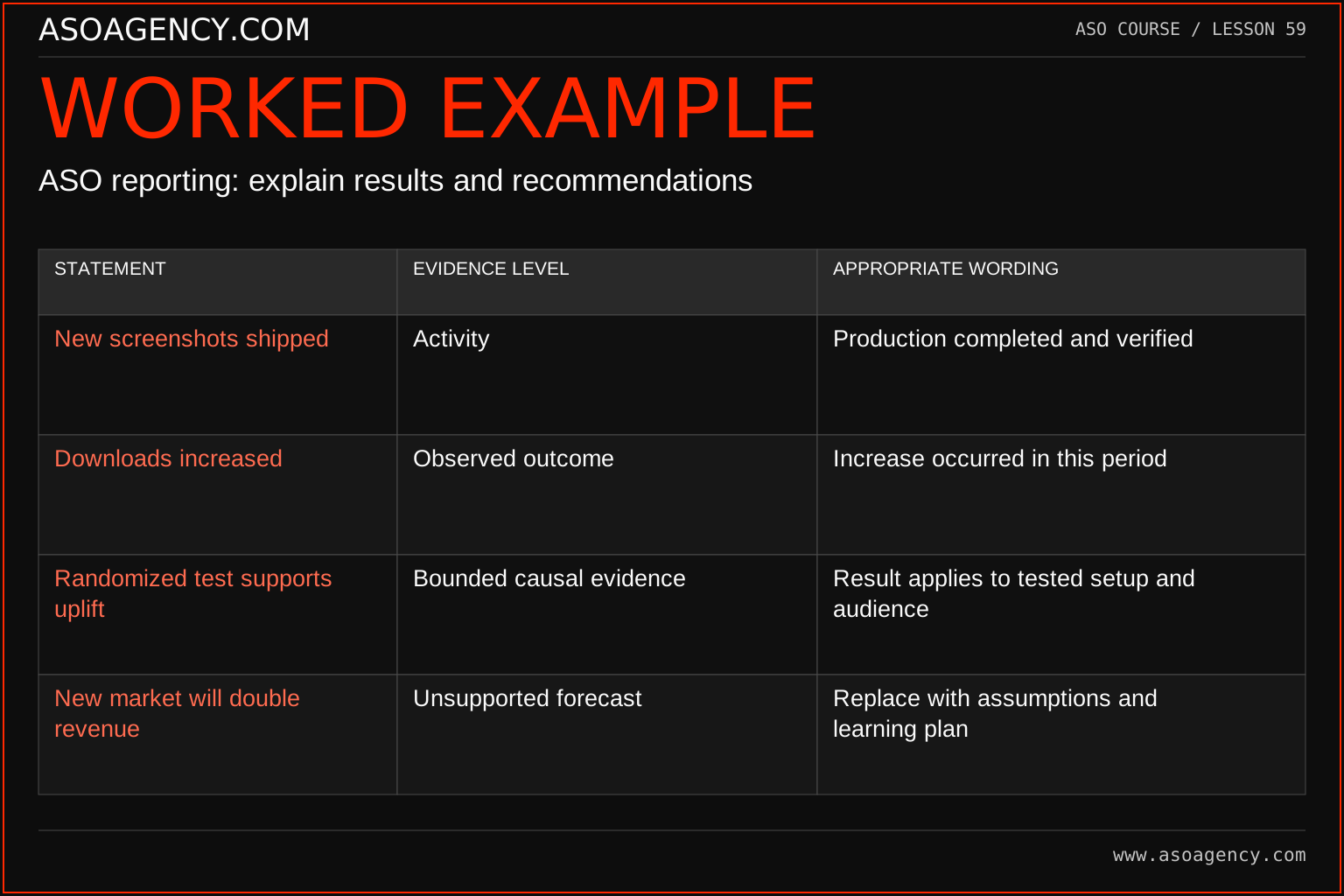
| Statement | Evidence level | Appropriate wording |
|---|---|---|
| New screenshots shipped | Activity | Production completed and verified |
| Downloads increased | Observed outcome | Increase occurred in this period |
| Randomized test supports uplift | Bounded causal evidence | Result applies to tested setup and audience |
| New market will double revenue | Unsupported forecast | Replace with assumptions and learning plan |
The categories prevent activity from being sold as impact and forecasts from being presented as facts. A report can include all three legitimate levels if they are labeled clearly. The final recommendation should rely on the evidence relevant to the decision, not on whichever chart is most impressive. Keep speculative business scenarios in a separate assumptions section.
Build a handover someone can use
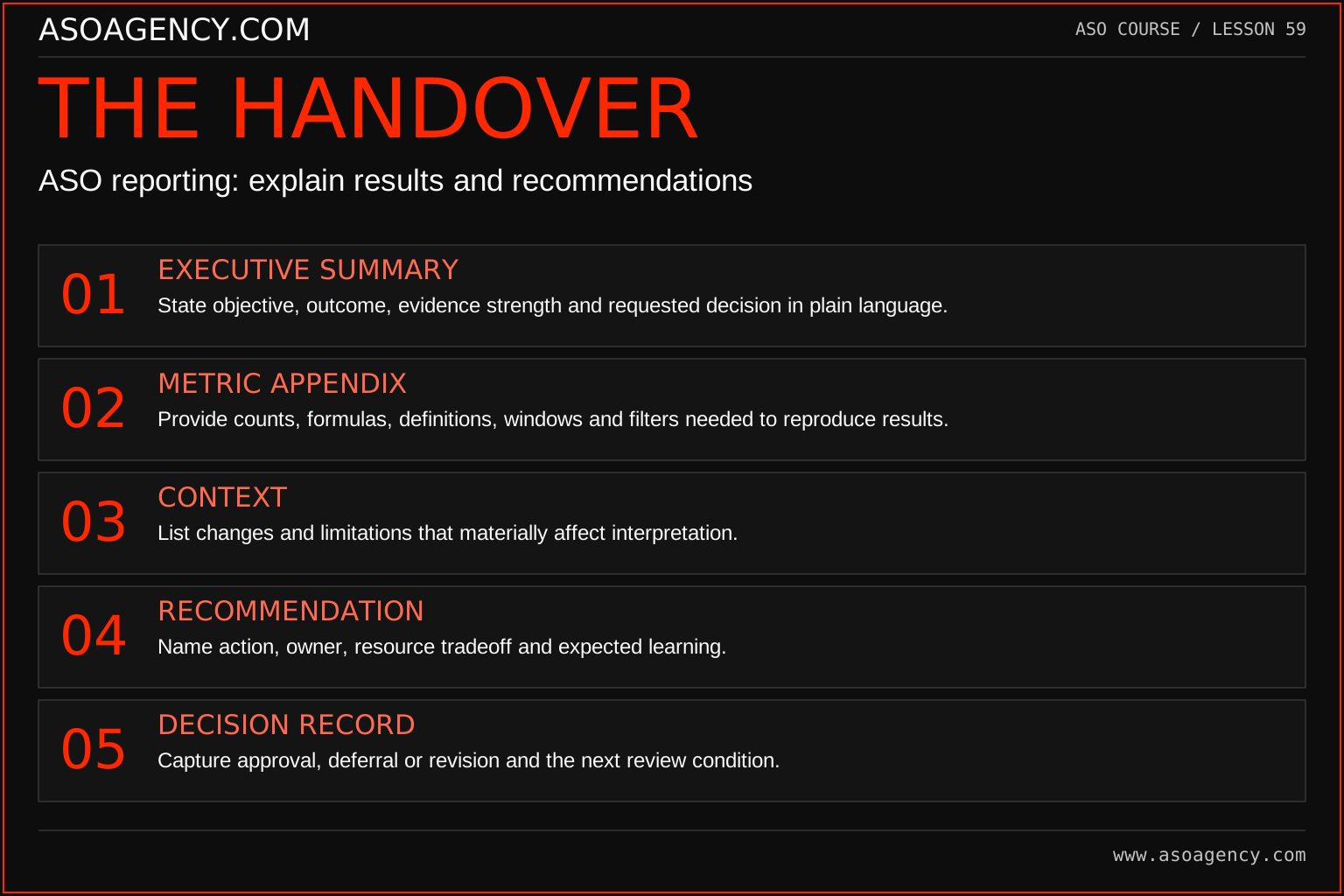
Executive summary
State objective, outcome, evidence strength and requested decision in plain language.
Metric appendix
Provide counts, formulas, definitions, windows and filters needed to reproduce results.
Context
List changes and limitations that materially affect interpretation.
Recommendation
Name action, owner, resource tradeoff and expected learning.
Decision record
Capture approval, deferral or revision and the next review condition.
Your ASO assignment
Use your own app and evidence, or work through the teaching case. Keep your observations separate from assumptions and explain the reasoning behind your decisions.
- Write a five-sentence executive summary.
- Create a metric table with counts, definitions and comparison context.
- Ask for one concrete decision with an owner and deadline.
Scenario challenge
Rewrite “Our redesign increased conversion 25%” when the rate moved from 20% to 25% during a major paid-campaign change. Include the five-percentage-point change and the attribution limitation.
Assess your work
- The headline matches the strength of the evidence.
- Activity is not substituted for business impact.
- The requested decision is concrete and resourced.
Common mistakes to catch
- Showing only favorable segments or metrics.
- Ending a report with generic recommendations that have no owner.
Knowledge check
How should you report an inconclusive experiment after substantial design work?
Read the answer and reasoning
State the question, result and uncertainty honestly, then explain what was learned and whether a revised test is worth the cost. Production effort does not make the evidence stronger or require declaring a winner.
Sources and further reading
Platform references reviewed 29 September 2026. These sources support platform capabilities and constraints; the teaching frameworks, assignments and illustrative cases are original course material.
- Apple — Acquisition analytics — Acquisition metric definitions and source attribution.
- Google Play — Understand and grow your user base — Current listing-click reporting, completed acquisitions and segmentation.
Your ASO lesson notes
Use this space for your assignment, evidence and handover. Select Save to keep a draft in this browser, or download a copy to take with you.
Notes stay on this device and are not submitted to ASO Agency.
Complete your assignment with the App store conversion calculator.
Loading your progress…
Progress is saved only in this browser. It does not sync across devices. Mark a lesson complete after doing its exercise.