ASO course · lesson 53 of 60
ASO seasonal campaigns and app store events
Connect timely store promotion to a real product experience and a maintenance plan.
By Gabriel Machuret · Editorial methodology
Before you start: A genuine upcoming product event or seasonal use case and a publishing owner.
Module 9: Measurement and growth integration
Plan about 50 minutes for reading, practice and review
You will produce: An event-content brief with eligibility checks, publication timing and expiry ownership.
Understand the decision
Start with the in-product reason
An event or seasonal message needs a real experience behind it: content, a challenge, a feature moment or another supported activity. A decorative seasonal banner alone does not establish eligibility for a platform’s promotional surface. Describe what the user can do, when it is available and whether it is relevant to new, existing or returning users.
Check platform-specific eligibility
Apple In-App Events and Google Play promotional content have their own requirements and availability. Review current official guidance and the app’s console access before designing the campaign. Do not promise editorial featuring or universal access to every promotional surface. The production brief should separate what the team controls from approval, eligibility and distribution decisions made by the platform.
Plan the end as carefully as the start
Time-sensitive assets need dates, time-zone context, an owner and a removal or replacement plan. Check that deep destinations and event content remain valid for the intended audience. Record the event in the analysis timeline because temporary promotion can alter source mix and behavior. A post-event decline may reflect the event ending rather than a sudden failure of the underlying listing.
Apply the method in practice
Start with something users can actually experience
An event or seasonal message should correspond to real timely content, activity or an offer available in the app. A calendar theme alone is not evidence that the product has an event worth promoting. Define the participant, experience, dates and eligibility. Apple's In-App Events and Google's promotional content are distinct platform programs with their own requirements. Check current eligibility and content guidance rather than assuming every app can use every placement or receive featuring.
Coordinate dates, deep links and conditions
Create one source of truth for start and end times, time zone, locales, content availability and offer conditions. Test the destination for new and existing users where relevant. If the event requires a subscription or other condition, ensure the store message and product experience explain it accurately. Plan the end state before launch: what happens to an old link, expired creative or user arriving after the event? Maintenance is part of the event brief.
Evaluate participation as well as acquisition
A timely card may attract existing or returning users as well as new users. Select measures that match the event's objective and preserve platform definitions. Downloads alone may not represent successful participation. Record promotion, product changes and seasonal context when interpreting results. An increase during a holiday does not establish that one creative caused the change. Use the readout to decide whether to repeat the format, improve the experience or stop investing in an event that did not serve users.
Platform references for this work: Apple — In-App Events · Google Play — Understand promotional content
Your step-by-step procedure
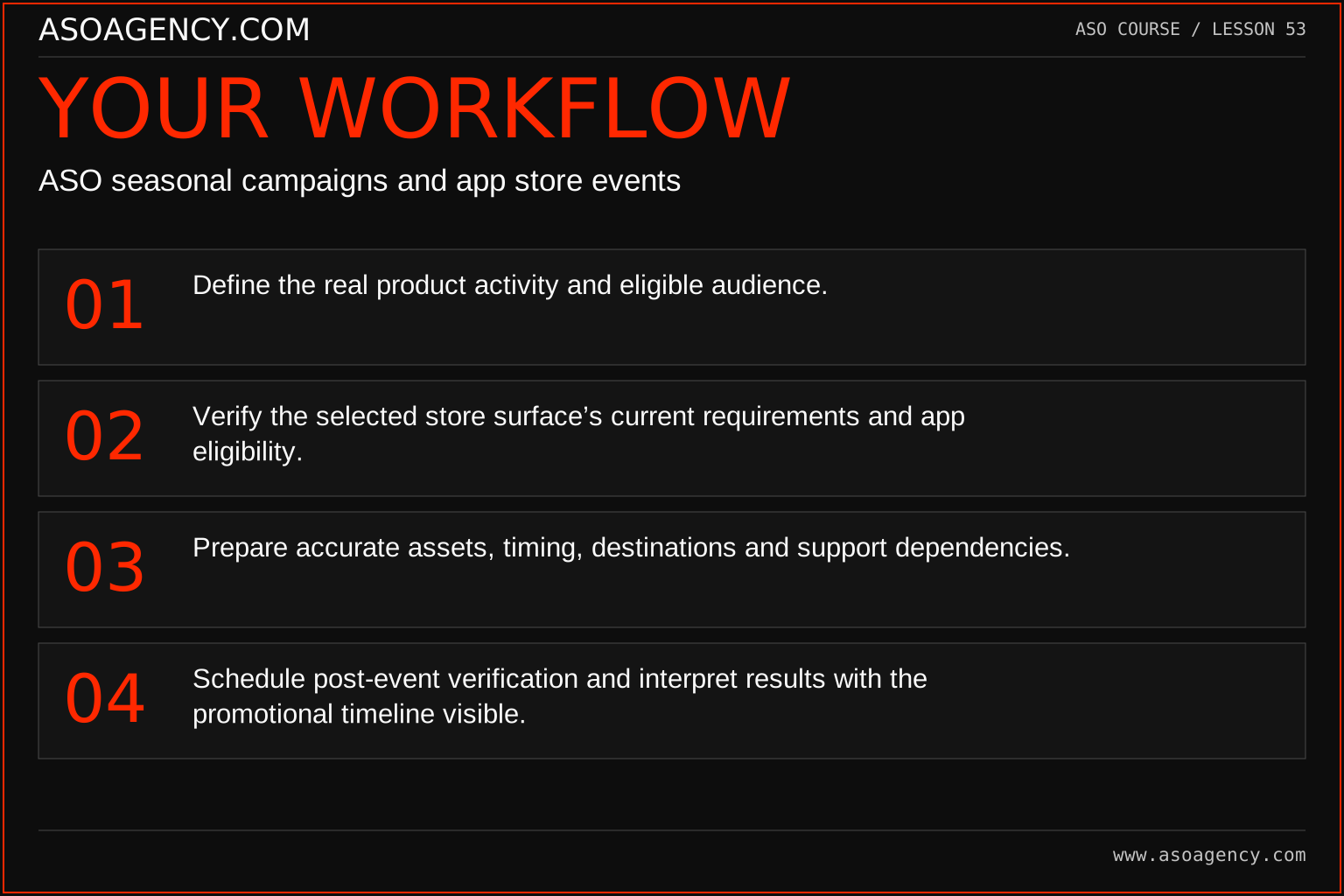
- Define the real product activity and eligible audience.
- Verify the selected store surface’s current requirements and app eligibility.
- Prepare accurate assets, timing, destinations and support dependencies.
- Schedule post-event verification and interpret results with the promotional timeline visible.
Worked example and interpretation
Trail Notes and numerical research scenarios are fictional teaching examples. Platform limits, where shown, come from the linked official references.
Trail Notes proposes a month-long walking-memory challenge with an actual in-app collection workflow. The team verifies whether the chosen promotional surface fits the activity, prepares truthful assets and names an expiry owner. It does not promise that submission will secure editorial placement. The later report distinguishes the event period from ordinary acquisition instead of using the temporary peak as a new baseline.
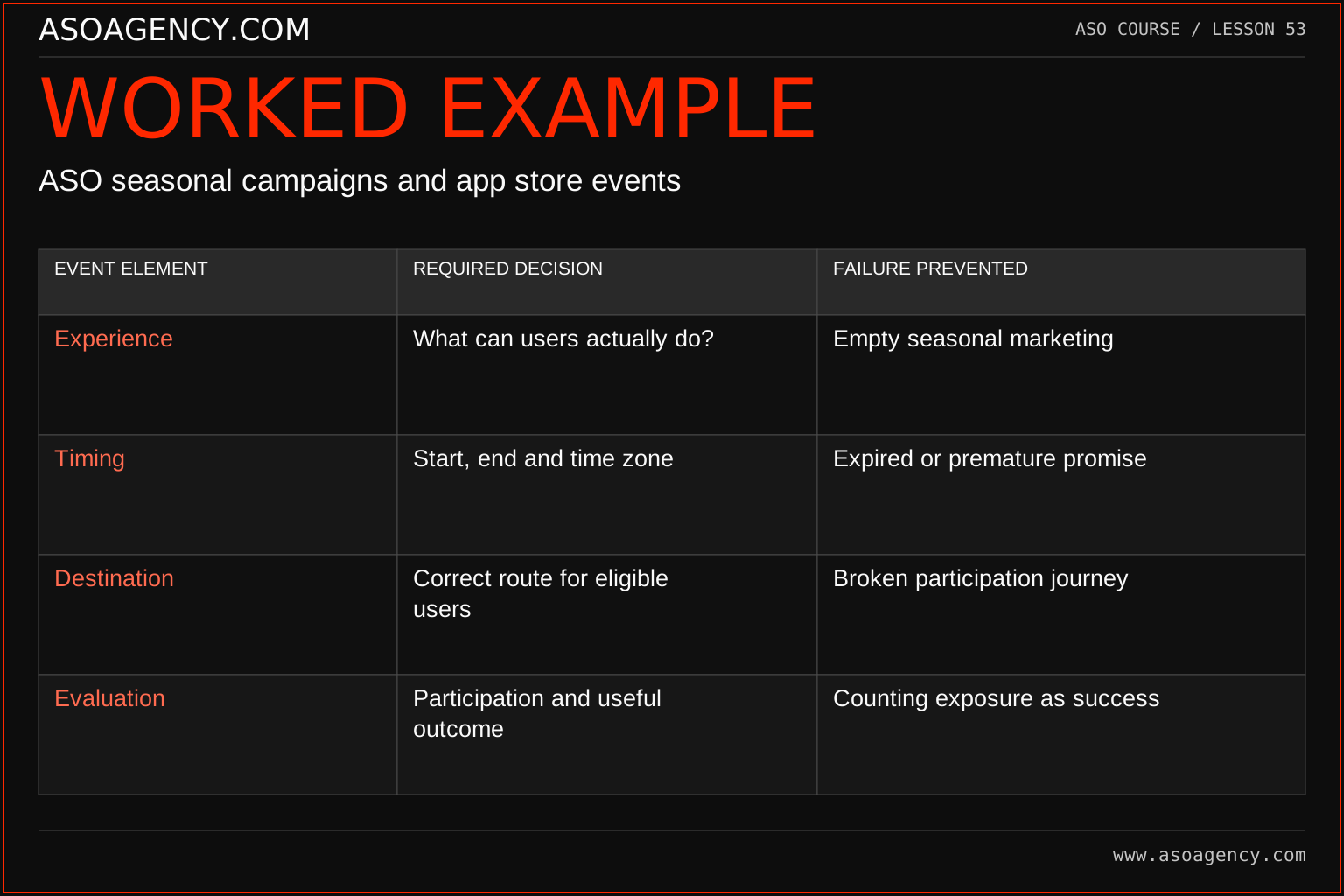
| Event element | Required decision | Failure prevented |
|---|---|---|
| Experience | What can users actually do? | Empty seasonal marketing |
| Timing | Start, end and time zone | Expired or premature promise |
| Destination | Correct route for eligible users | Broken participation journey |
| Evaluation | Participation and useful outcome | Counting exposure as success |
This framework applies to planning, while actual submission must follow the selected platform's current rules. Google promotional-content access can depend on eligibility; approval does not guarantee broad featuring. Keep those boundaries in the operating plan. The team should be able to verify the promised experience before asking a store to promote it.
Build a handover someone can use
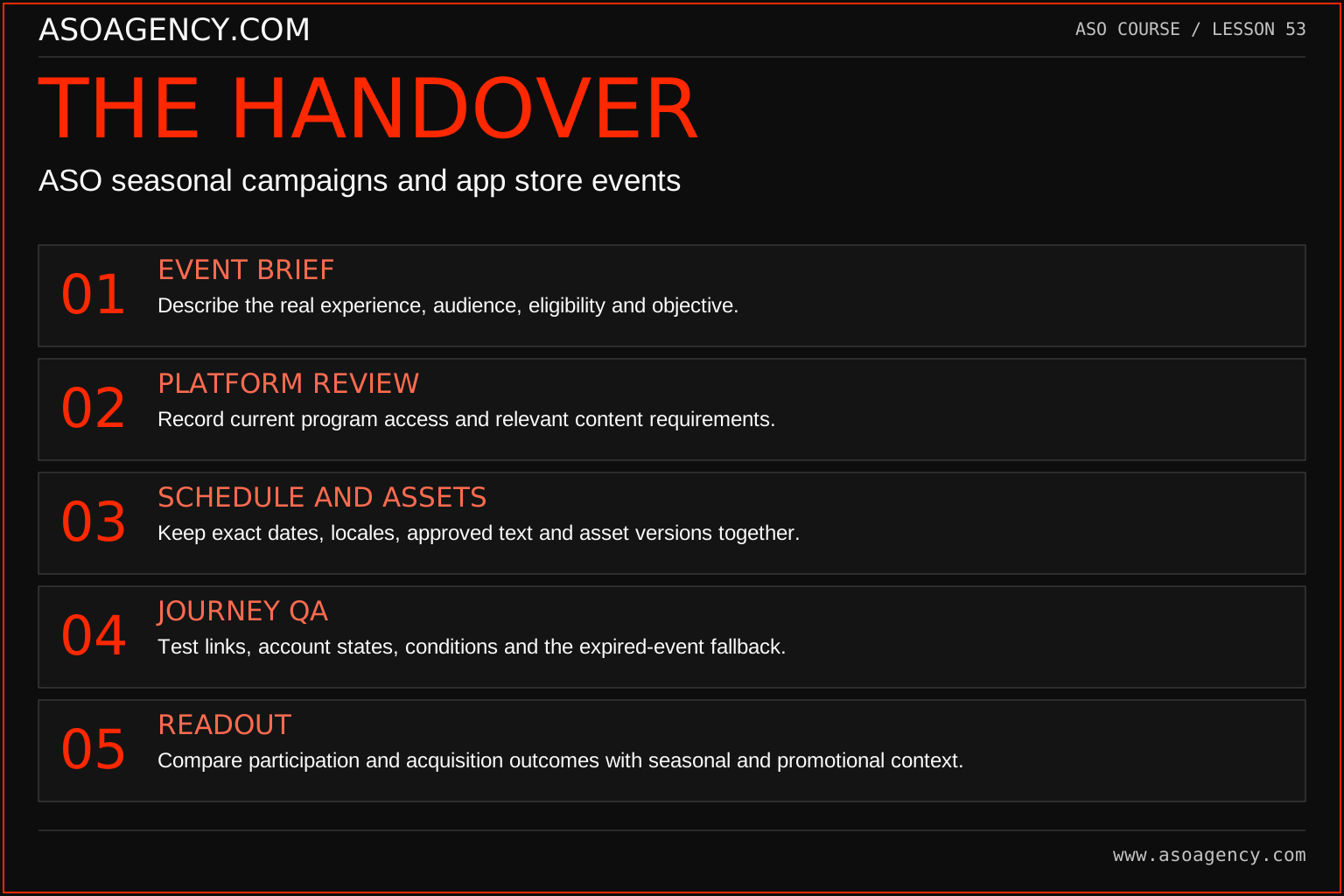
Event brief
Describe the real experience, audience, eligibility and objective.
Platform review
Record current program access and relevant content requirements.
Schedule and assets
Keep exact dates, locales, approved text and asset versions together.
Journey QA
Test links, account states, conditions and the expired-event fallback.
Readout
Compare participation and acquisition outcomes with seasonal and promotional context.
Your ASO assignment
Use your own app and evidence, or work through the teaching case. Keep your observations separate from assumptions and explain the reasoning behind your decisions.
- Write a promotion brief tied to an available product experience.
- Create start, end and fallback checks with time-zone context.
- Explain how the promotion could distort a naive before-and-after report.
Scenario challenge
A team wants a holiday event card for an app with no new content or activity. Identify the missing user experience and explain how to decide whether a truthful seasonal listing message or no event is more appropriate.
Assess your work
- The promotion corresponds to real product value.
- Platform eligibility and distribution are not assumed or guaranteed.
- The asset lifecycle includes removal or replacement.
Common mistakes to catch
- Promising featuring as an ASO deliverable.
- Leaving expired event claims in permanent listing assets.
Knowledge check
Traffic falls after an event ends. Is that evidence the metadata stopped working?
Read the answer and reasoning
Not by itself. Compare source mix, timing and ordinary-period behavior. The event may have temporarily increased visibility or engagement. Record its end before evaluating a metadata explanation, and avoid treating the promotional peak as the correct ongoing baseline.
Sources and further reading
Platform references reviewed 29 September 2026. These sources support platform capabilities and constraints; the teaching frameworks, assignments and illustrative cases are original course material.
- Apple — In-App Events — Event experiences, discovery surfaces and presentation.
- Google Play — Understand promotional content — Program eligibility and timely promotional experiences.
Your ASO lesson notes
Use this space for your assignment, evidence and handover. Select Save to keep a draft in this browser, or download a copy to take with you.
Notes stay on this device and are not submitted to ASO Agency.
Complete your assignment with the ASO experiment planner.
Loading your progress…
Progress is saved only in this browser. It does not sync across devices. Mark a lesson complete after doing its exercise.