ASO course · lesson 50 of 60
ASO and Apple Ads: coordinate paid app acquisition
Share learning across paid and store work while separating attribution from incrementality.
By Gabriel Machuret · Editorial methodology
Before you start: Your keyword map, acquisition-source definitions and campaign owner.
Module 9: Measurement and growth integration
Plan about 50 minutes for reading, practice and review
You will produce: A paid/store coordination brief with message mapping and measurement boundaries.
Understand the decision
Use paid evidence as contextual evidence
Search-term and campaign data can reveal language, audience response and message mismatch. Paid traffic is selected through targeting, bids, creative and delivery systems, so it is not automatically representative of organic visitors. Record the campaign context when bringing a finding into the ASO map. A strong paid term is a research lead, not proof that the same organic opportunity exists.
Maintain message continuity
Apple Ads can use product-page assets and custom-page variations in supported placements. Coordinate the incoming promise, destination and first-use experience. Keep page and campaign identifiers in the change log so results can be interpreted later. A mismatch between ad and listing may be a communication problem even when both assets are individually accurate.
Distinguish credited results from additional results
Attribution assigns observed outcomes according to a reporting method. Incrementality asks what would have happened without the intervention. Do not subtract one platform’s paid count from another report’s total unless the populations and rules support that operation. Credited installs alone cannot prove that an ad created entirely new demand rather than capturing people who would have found the app anyway.
Apply the method in practice
Share the promise and audience definitions
Paid and organic teams often use overlapping language and assets but operate with different evidence. Align on supported product claims, intended use cases and important exclusions. A paid campaign that attracts navigation seekers can undermine a journal-focused listing even when the organic keyword strategy is coherent. Keep the campaign message, destination page and in-app experience connected. Research from paid queries can generate ASO hypotheses, but it does not automatically establish organic ranking opportunity or identical user behavior.
Keep channel measures distinct
Record campaign targeting, match settings, destination and reporting definitions. Paid search-term data describes traffic under an advertising configuration, not all organic demand. Apple Ads and store analytics can differ in attribution and scope; do not simply subtract mismatched reports to produce a precise organic number. If reconciliation is possible, document the method and limitations. If it is not, show separate views. Avoid claiming that paid spend causes an organic ranking increase unless the evidence design actually supports that causal claim.
Coordinate changes to preserve interpretation
Schedule major campaign, listing and product changes with a shared log. Simultaneous work may be commercially necessary, but it limits attribution and should be documented. When a custom page serves a paid audience, record its version and routing. Share findings as bounded learning: which message appeared relevant to which audience under which conditions. Decide what should be tested in another context rather than copying a paid winner everywhere without checking intent and product fit.
Platform references for this work: Apple Ads — Search results · Apple Ads — Add and manage keywords
Your step-by-step procedure
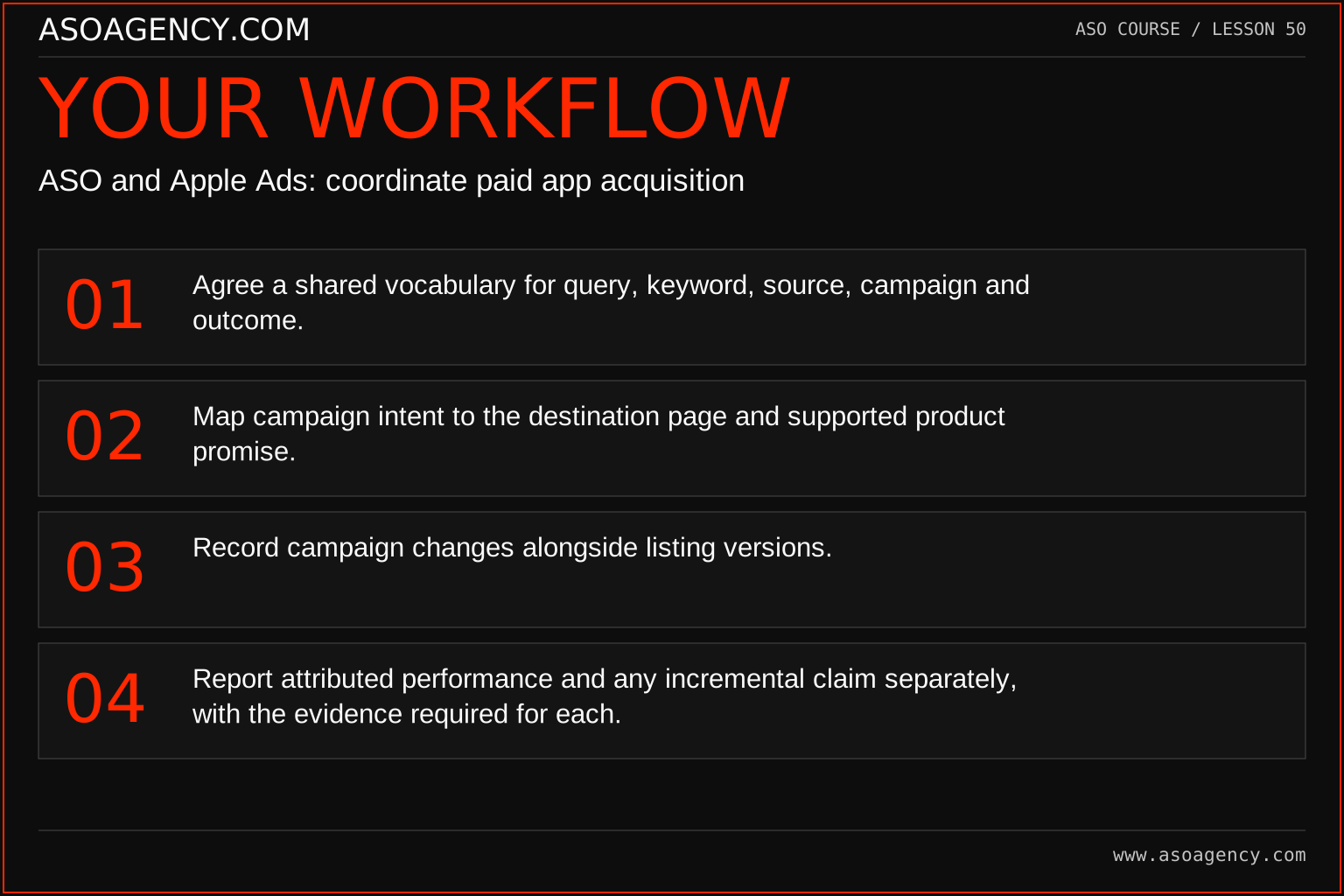
- Agree a shared vocabulary for query, keyword, source, campaign and outcome.
- Map campaign intent to the destination page and supported product promise.
- Record campaign changes alongside listing versions.
- Report attributed performance and any incremental claim separately, with the evidence required for each.
Worked example and interpretation
Trail Notes and numerical research scenarios are fictional teaching examples. Platform limits, where shown, come from the linked official references.
Trail Notes’ campaign for “walking journal” sends visitors to a page focused on travel memories. The team aligns the destination with the campaign intent and logs the change. Paid-attributed downloads increase, but no controlled incrementality design exists. The report describes improved attributed campaign performance and does not claim the same number of additional organic users or a proven organic-ranking effect.
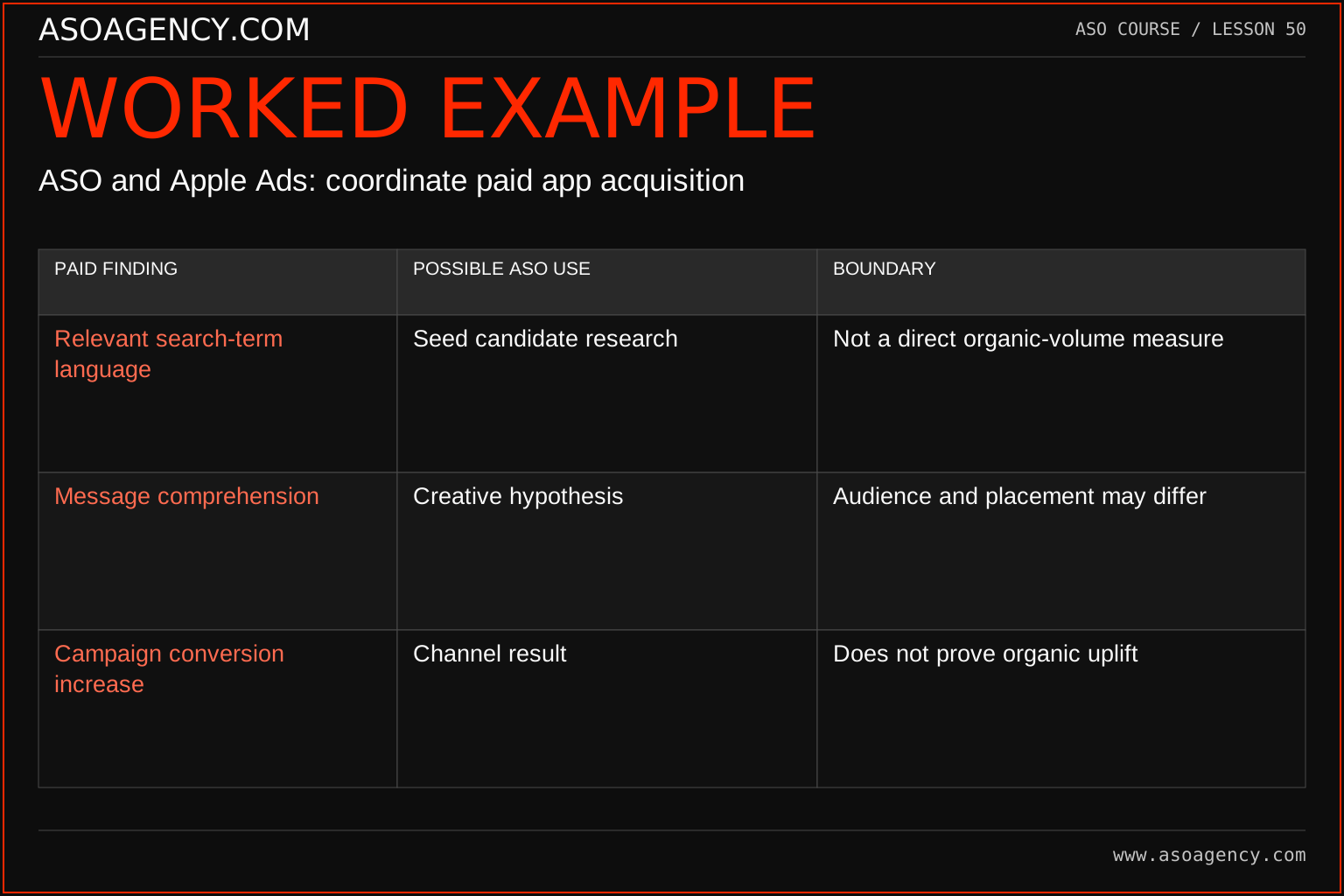
| Paid finding | Possible ASO use | Boundary |
|---|---|---|
| Relevant search-term language | Seed candidate research | Not a direct organic-volume measure |
| Message comprehension | Creative hypothesis | Audience and placement may differ |
| Campaign conversion increase | Channel result | Does not prove organic uplift |
Paid evidence can be useful without being interchangeable with organic evidence. A phrase producing qualified campaign users may deserve intent research and a metadata review. It still needs product relevance, local context and a place in the overall message. Keep the acquisition-quality outcome visible so a cheap install source is not mistaken for a valuable audience merely because the top-of-funnel metric looks strong.
Build a handover someone can use
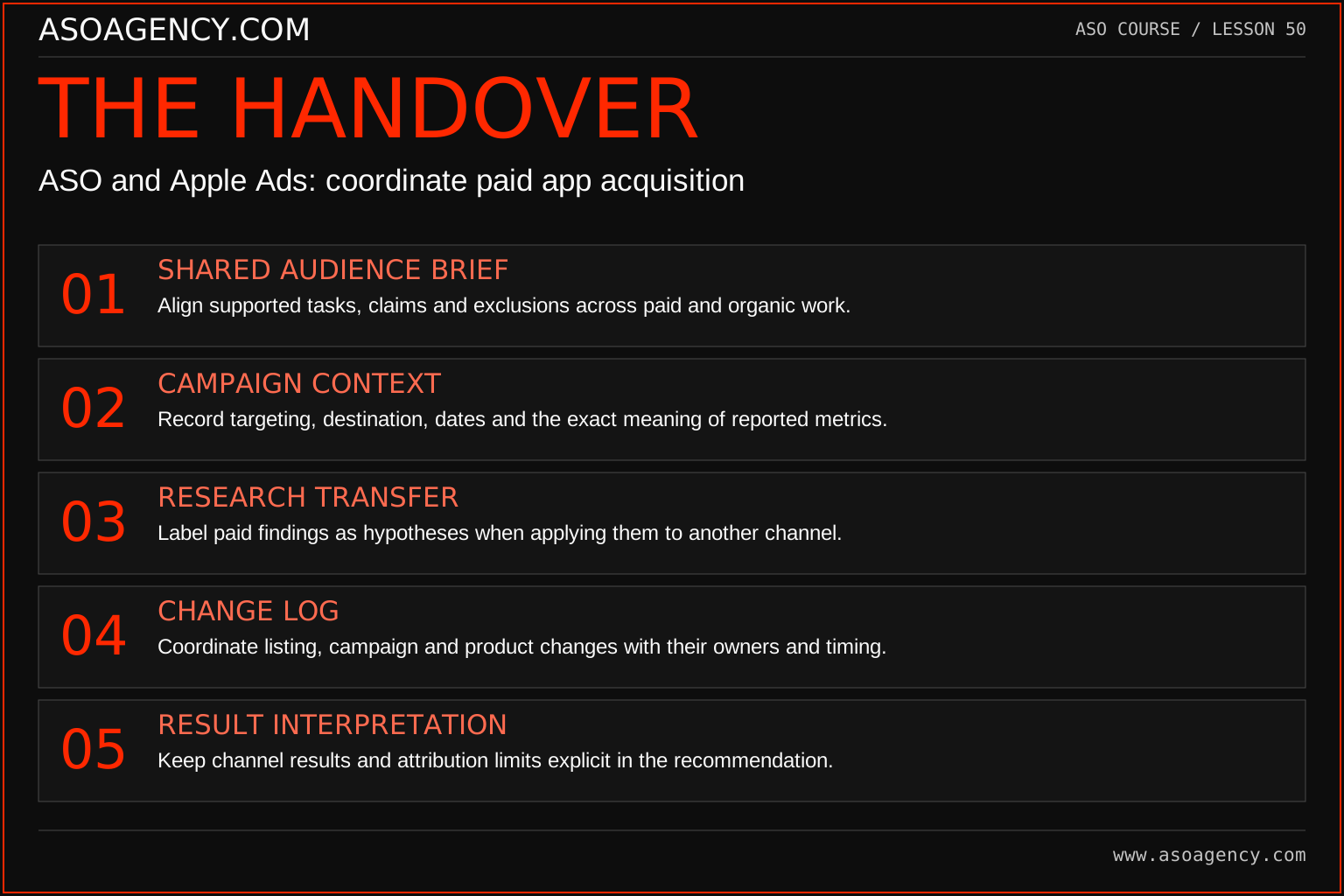
Shared audience brief
Align supported tasks, claims and exclusions across paid and organic work.
Campaign context
Record targeting, destination, dates and the exact meaning of reported metrics.
Research transfer
Label paid findings as hypotheses when applying them to another channel.
Change log
Coordinate listing, campaign and product changes with their owners and timing.
Result interpretation
Keep channel results and attribution limits explicit in the recommendation.
Your ASO assignment
Use your own app and evidence, or work through the teaching case. Keep your observations separate from assumptions and explain the reasoning behind your decisions.
- Draw a campaign-to-listing-to-product journey.
- Write a shared change-log row for a coordinated release.
- Explain one attribution claim that the available data cannot establish.
Scenario challenge
A paid query converts well and a manager asks to add it to every organic field. Write the relevance, language, duplication and evidence checks required before making that decision.
Assess your work
- Paid findings retain targeting and source context.
- Destination messages match supported product value.
- Attribution is not confused with a causal incremental estimate.
Common mistakes to catch
- Assuming ad spend directly guarantees organic ranking improvements.
- Subtracting incompatible reports to invent an organic-only result.
Knowledge check
Paid-attributed installs rise after a campaign change. Has total demand necessarily grown by that amount?
Read the answer and reasoning
No. Attribution reports credit under their own rules. Some people may have installed through another path without the campaign. Assess total outcomes and use an appropriate incremental design if that causal question matters; do not relabel credited installs as proven additional demand.
Sources and further reading
Platform references reviewed 29 September 2026. These sources support platform capabilities and constraints; the teaching frameworks, assignments and illustrative cases are original course material.
- Apple Ads — Search results — Paid search placement context and configuration.
- Apple Ads — Add and manage keywords — Advertising keyword setup and matching context.
Your ASO lesson notes
Use this space for your assignment, evidence and handover. Select Save to keep a draft in this browser, or download a copy to take with you.
Notes stay on this device and are not submitted to ASO Agency.
Complete your assignment with the ASO experiment planner.
Loading your progress…
Progress is saved only in this browser. It does not sync across devices. Mark a lesson complete after doing its exercise.