ASO course · lesson 13 of 60
ASO keyword search volume: interpret demand estimates
Use demand evidence as a directional signal while preserving source and uncertainty.
By Gabriel Machuret · Editorial methodology
Before you start: An intent-based keyword map and any available research-tool exports.
Module 3: Keyword evaluation and strategy
Plan about 50 minutes for reading, practice and review
You will produce: A demand-evidence table with uncertainty and sensitivity notes.
Understand the decision
Understand what a score measures
A vendor score may be an estimate, a normalized index or a platform-specific signal. It is not automatically a monthly search count. Before comparing terms, record the provider, store, market, date and stated method. Scores from different providers may use different scales. Putting them in one sorted column creates precision that the underlying information does not support.
Triangulate rather than worship one number
Compare demand indications with customer language, relevant result sets and first-party evidence where available. Agreement strengthens a research hypothesis; disagreement tells you where to investigate. A missing score does not prove that no one searches a term. Likewise, a large estimate does not establish that the app can satisfy the people behind it.
Use ranges and decisions
The practical question is often whether a term deserves a slot, further research or no attention. Use confidence labels and sensitivity checks instead of forecasting exact downloads from an opaque score. Ask whether your recommendation changes if the estimate is substantially wrong. If it does, gather better evidence before making a costly creative or localization commitment.
Apply the method in practice
Ask what the number represents
Before sorting by a demand score, read the provider's definition. A relative index, estimated searches and paid-search popularity are different measures. Record store, market, device coverage, date and methodology limitations. If the provider does not disclose enough to interpret a score, use it as a directional signal rather than a precise count. Never convert an index of 60 into 60 searches or assume a score of 80 means twice the demand of 40. The scale may be nonlinear or normalized against a changing reference set.
Triangulate signals with different strengths
Combine product relevance, customer language, observed results and available demand estimates. Agreement can increase confidence in a research priority, but it does not turn estimates into observed customer acquisition. A term may appear frequently in interviews because it describes a benefit while rarely being typed into a store. Conversely, a high-demand term may have poor product fit. Record what each source establishes and where it is silent. Missing data should lead to a research decision, not an invented midpoint that looks measured.
Use sensitivity to expose fragile priorities
Compare candidate order under plausible interpretations of uncertain signals. If a small score change reverses the shortlist, treat the ranking as fragile and gather the evidence most likely to resolve it. If a relevant term remains attractive across scenarios, it may be a robust research priority. Keep tool versions and exports so later changes can be interpreted. A demand estimate is useful when it helps allocate research effort; it becomes misleading when it is presented as a forecast of downloads your listing will receive.
Platform references for this work: Apple — App Store search
Your step-by-step procedure
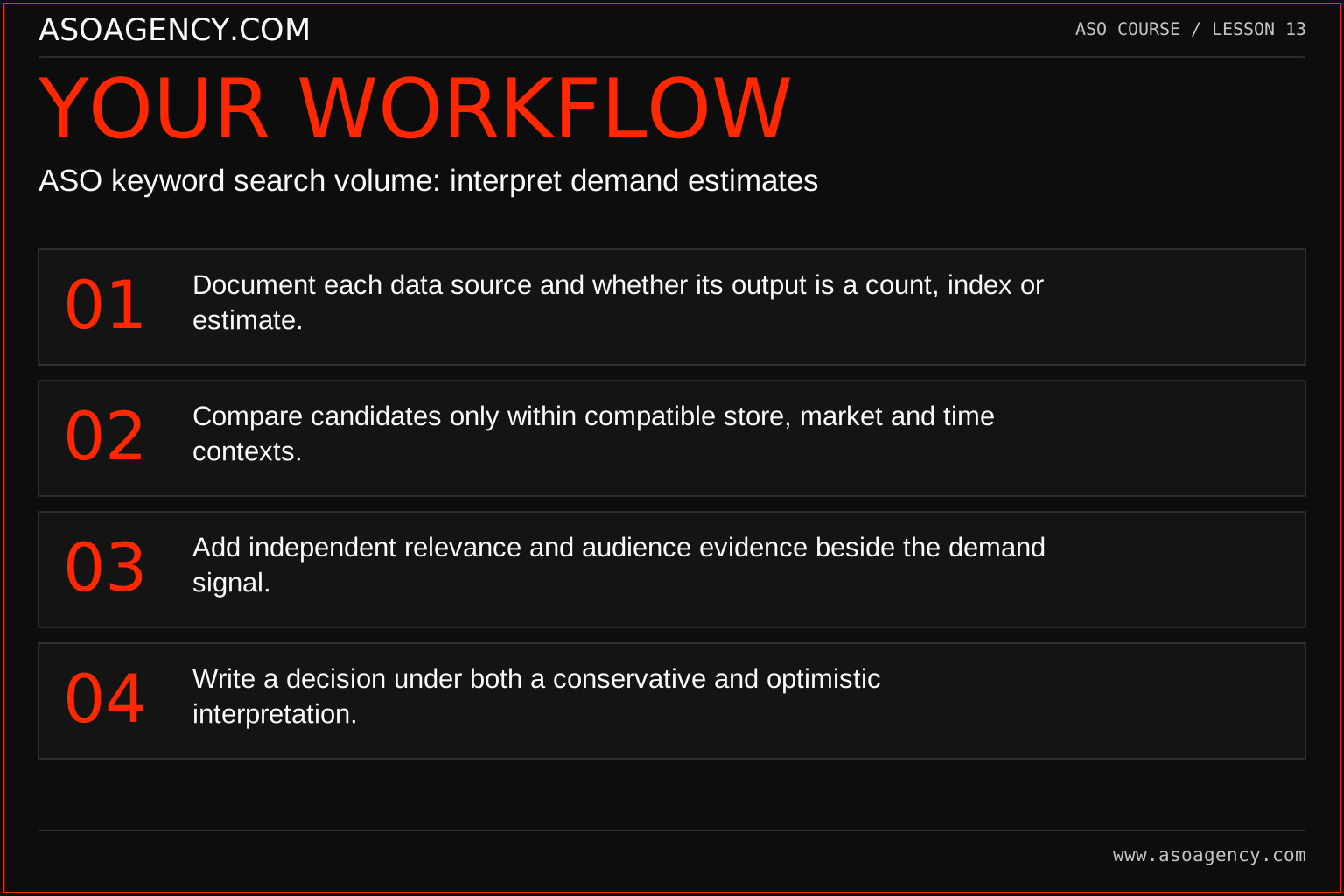
- Document each data source and whether its output is a count, index or estimate.
- Compare candidates only within compatible store, market and time contexts.
- Add independent relevance and audience evidence beside the demand signal.
- Write a decision under both a conservative and optimistic interpretation.
Worked example and interpretation
Trail Notes and numerical research scenarios are fictional teaching examples. Platform limits, where shown, come from the linked official references.
A fictional provider assigns walking journal an index of 42, hiking diary 39 and offline navigation 81. These are directional indices rather than search counts. The team investigates the two relevant expressions and rejects navigation for the current product. It does not infer that the highest score will produce the most qualified users.
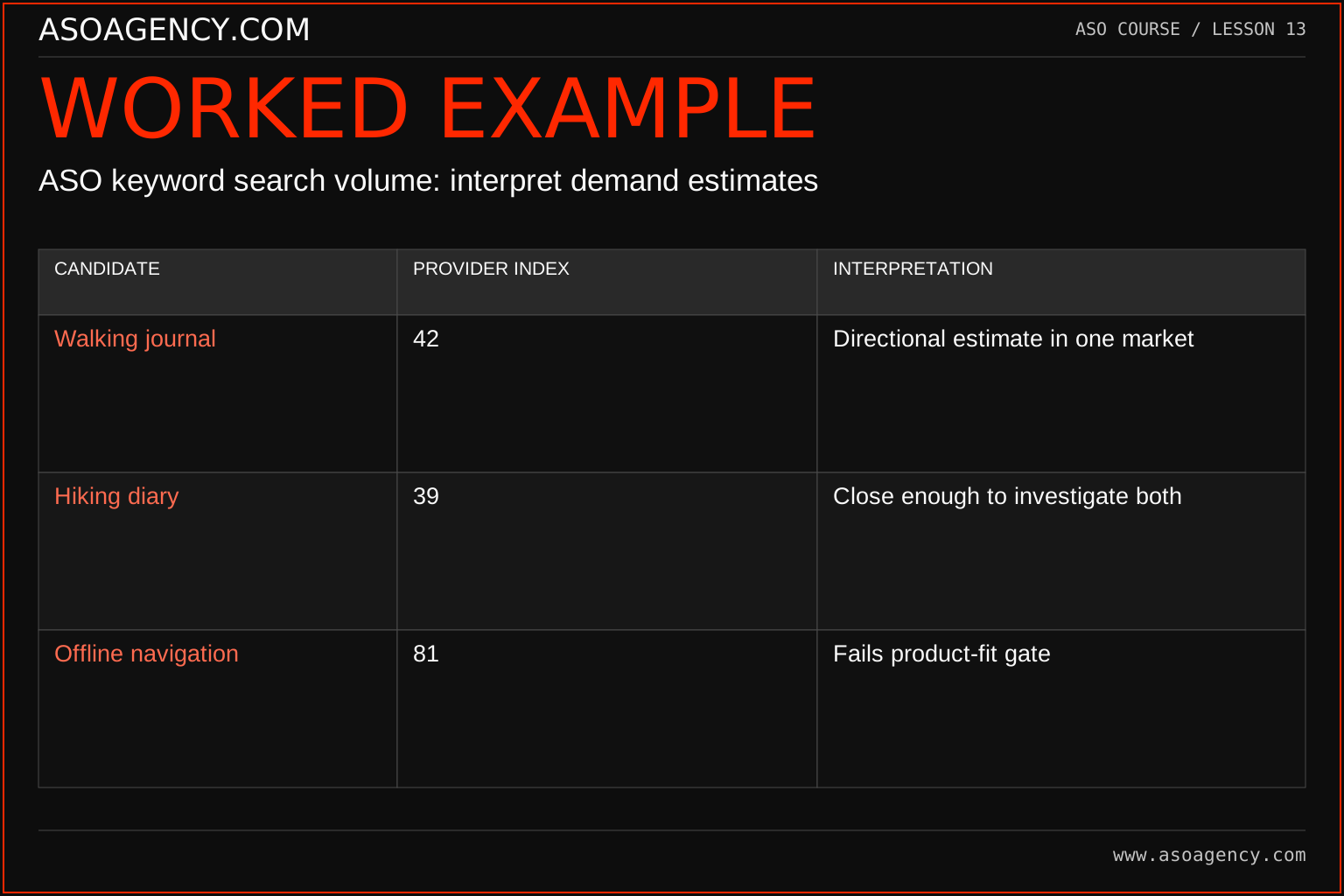
| Candidate | Provider index | Interpretation |
|---|---|---|
| Walking journal | 42 | Directional estimate in one market |
| Hiking diary | 39 | Close enough to investigate both |
| Offline navigation | 81 | Fails product-fit gate |
These fictional indices have no declared linear relationship to search counts. The three-point difference between journal and diary cannot justify a precise revenue forecast. Investigate intent and local language before choosing between them. Navigation remains excluded regardless of score because the app lacks the function. Keep a separate evidence-confidence column so a high index with unclear methodology does not appear more certain than a lower index supported by better context.
Build a handover someone can use
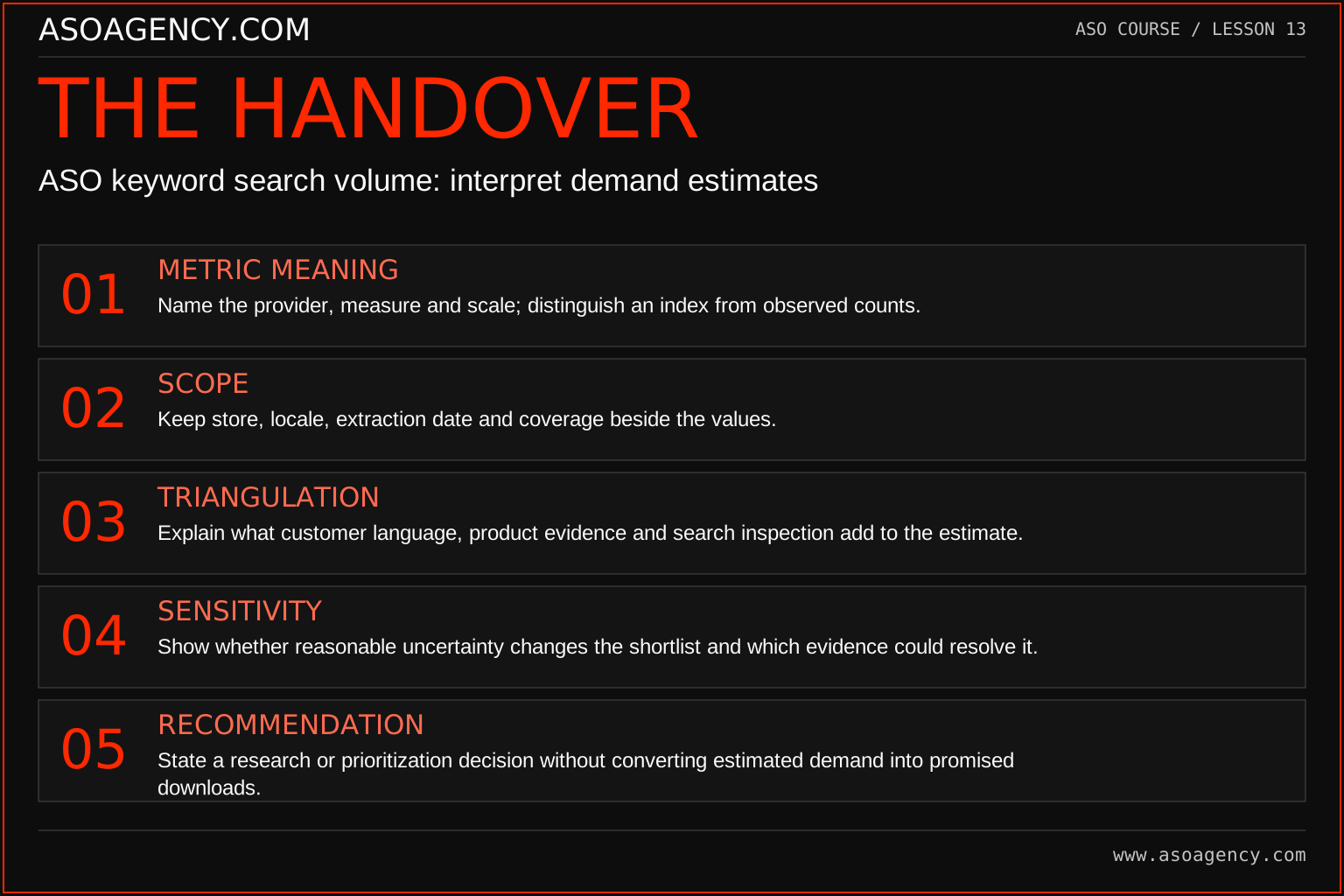
Metric meaning
Name the provider, measure and scale; distinguish an index from observed counts.
Scope
Keep store, locale, extraction date and coverage beside the values.
Triangulation
Explain what customer language, product evidence and search inspection add to the estimate.
Sensitivity
Show whether reasonable uncertainty changes the shortlist and which evidence could resolve it.
Recommendation
State a research or prioritization decision without converting estimated demand into promised downloads.
Your ASO assignment
Use your own app and evidence, or work through the teaching case. Keep your observations separate from assumptions and explain the reasoning behind your decisions.
- Annotate ten candidate scores with their definitions and contexts.
- Identify three decisions that remain sound even if estimates are wrong.
- List one decision requiring stronger evidence before investment.
Scenario challenge
Two providers give the same term scores of 42 and 76. Explain why averaging them to 59 may be meaningless. Identify the definitions and normalization information you need before comparing them.
Assess your work
- Indices are not mislabeled as search volumes.
- Incompatible sources are not averaged or ranked together.
- The recommendation still accounts for product relevance.
Common mistakes to catch
- Turning an undocumented score into an exact installation forecast.
- Assuming a blank value means zero searches.
Knowledge check
Can a score of 80 be called twice the demand of a score of 40?
Read the answer and reasoning
Only if the source explicitly defines a comparable ratio scale supporting that interpretation. Most research indices should not be treated that way without verification. Report the scale honestly and explain what decision it informs rather than inventing arithmetic meaning.
Sources and further reading
Platform references reviewed 29 September 2026. These sources support platform capabilities and constraints; the teaching frameworks, assignments and illustrative cases are original course material.
- Apple — App Store search — Search presentation, relevant keywords and metadata guidance.
Your ASO lesson notes
Use this space for your assignment, evidence and handover. Select Save to keep a draft in this browser, or download a copy to take with you.
Notes stay on this device and are not submitted to ASO Agency.
Complete your assignment with the App Store keyword-field builder.
Loading your progress…
Progress is saved only in this browser. It does not sync across devices. Mark a lesson complete after doing its exercise.