ASO course · lesson 12 of 60
How to build an ASO keyword map
Turn research into a map connecting intent, product evidence, metadata and validation.
By Gabriel Machuret · Editorial methodology
Before you start: The seed library, intent clusters and product proposition brief.
Module 2: Audience and market research
Plan about 50 minutes for reading, practice and review
You will produce: Module project: an intent-to-product-to-listing keyword map with priorities and validation notes.
Understand the decision
Make the map a decision document
A keyword map records why an intent matters and how the listing will address it. Include audience situation, candidate phrases, product proof, proposed field or asset and validation method. Avoid presenting a list sorted by one tool score as a complete strategy. The map should help a copywriter make coherent choices and help a reviewer challenge unsupported ones.
Assign a role to each target
Some terms explain the core product; others qualify a use case or support a secondary audience. Prioritize meaning before packing fields. A title must remain recognizable and a screenshot must remain understandable. When several terms compete for the same space, use the intended audience and evidence to make the tradeoff rather than awkwardly combining every phrase.
Plan how the map will change
Record the current confidence and the next evidence needed for each cluster. Later measurement may show that a target attracts the wrong expectations or that the product supports a better use case. Version the map with the listing changes so analysts can connect decisions to outcomes. A strategy that cannot be revised is merely a frozen brainstorming document.
Apply the method in practice
Turn the library into a decision document
The map connects a candidate to intent, product proof, evidence, locale and a proposed communication role. It should let a reviewer understand why a term was retained without opening five unrelated spreadsheets. Keep original phrases and approved concepts distinct from field-ready text. A term can be relevant but remain outside the next release because space, readability or confidence favors another concept. Record that reason rather than treating every exclusion as proof that the term is bad.
Assign roles before drafting strings
Group terms by the user task they represent, then decide which idea should anchor the visible promise. Secondary terms can explain complementary benefits where the platform permits. Do not copy the entire research list into every field. On iOS, the keyword field has different formatting and visibility from the name and subtitle; Google Play requires a separate writing approach. The map should identify the destination store and proposed role, with final field validation deferred to the relevant execution lesson. This preserves strategy while preventing premature formatting choices from distorting research.
Run a reviewer challenge
Ask a colleague to choose an inclusion and an exclusion and reconstruct both decisions from the map. If the evidence is missing, revise the record. Ask what would change the recommendation: a new capability, local-language review, stronger demand evidence or a different audience objective. Freeze the approved version before copy production and keep open questions separate. After launch, compare results with the original hypothesis instead of rewriting the rationale to match what happened. That is how the map becomes a learning record rather than a one-time spreadsheet.
Platform references for this work: Apple — App Store search · Google Play — Understand and grow your user base
Your step-by-step procedure
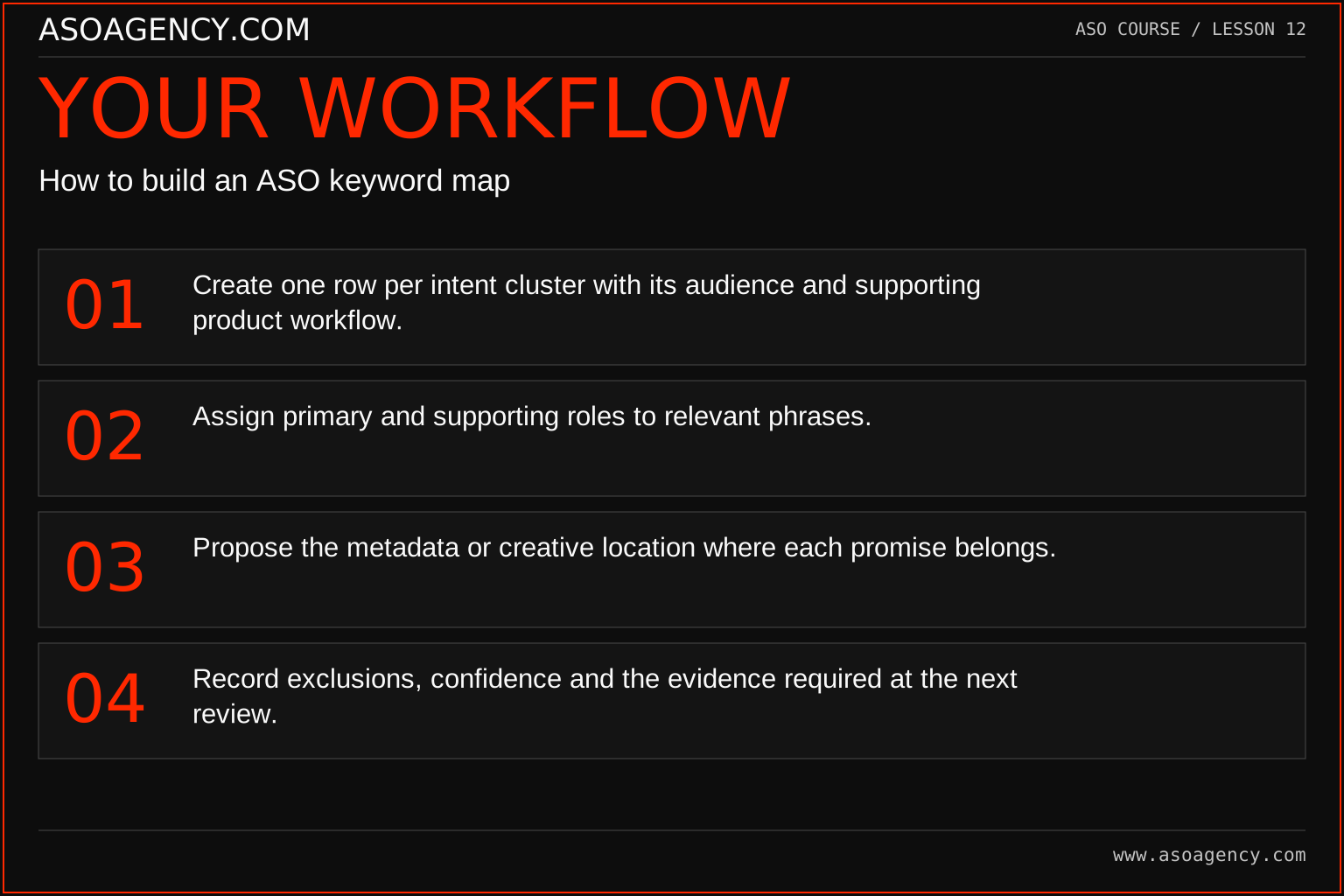
- Create one row per intent cluster with its audience and supporting product workflow.
- Assign primary and supporting roles to relevant phrases.
- Propose the metadata or creative location where each promise belongs.
- Record exclusions, confidence and the evidence required at the next review.
Worked example and interpretation
Trail Notes and numerical research scenarios are fictional teaching examples. Platform limits, where shown, come from the linked official references.
Trail Notes maps “hiking journal” to its core identity, “private walk diary” to a supporting benefit and “export walking memories” to a deeper workflow. The map connects each to a real screen and a draft message. Route-planning language is excluded. The next review will inspect query relevance where available and whether acquired users save a first journal, while acknowledging attribution gaps.
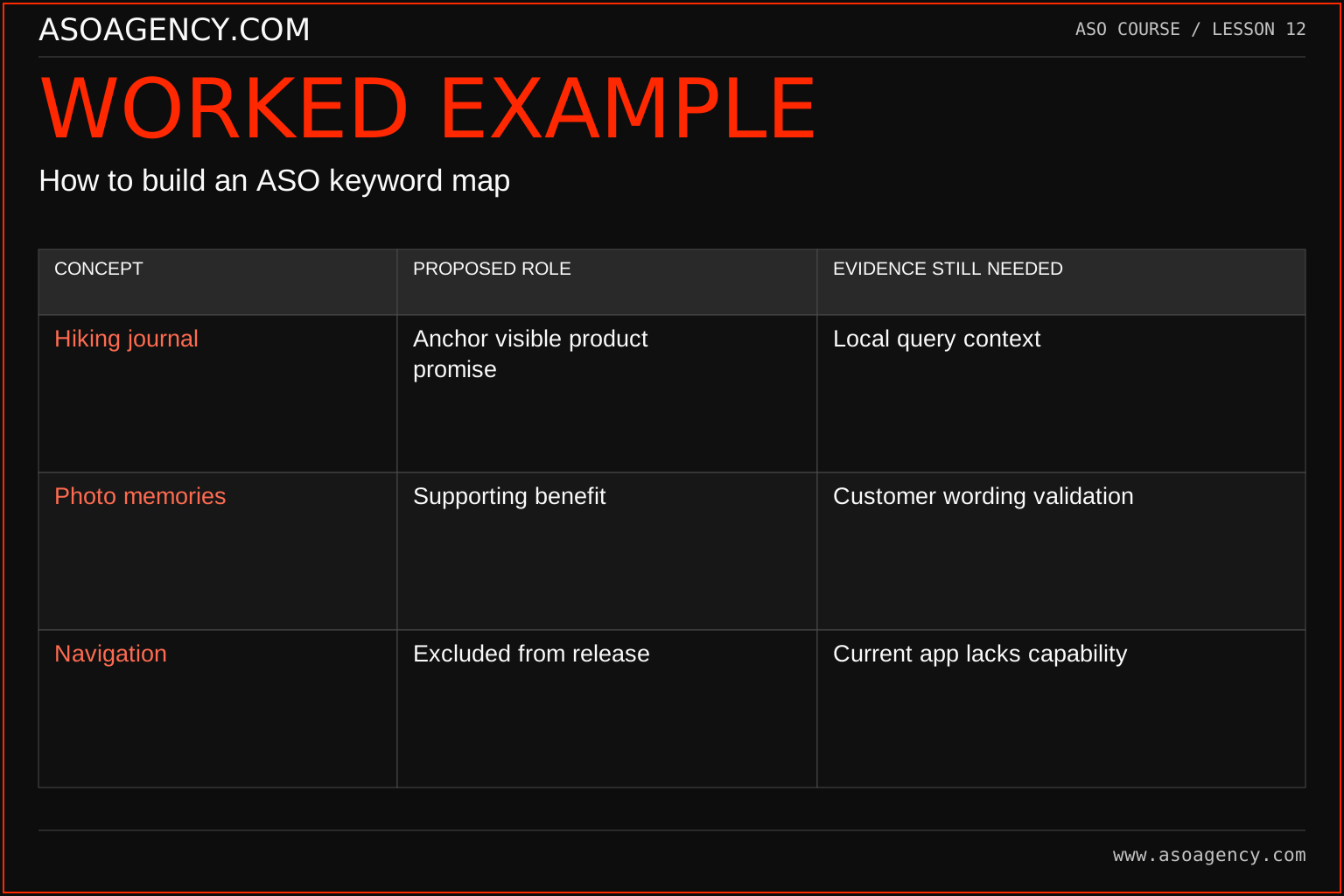
| Concept | Proposed role | Evidence still needed |
|---|---|---|
| Hiking journal | Anchor visible product promise | Local query context |
| Photo memories | Supporting benefit | Customer wording validation |
| Navigation | Excluded from release | Current app lacks capability |
This map organizes decisions without pretending that a term has proven commercial value. The anchor is a coherent product description; the supporting benefit needs language research; the excluded concept remains visible so it cannot accidentally reenter the draft. The handover should include both the full candidate history and the approved working shortlist. A copywriter needs to know which concepts are flexible and which product boundaries are fixed.
Build a handover someone can use
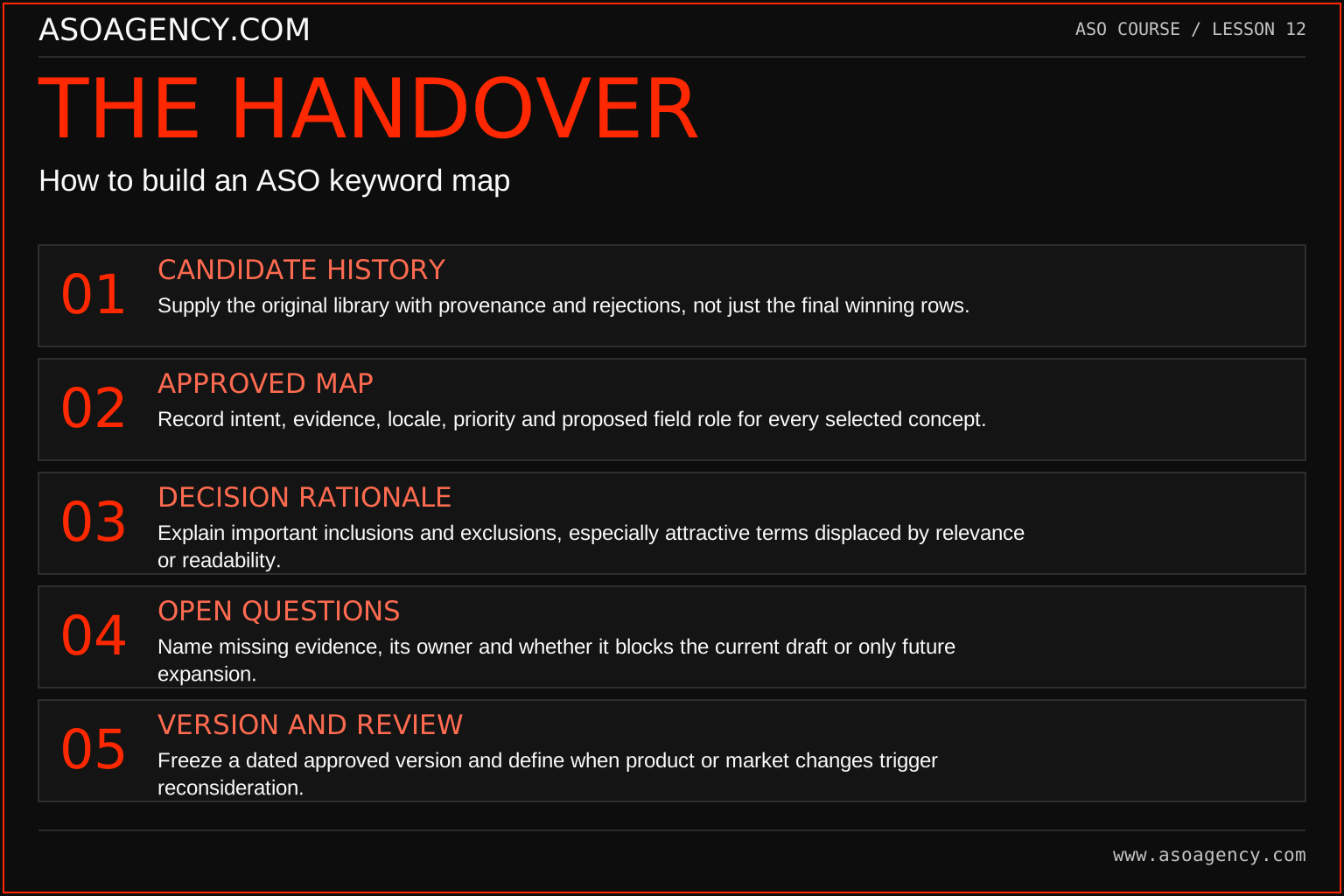
Candidate history
Supply the original library with provenance and rejections, not just the final winning rows.
Approved map
Record intent, evidence, locale, priority and proposed field role for every selected concept.
Decision rationale
Explain important inclusions and exclusions, especially attractive terms displaced by relevance or readability.
Open questions
Name missing evidence, its owner and whether it blocks the current draft or only future expansion.
Version and review
Freeze a dated approved version and define when product or market changes trigger reconsideration.
Your ASO assignment
Use your own app and evidence, or work through the teaching case. Keep your observations separate from assumptions and explain the reasoning behind your decisions.
- Build a map for five intent clusters.
- Write a plain-language rationale for the top two priorities.
- Ask a colleague to identify any promise they cannot verify in the app.
Scenario challenge
Hand your map to someone unfamiliar with the app. Ask them to explain the main promise and one rejected term. If they can only repeat a score, improve the rationale before proceeding to metadata production.
Assess your work
- Each target has both an audience reason and product evidence.
- The proposed listing communicates a coherent product identity.
- The map records how contradictory future evidence will be handled.
Common mistakes to catch
- Filling every available field before deciding what the app should mean.
- Treating a ranking increase as automatic proof of qualified acquisition.
Knowledge check
A term ranks better after a rewrite but brings complaints about a missing feature. Keep it?
Read the answer and reasoning
Reconsider its role and inspect the expectation mismatch. Improved visibility is not enough to justify misleading acquisition. Correct the promise, review the candidate’s intent and evaluate downstream quality with appropriately matched evidence. Preserve the lesson in the map so the same mistake is not repeated.
Sources and further reading
Platform references reviewed 29 September 2026. These sources support platform capabilities and constraints; the teaching frameworks, assignments and illustrative cases are original course material.
- Apple — App Store search — Search presentation, relevant keywords and metadata guidance.
- Google Play — Understand and grow your user base — Current listing-click reporting, completed acquisitions and segmentation.
Your ASO lesson notes
Use this space for your assignment, evidence and handover. Select Save to keep a draft in this browser, or download a copy to take with you.
Notes stay on this device and are not submitted to ASO Agency.
Complete your assignment with the App Store keyword-field builder.
Loading your progress…
Progress is saved only in this browser. It does not sync across devices. Mark a lesson complete after doing its exercise.