ASO course · lesson 14 of 60
ASO keyword difficulty and competitor assessment
Evaluate whether a relevant target is a sensible near-term investment without promising rankings.
By Gabriel Machuret · Editorial methodology
Before you start: A shortlist with intent and demand context.
Module 3: Keyword evaluation and strategy
Plan about 50 minutes for reading, practice and review
You will produce: A keyword portfolio with roles, competitive observations and review triggers.
Understand the decision
Difficulty is not one universal fact
Feasibility depends on the query, market, result set, app maturity and strength of competing propositions. Vendor difficulty scores compress some signals and omit others. Treat them as research aids. Examine whether visible apps satisfy the same job, whether the results are brand-heavy and whether your app offers a credible distinction that the listing can demonstrate.
Separate visibility opportunity from business opportunity
A term may look easier to rank for yet attract users who do not value the product. Conversely, a competitive term may accurately describe the app and belong in its identity even if near-term ranking gains are uncertain. Decide whether a candidate serves positioning, discovery exploration or a secondary use case. Different roles deserve different expectations and measurement.
Choose a portfolio of learning bets
Avoid allocating every field to the most competitive broad terms or only to obscure phrases. Build a small portfolio of strongly relevant core language and plausible supporting opportunities. Record what would justify expanding or retiring each target. This is a practical allocation method, not a statistical ranking model; its value is the explicit reasoning behind the tradeoffs.
Apply the method in practice
Inspect the result environment beyond brand size
For a relevant term, record the kinds of products currently visible, how directly they fulfill the task, their visible promises and any meaningful product differences. A large brand is not proof that competition is impossible; a small app is not proof that a term is easy. Review the actual intent and evidence. Keep observed facts separate from tool-generated difficulty estimates. A dated result snapshot can describe the environment you inspected but cannot establish the platform's ranking formula or predict where your app will appear.
Look for a credible reason to be chosen
Ask what your product demonstrates that matters to this searcher. A simpler journal workflow might be a real distinction; “better quality” without evidence is not. Map the difference to a released capability, then consider whether the listing can communicate it clearly. If the product is weaker for the central task, copy alone may not solve the competitive problem. The correct recommendation can be to focus on a narrower use case or improve the product before investing heavily in that query family.
Separate ability to test from probability of winning
Feasibility includes research access, production effort, available traffic and the ability to interpret results. A relevant opportunity may still be a poor immediate project if it requires an unbuilt feature or unavailable localization. Record those dependencies. Use coarse judgments with explanations rather than a spurious universal difficulty threshold. A useful conclusion might be “worth a limited test once the local reviewer confirms intent,” which is more operational than assigning a precise success probability without a validated model.
Platform references for this work: Apple — App Store search
Your step-by-step procedure
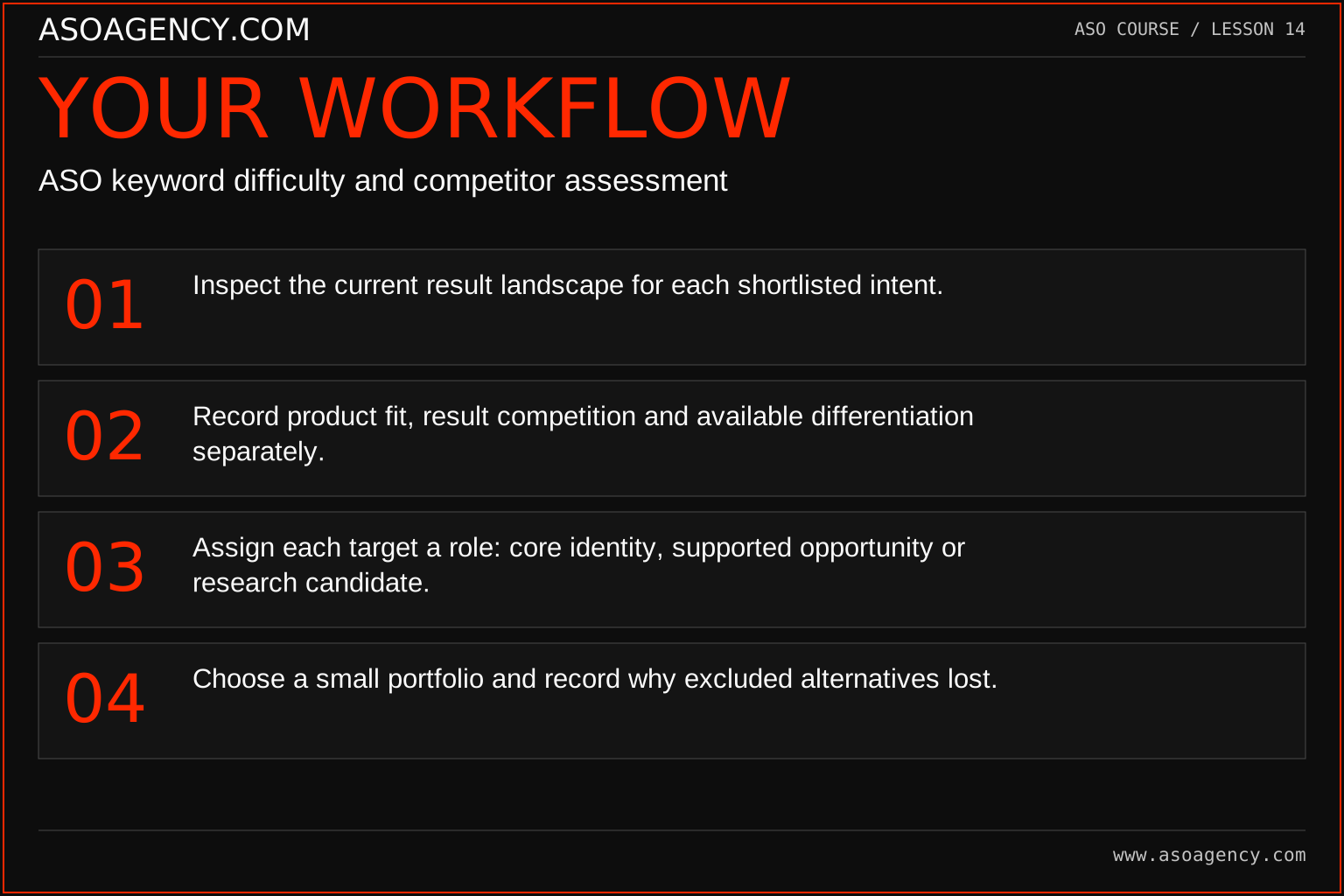
- Inspect the current result landscape for each shortlisted intent.
- Record product fit, result competition and available differentiation separately.
- Assign each target a role: core identity, supported opportunity or research candidate.
- Choose a small portfolio and record why excluded alternatives lost.
Worked example and interpretation
Trail Notes and numerical research scenarios are fictional teaching examples. Platform limits, where shown, come from the linked official references.
Trail Notes keeps “hiking journal” as core identity despite established competitors. It explores “walk diary” as supporting language because it matches a simpler user job. A low-scored phrase about delivery tracking is excluded regardless of apparent ease. The team’s rationale remains useful even if a vendor later changes its difficulty score, because the product and audience assumptions are visible.
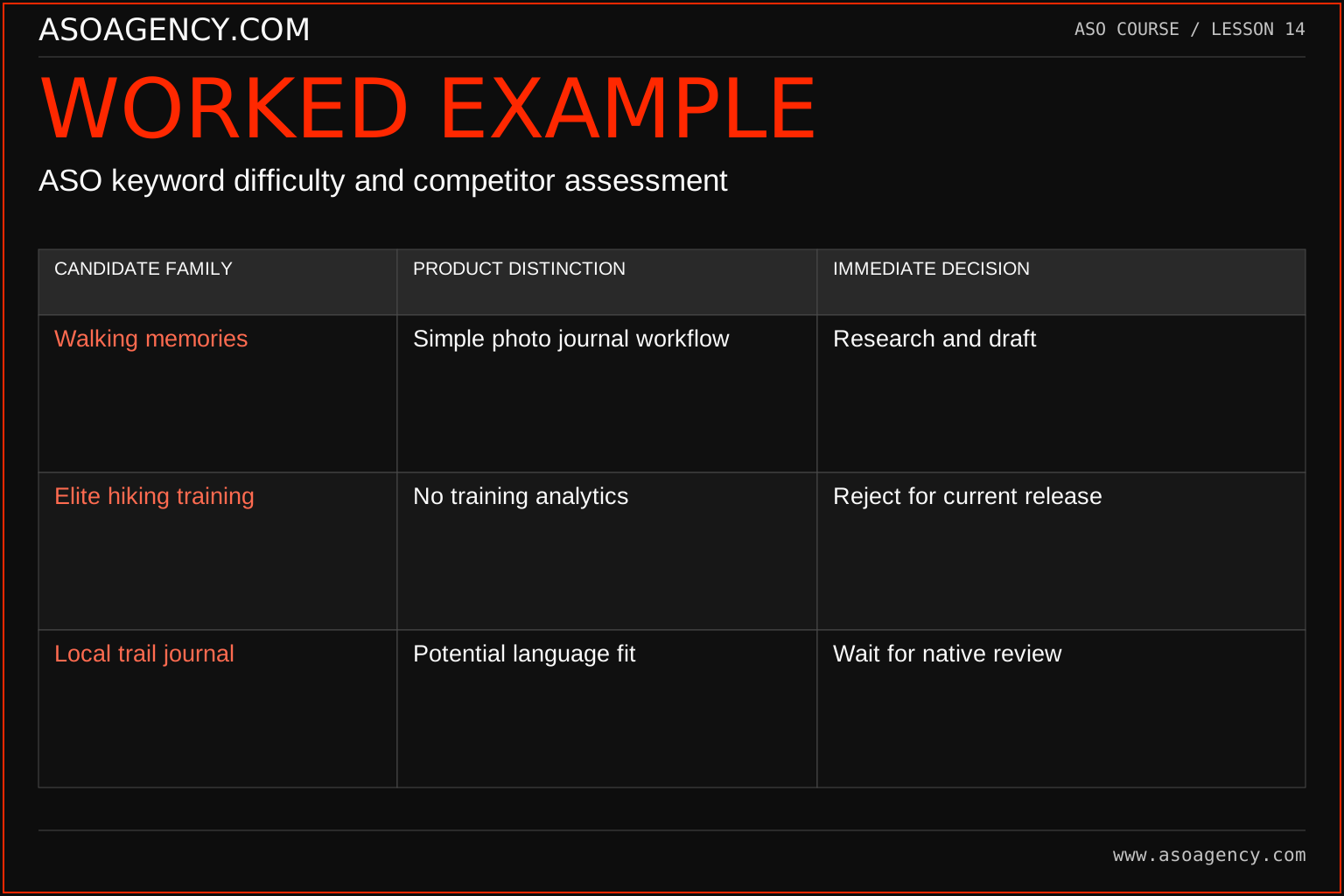
| Candidate family | Product distinction | Immediate decision |
|---|---|---|
| Walking memories | Simple photo journal workflow | Research and draft |
| Elite hiking training | No training analytics | Reject for current release |
| Local trail journal | Potential language fit | Wait for native review |
The first opportunity has a demonstrable reason to investigate, not a guarantee of ranking. The second fails because the central task is unsupported. The third has a dependency rather than an inherently negative verdict. This prevents “competition” from becoming a catch-all explanation for unrelated product, language and measurement constraints. Each decision should name the specific barrier and the evidence or capability that could change it.
Build a handover someone can use
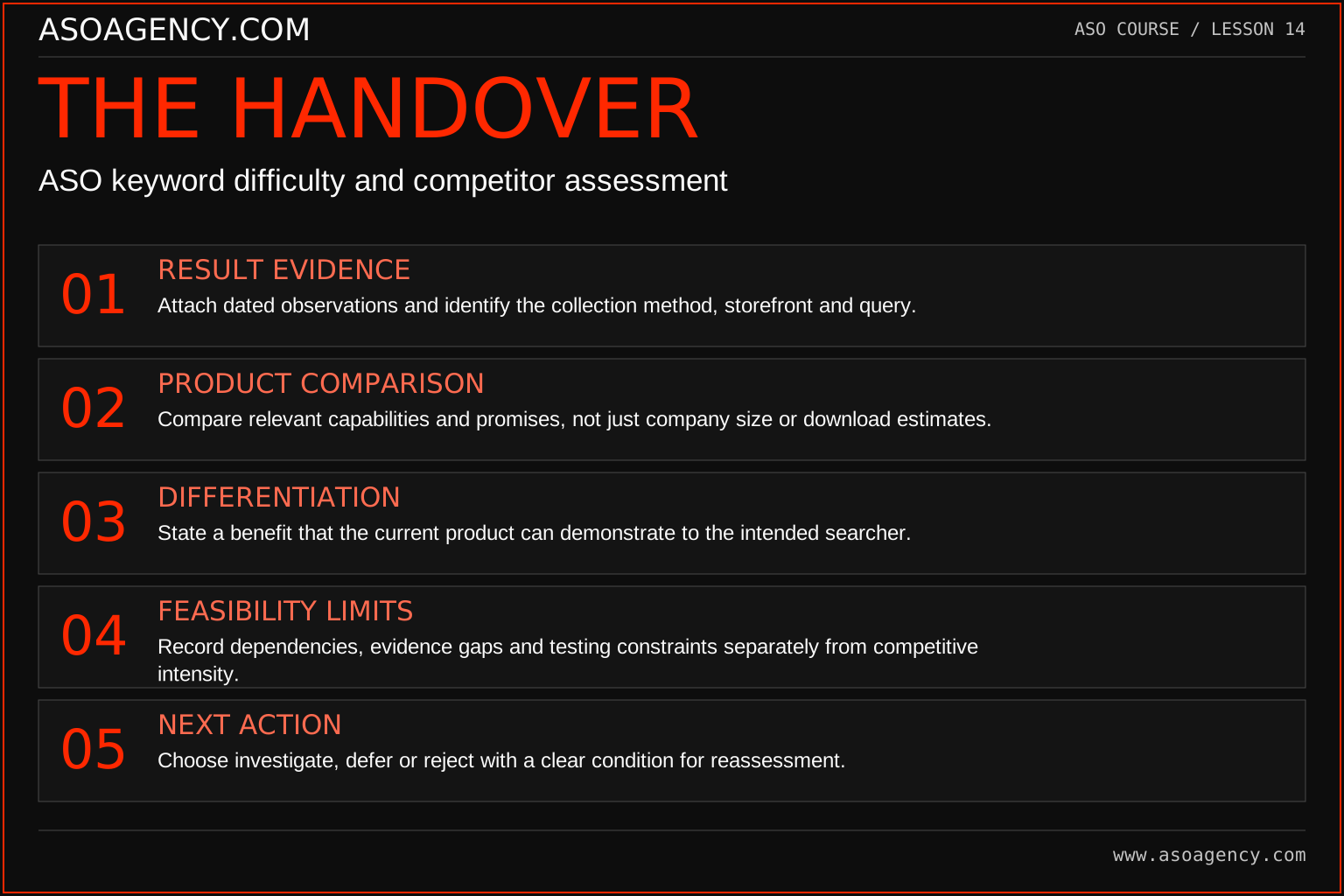
Result evidence
Attach dated observations and identify the collection method, storefront and query.
Product comparison
Compare relevant capabilities and promises, not just company size or download estimates.
Differentiation
State a benefit that the current product can demonstrate to the intended searcher.
Feasibility limits
Record dependencies, evidence gaps and testing constraints separately from competitive intensity.
Next action
Choose investigate, defer or reject with a clear condition for reassessment.
Your ASO assignment
Use your own app and evidence, or work through the teaching case. Keep your observations separate from assumptions and explain the reasoning behind your decisions.
- Evaluate six candidates using separate relevance and feasibility notes.
- Choose two core and two exploratory targets.
- Write what evidence would retire one exploratory target.
Scenario challenge
A difficulty tool labels a query easy, but every observed result serves navigation. Explain why the score does not override the product mismatch and propose a more suitable query family to inspect.
Assess your work
- Each selected target has a product-supported reason.
- Competitive evidence is dated and market-specific.
- No difficulty score is treated as a guarantee or universal truth.
Common mistakes to catch
- Equating low competition with valuable traffic.
- Abandoning accurate product language solely because a large app uses it.
Knowledge check
Should an easy but irrelevant query receive a scarce metadata slot?
Read the answer and reasoning
No. Scarce space should reinforce a truthful and useful product promise. Irrelevant visibility can create poor expectations and distract from qualified acquisition. Record the rejection so a later score update does not repeatedly reopen an already resolved product-fit question.
Sources and further reading
Platform references reviewed 29 September 2026. These sources support platform capabilities and constraints; the teaching frameworks, assignments and illustrative cases are original course material.
- Apple — App Store search — Search presentation, relevant keywords and metadata guidance.
Your ASO lesson notes
Use this space for your assignment, evidence and handover. Select Save to keep a draft in this browser, or download a copy to take with you.
Notes stay on this device and are not submitted to ASO Agency.
Complete your assignment with the App Store keyword-field builder.
Loading your progress…
Progress is saved only in this browser. It does not sync across devices. Mark a lesson complete after doing its exercise.