ASO course · lesson 9 of 60
App review analysis for ASO and customer research
Extract actionable themes from reviews while preserving sampling limits and product context.
By Gabriel Machuret · Editorial methodology
Before you start: A defined research question and public reviews you are permitted to examine.
Module 2: Audience and market research
Plan about 50 minutes for reading, practice and review
You will produce: A review-research memo that includes the sampling method and a traceable action list.
Understand the decision
Sampling shapes the conclusion
Recent negative reviews answer a different question from all reviews across several years. Choose a period, language, rating mix and version context before coding. Reviews are self-selected feedback, not a representative survey of every user. Preserve the sample boundaries so an emotionally vivid complaint does not become a claim about the entire customer base.
Use a simple coding scheme
Separate product defects, missing capabilities, confusing expectations, pricing concerns and praise for existing value. A review can receive more than one code. Keep a short supporting excerpt and an uncertainty note rather than replacing the evidence with a sentiment label. Count themes within the sample and record duplicates or updates so repeated messages do not inflate the result.
Route themes to the right owner
A broken login belongs with engineering and support. A visitor expecting navigation from a journaling app may indicate an acquisition-message problem. A loved export feature may suggest a screenshot idea. The ASO action is not always to change copy: sometimes the right response is to stop advertising a benefit until the product works reliably or to request better evidence.
Apply the method in practice
Define the sampling frame before reading for themes
Record which apps, markets, languages, ratings, versions and date range you will inspect. Include positive, neutral and negative experiences where available. Reading only dramatic one-star reviews exaggerates friction; reading only enthusiastic reviews hides it. Reviews are self-selected and cannot establish the prevalence of an issue among all users. Still, a clear account of a failed task can reveal an important mechanism. Preserve the sampling rule so a later reviewer understands whose experiences entered the analysis and whose did not.
Code meaning, severity and product context separately
Give each review a research ID and assign a theme such as navigation expectation, save failure, pricing surprise or useful memory keeping. Allow multiple themes when the text warrants them. Separate what the reviewer reports from what you can verify. A complaint about an old version may not describe the current app; a repeated save failure should be checked against product diagnostics. Keep severity separate from frequency: one credible loss-of-work report may warrant attention even when it appears only once in your sample.
Translate the themes into distinct workstreams
Language that describes desired value can feed keyword research. Confusion about the promise can inform screenshots. A reproducible defect belongs with engineering. Pricing surprise needs a comparison between the listing and actual offer. Do not respond to every negative theme by rewriting marketing copy. Keep representative excerpts short and contextual, with links or IDs to the source where appropriate. Before publishing a claim such as “users love our privacy,” verify what the reviews actually say and whether the product supports the broader implication.
Platform references for this work: Apple — Ratings and reviews · Android Developers — Android vitals
Your step-by-step procedure
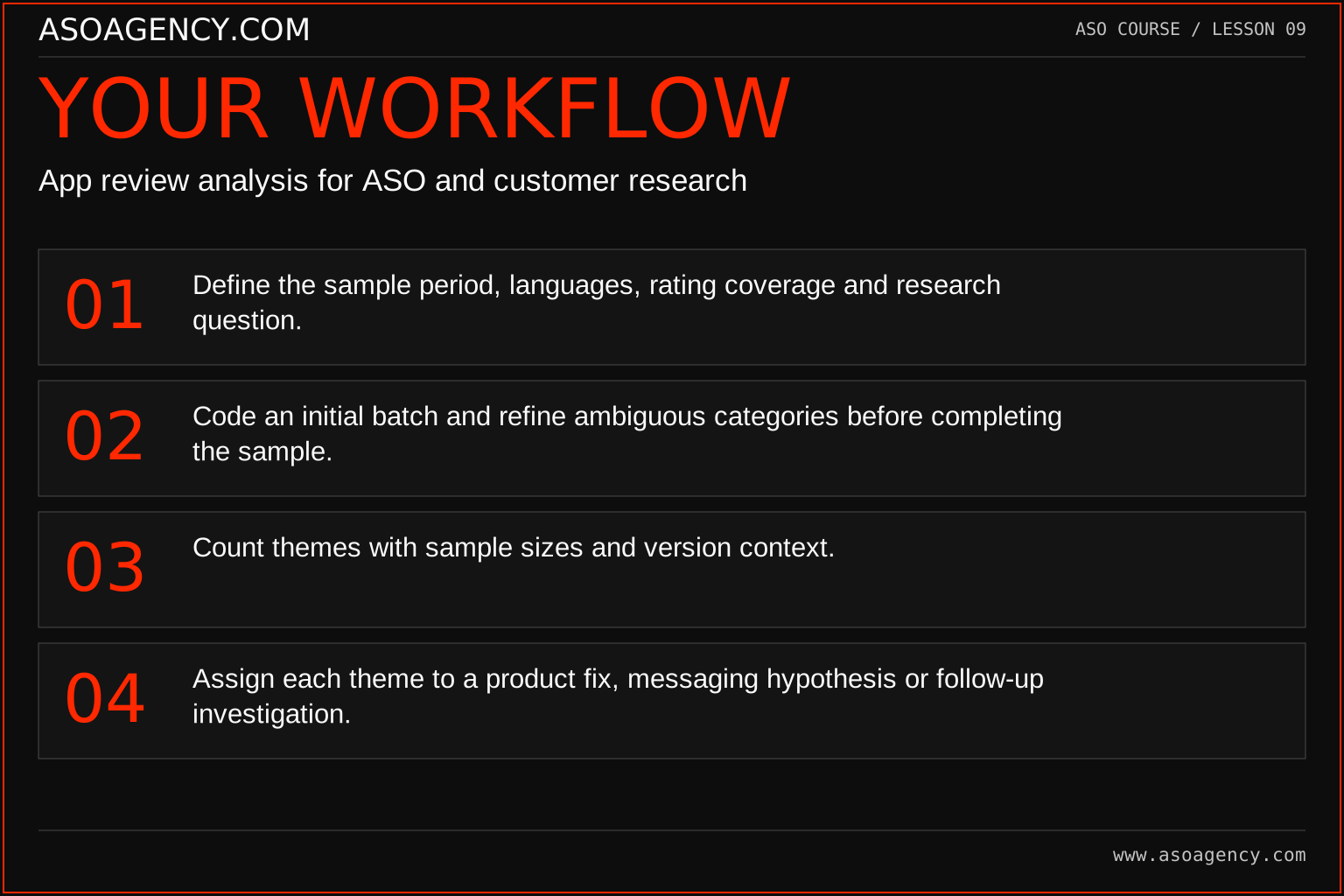
- Define the sample period, languages, rating coverage and research question.
- Code an initial batch and refine ambiguous categories before completing the sample.
- Count themes with sample sizes and version context.
- Assign each theme to a product fix, messaging hypothesis or follow-up investigation.
Worked example and interpretation
Trail Notes and numerical research scenarios are fictional teaching examples. Platform limits, where shown, come from the linked official references.
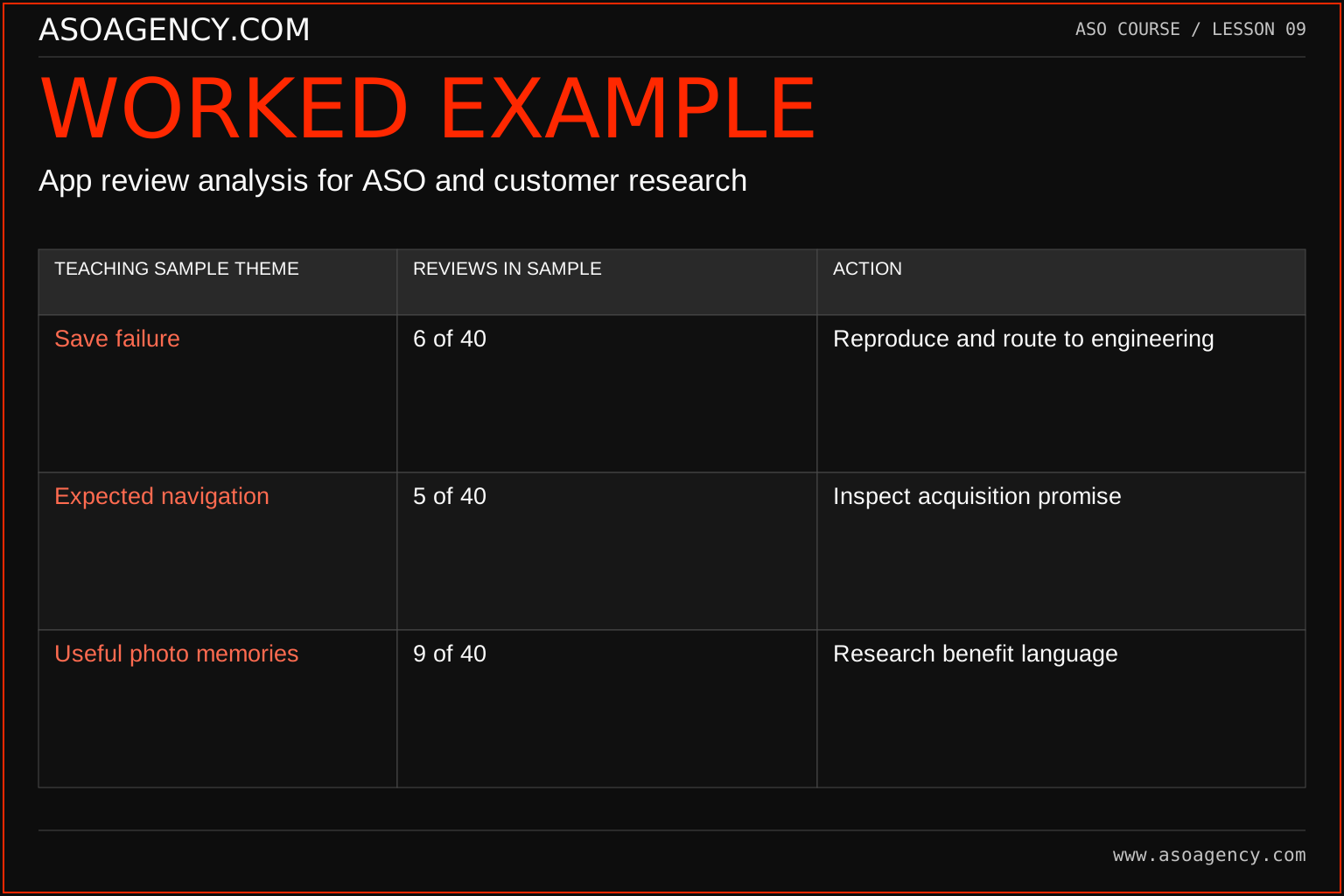
In a fictional sample of 40 Trail Notes reviews, six mention save failures, five mention missing navigation and nine describe useful photo memories. Themes can overlap. These counts describe the selected reviews, not the prevalence of experiences among all users. The analyst routes the themes to engineering, message research and benefit-language research respectively.
| Teaching sample theme | Reviews in sample | Action |
|---|---|---|
| Save failure | 6 of 40 | Reproduce and route to engineering |
| Expected navigation | 5 of 40 | Inspect acquisition promise |
| Useful photo memories | 9 of 40 | Research benefit language |
These constructed counts describe only this 40-review sample; themes may overlap. They are not percentages of the user base and should not be presented as a survey. The save-failure theme may need urgent investigation because of its consequence. The navigation theme suggests an expectation question. The positive memory theme gives language to explore, but it does not establish that the phrase has store-search demand. Each category produces a different next action.
Build a handover someone can use
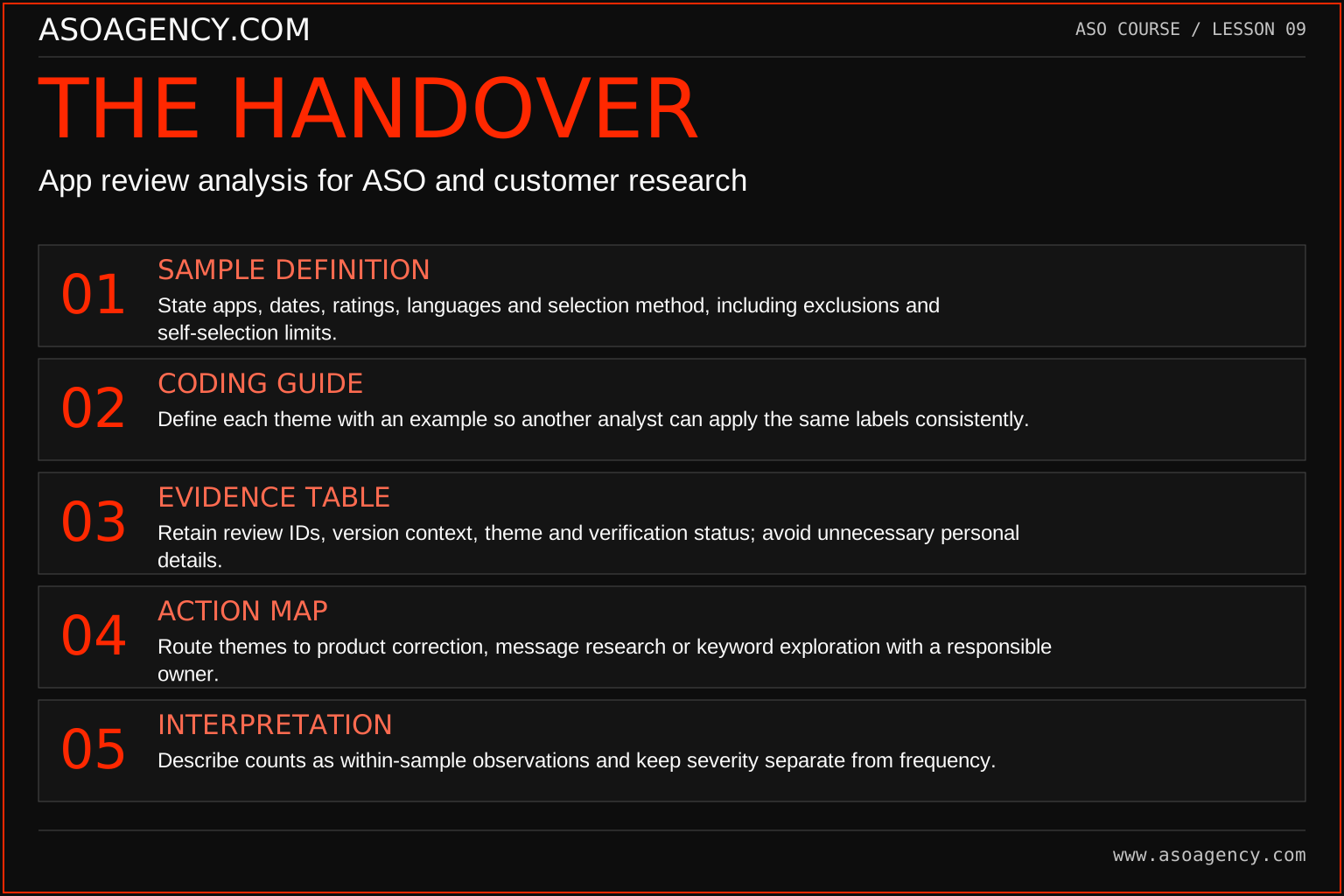
Sample definition
State apps, dates, ratings, languages and selection method, including exclusions and self-selection limits.
Coding guide
Define each theme with an example so another analyst can apply the same labels consistently.
Evidence table
Retain review IDs, version context, theme and verification status; avoid unnecessary personal details.
Action map
Route themes to product correction, message research or keyword exploration with a responsible owner.
Interpretation
Describe counts as within-sample observations and keep severity separate from frequency.
Your ASO assignment
Use your own app and evidence, or work through the teaching case. Keep your observations separate from assumptions and explain the reasoning behind your decisions.
- Code 20 real public reviews or a clearly labeled practice set.
- Create a theme table with counts, excerpts, limitations and owners.
- Propose one messaging action and one non-ASO action.
Scenario challenge
A report says “15% of users cannot save journals” because six of 40 sampled reviews mention saving. Rewrite the claim accurately and explain what additional evidence would be needed to estimate the affected-user rate.
Assess your work
- The sample can be reconstructed from the notes.
- Theme counts do not imply population prevalence.
- Suggested actions match the type of problem observed.
Common mistakes to catch
- Filtering only for reviews that support the desired positioning.
- Publishing identifying customer details unnecessarily.
Knowledge check
Most recent complaints concern a crash. Should you rewrite screenshots first?
Read the answer and reasoning
Investigate and route the crash evidence to the product team, noting version and device context. A new screenshot cannot repair a broken experience. Listing work may continue on unrelated accuracy issues, but acquisition expansion should account for the unresolved product problem.
Sources and further reading
Platform references reviewed 29 September 2026. These sources support platform capabilities and constraints; the teaching frameworks, assignments and illustrative cases are original course material.
- Apple — Ratings and reviews — Review requests, responses and user-feedback practices.
- Android Developers — Android vitals — Product-quality monitoring and Android performance signals.
Your ASO lesson notes
Use this space for your assignment, evidence and handover. Select Save to keep a draft in this browser, or download a copy to take with you.
Notes stay on this device and are not submitted to ASO Agency.
Complete your assignment with the Interactive ASO audit checklist.
Loading your progress…
Progress is saved only in this browser. It does not sync across devices. Mark a lesson complete after doing its exercise.