ASO course · lesson 8 of 60
ASO competitor analysis: research app store results
Build a dated competitor set that reflects the search problem rather than only business rivals.
By Gabriel Machuret · Editorial methodology
Before you start: Initial customer-language candidates and a defined storefront.
Module 2: Audience and market research
Plan about 50 minutes for reading, practice and review
You will produce: A dated search-landscape map and proposition comparison.
Understand the decision
Competition depends on the query
Your commercial competitor may not be the app a searcher sees beside you. A hiking journal could compete with diaries, route planners or fitness logs depending on the query. Research a few distinct intents and record which product types appear. The goal is to understand the choice a visitor faces, not to compile the longest possible list of famous brands.
Capture observations carefully
Record query, store, market, device context and observation date. Distinguish ads from other results and avoid presenting one manual observation as a stable universal rank. Results can change and the observer’s context may matter. Where a tool supplies ranking data, record its method and market coverage. Public visibility is evidence of an observed result, not proof of a competitor’s installs or revenue.
Compare propositions rather than copy
For each relevant competitor, examine its primary promise, supporting evidence, audience and obvious exclusions. Note what a visitor would understand quickly and what remains ambiguous. Then identify an opportunity grounded in your product, such as a clearer private-journal use case. Copying a successful-looking title does not transfer the product, demand or brand recognition behind it.
Apply the method in practice
Distinguish business rivals from search alternatives
A company selling a similar subscription is not necessarily the main alternative shown for your target query. Start with the query, target storefront and language, then record the visible results. A notes app or photo journal may compete for a memory-keeping search even if the business considers navigation brands its rivals. Record why each result belongs in the comparison: shared intent, similar capability or a misleading overlap. This produces a task-specific competitor set instead of copying a list of famous companies into every research project.
Capture results in a repeatable way
Record exact query spelling, date, storefront, device or interface and observed result type. Distinguish paid placements from other results where they are identifiable. Save a capture that shows enough context to verify the observation. Search order can vary, so one observation is a dated snapshot rather than a permanent fact. Use a consistent collection method for later comparisons and note changes in that method. Do not treat an estimated rank from one tool as interchangeable with a manually observed position from another environment.
Analyze what the result teaches about intent
Read the visible promise and inspect the product rather than assuming a ranking proves relevance. Compare audience, core task, pricing context and proof shown in creative. Identify repeated patterns and meaningful exceptions. If a query mostly returns navigation products, investigate whether its common meaning conflicts with your journal. That is evidence about the result environment, not proof that a journal can never appear. Keep the decision proportional: deprioritize a weak fit, clarify the product promise or gather additional local evidence before using scarce metadata space.
Platform references for this work: Apple — App Store search
Your step-by-step procedure
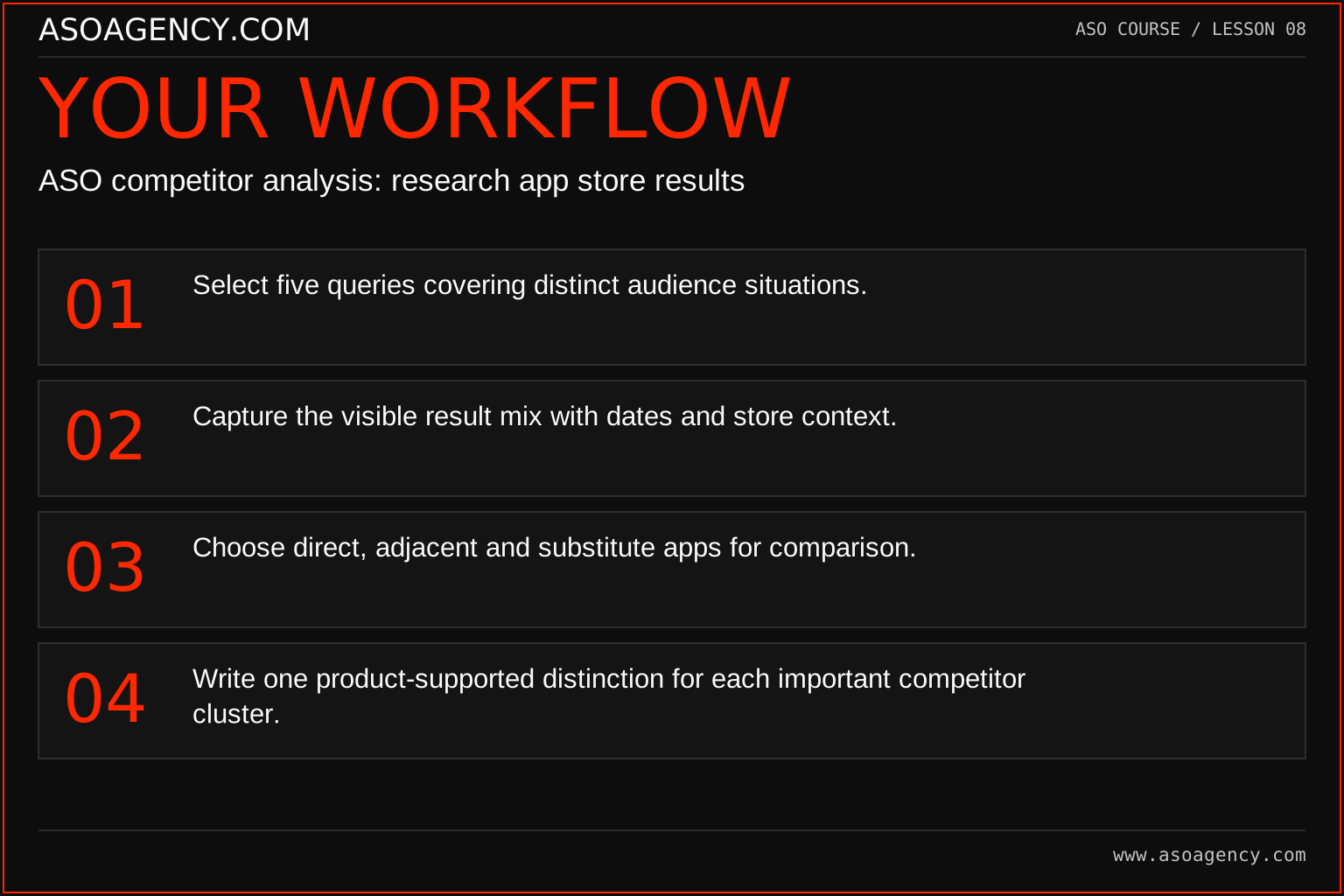
- Select five queries covering distinct audience situations.
- Capture the visible result mix with dates and store context.
- Choose direct, adjacent and substitute apps for comparison.
- Write one product-supported distinction for each important competitor cluster.
Worked example and interpretation
Trail Notes and numerical research scenarios are fictional teaching examples. Platform limits, where shown, come from the linked official references.
For “hiking journal,” Trail Notes encounters journals and outdoor logs. For “hiking maps,” route-navigation products dominate the observed set. Rather than calling those products easy keyword opportunities, the analyst records an intent mismatch. The competitive brief prioritizes journaling language and uses the map results to explain why broad outdoor terms may attract expectations the product cannot meet.
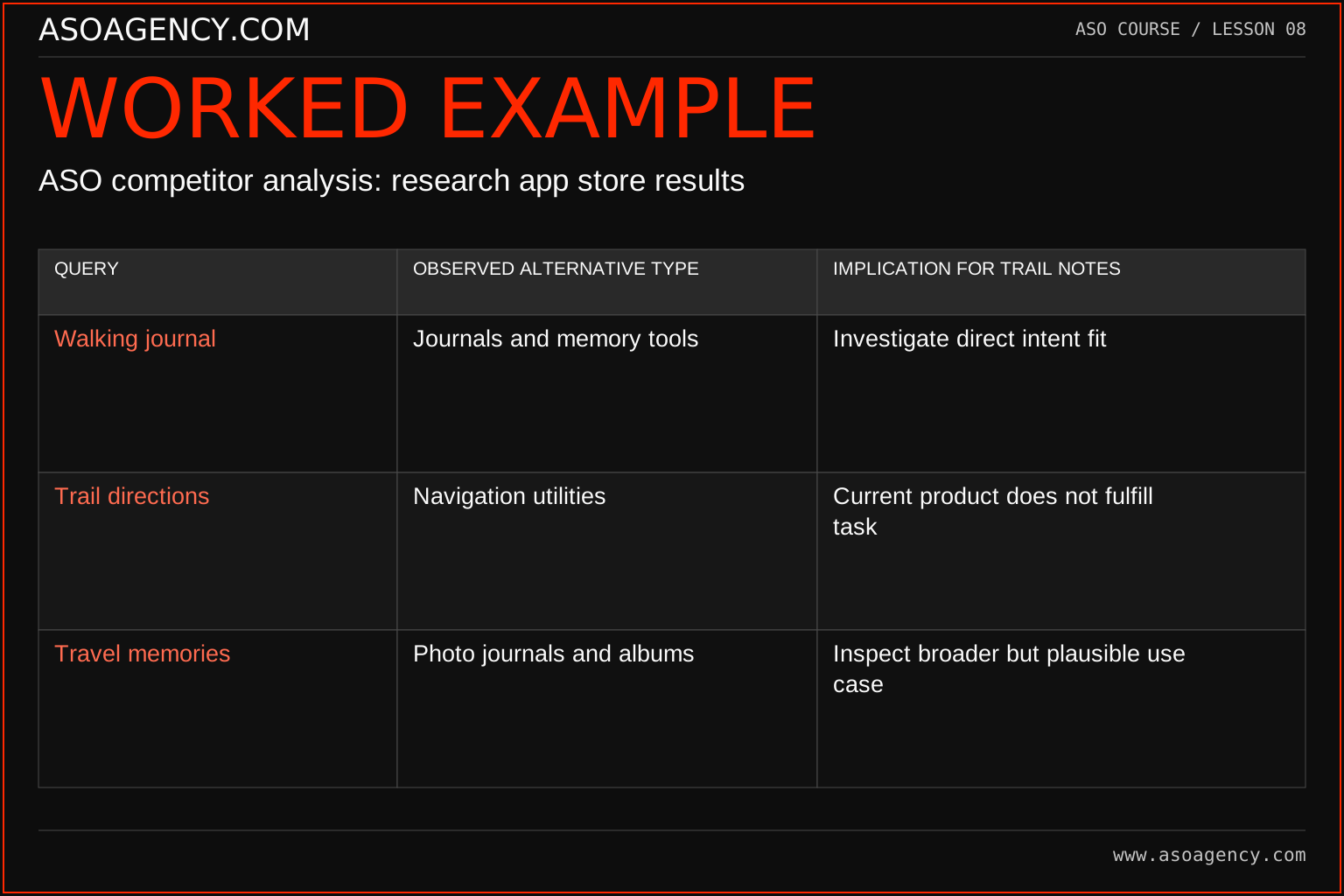
| Query | Observed alternative type | Implication for Trail Notes |
|---|---|---|
| Walking journal | Journals and memory tools | Investigate direct intent fit |
| Trail directions | Navigation utilities | Current product does not fulfill task |
| Travel memories | Photo journals and albums | Inspect broader but plausible use case |
This table is a fictional research example, not a live ranking report. It shows why different queries require different comparison sets. The travel-memory family may be relevant but broader than walking, so it needs product and audience evidence before displacing a more specific term. A professional report would attach dated captures to each row and keep the observation separate from the recommendation. Never convert a competitor's visible downloads estimate into a claim about the performance of your own listing.
Build a handover someone can use
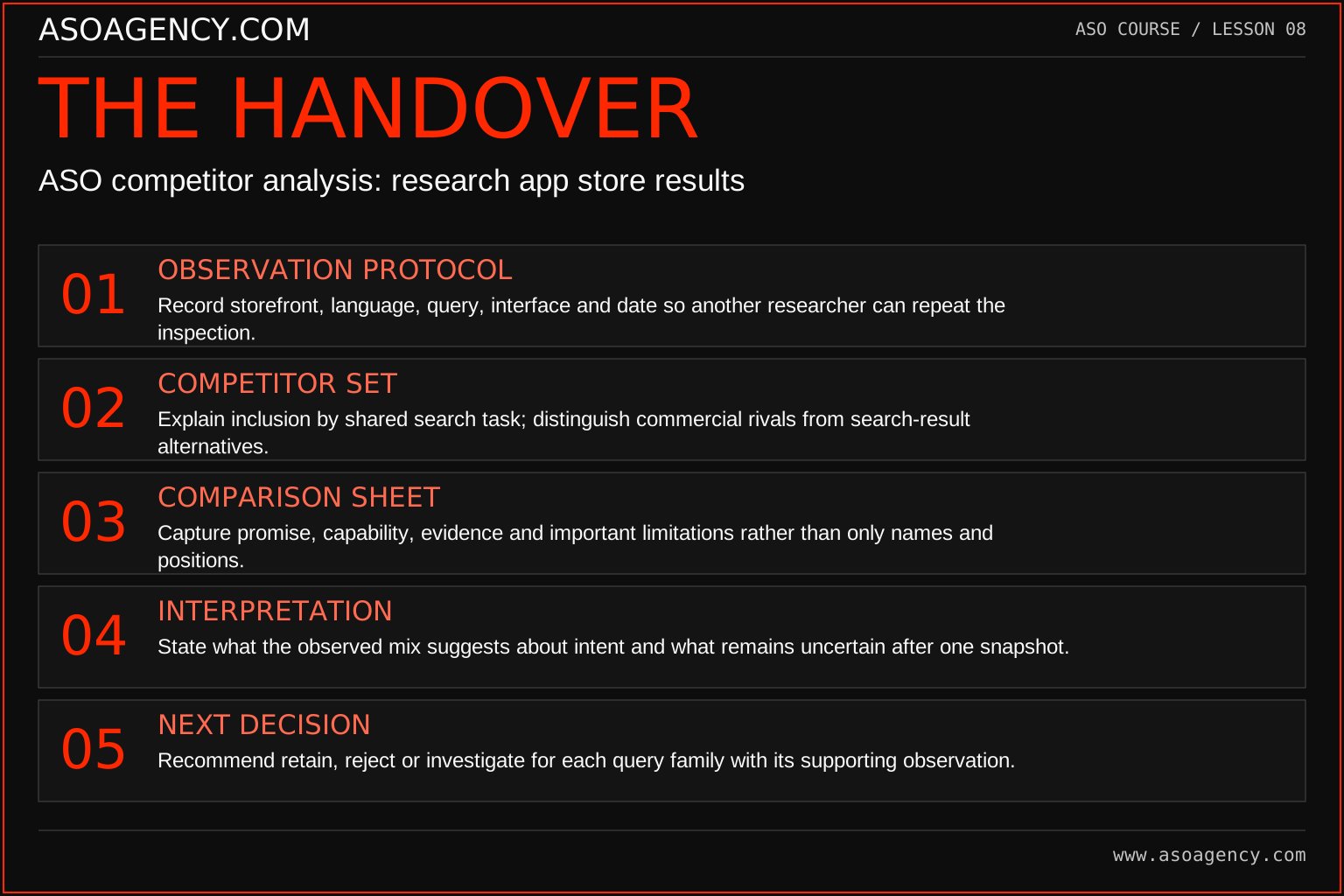
Observation protocol
Record storefront, language, query, interface and date so another researcher can repeat the inspection.
Competitor set
Explain inclusion by shared search task; distinguish commercial rivals from search-result alternatives.
Comparison sheet
Capture promise, capability, evidence and important limitations rather than only names and positions.
Interpretation
State what the observed mix suggests about intent and what remains uncertain after one snapshot.
Next decision
Recommend retain, reject or investigate for each query family with its supporting observation.
Your ASO assignment
Use your own app and evidence, or work through the teaching case. Keep your observations separate from assumptions and explain the reasoning behind your decisions.
- Create a research table for five queries and their observed app types.
- Compare three competing propositions using only visible evidence.
- Write a differentiation statement with a real product demonstration behind it.
Scenario challenge
Your company names three major navigation apps as competitors. For a journal-focused query, a photo diary appears prominently instead. Explain why it belongs in the search comparison even though it is not a direct business rival.
Assess your work
- Ads and non-ad observations are distinguished.
- Competitors are selected by user choice and intent.
- No private performance estimate is presented as an observed fact.
Common mistakes to catch
- Assuming a top result’s metadata caused its position.
- Copying a title without checking audience fit or brand rights.
Knowledge check
A large brand appears for your target query. Does that make the query impossible?
Read the answer and reasoning
Not necessarily. Investigate the full result set, product fit, audience specificity and available evidence. The brand is one feasibility signal, not a complete difficulty model. A narrower relevant intent may offer a better learning opportunity even when the broad query is competitive.
Sources and further reading
Platform references reviewed 29 September 2026. These sources support platform capabilities and constraints; the teaching frameworks, assignments and illustrative cases are original course material.
- Apple — App Store search — Search presentation, relevant keywords and metadata guidance.
Your ASO lesson notes
Use this space for your assignment, evidence and handover. Select Save to keep a draft in this browser, or download a copy to take with you.
Notes stay on this device and are not submitted to ASO Agency.
Complete your assignment with the Interactive ASO audit checklist.
Loading your progress…
Progress is saved only in this browser. It does not sync across devices. Mark a lesson complete after doing its exercise.