ASO course · lesson 26 of 60
Google Play title and short description optimization
Create a concise Play identity and benefit statement that remain accurate when read together.
By Gabriel Machuret · Editorial methodology
Before you start: The Play field matrix and primary audience proposition.
Module 5: Google Play execution
Plan about 50 minutes for reading, practice and review
You will produce: An approved-ready Play name and short description with alternatives and rationale.
Understand the decision
Give each field a different job
The app name establishes identity; the short description provides a compact reason to care. Current Play guidance sets 30 characters for the name and 80 for the short description. These are ceilings, not targets. Draft the meaning first, then shorten while preserving the supported use case and any qualification necessary to prevent misunderstanding.
Write benefits with concrete nouns and verbs
“Capture notes from every walk” tells a visitor more than “the ultimate outdoor experience.” Replace vague superlatives with recognizable actions and outcomes. Avoid stuffing a list of loosely related activities into the short description. When several audiences matter, choose the primary promise deliberately and address secondary workflows in the fuller explanation or a justified targeted listing.
Compare alternatives systematically
Draft several alternatives that vary one strategic emphasis: private memories, organized journals or easy capture. Score them against product truth and comprehension rather than personal taste alone. Read the selected pair with the icon and opening screenshot. If people infer navigation or exercise coaching from a journal app, the compressed language needs another pass.
Apply the method in practice
Write a task a suitable user can recognize
Lead with the core use case and a meaningful benefit. For Trail Notes, recording walking memories is a clearer direction than a collection of broad travel and fitness terms. The short description should add useful context to the name rather than mechanically repeating it. Check that each word earns its space by clarifying the product or its value. Avoid unsupported superiority claims and promotional wording that conflicts with current Google Play metadata policy. The goal is a truthful, understandable choice for the intended audience.
Evaluate alternatives through interpretation
Draft multiple versions that emphasize different supported benefits. Ask readers what they expect to do in the app and what conditions they infer. A line can sound appealing while creating the wrong expectation about maps, offline behavior or free access. Record those interpretations and revise the source of ambiguity. Do not infer conversion uplift from a small preference exercise. It is a comprehension check that helps prepare a better hypothesis for later experimentation, not a substitute for a controlled result.
Check exact strings in their visual context
The app name allows up to 30 characters and the short description up to 80 under current guidance. Count the final text including spaces and punctuation, then preview it with the icon and opening screenshots. Localization can change both length and emphasis. If shortening is necessary, preserve the core meaning and important qualifications. Keep the approved version and the reason for choosing it so later edits do not reintroduce an abandoned unsupported promise.
Platform references for this work: Google Play — Create and set up your app · Google Play — Metadata policy
Your step-by-step procedure
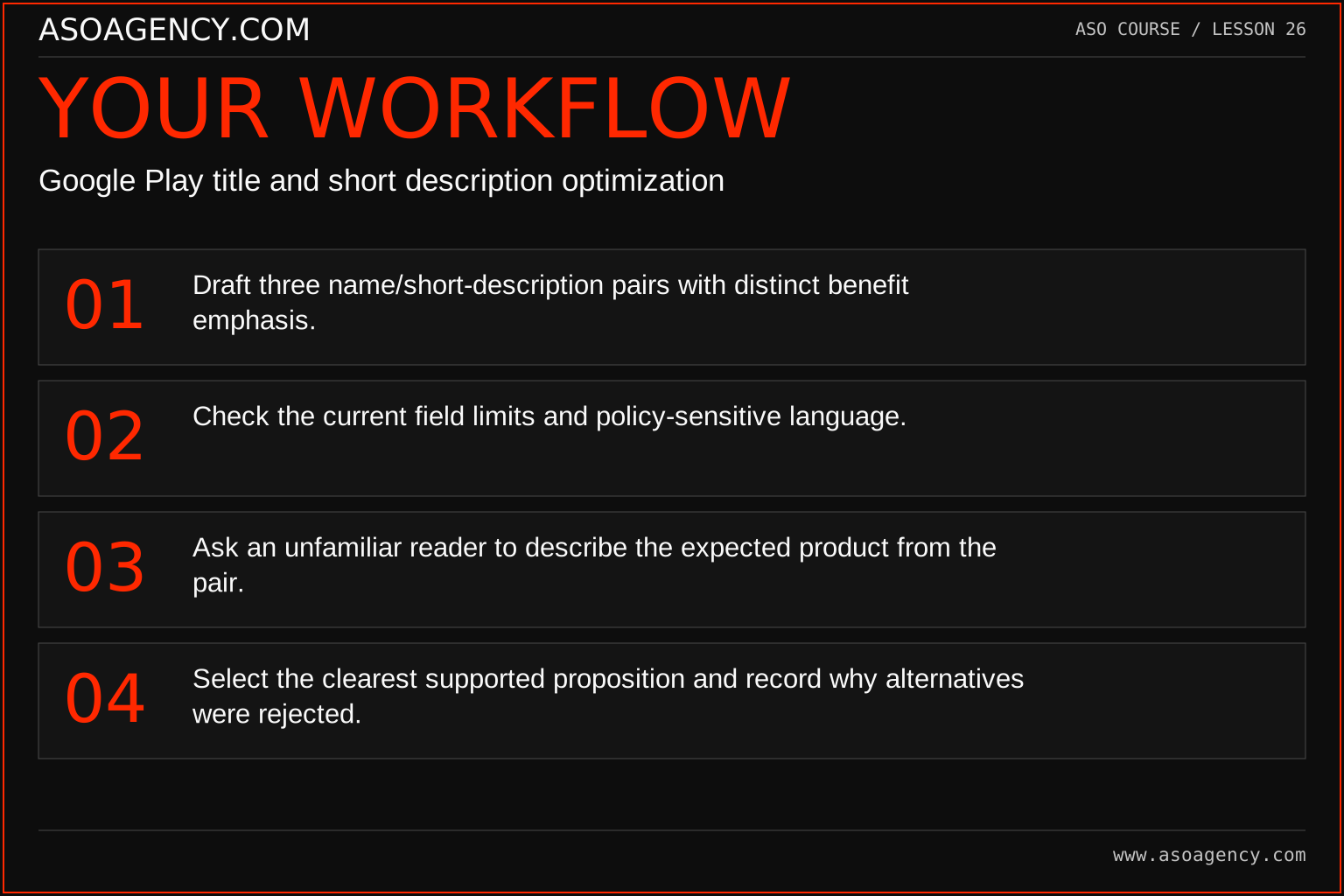
- Draft three name/short-description pairs with distinct benefit emphasis.
- Check the current field limits and policy-sensitive language.
- Ask an unfamiliar reader to describe the expected product from the pair.
- Select the clearest supported proposition and record why alternatives were rejected.
Worked example and interpretation
Trail Notes and numerical research scenarios are fictional teaching examples. Platform limits, where shown, come from the linked official references.
Trail Notes pairs its recognizable journal name with “Save notes and memories from your walks.” Another draft lists hiking, maps, fitness, travel and GPS. The latter covers more words but creates several unsupported expectations. The chosen copy is shorter and more focused; the decision does not claim that brevity itself is an algorithmic advantage or guarantees a conversion increase.
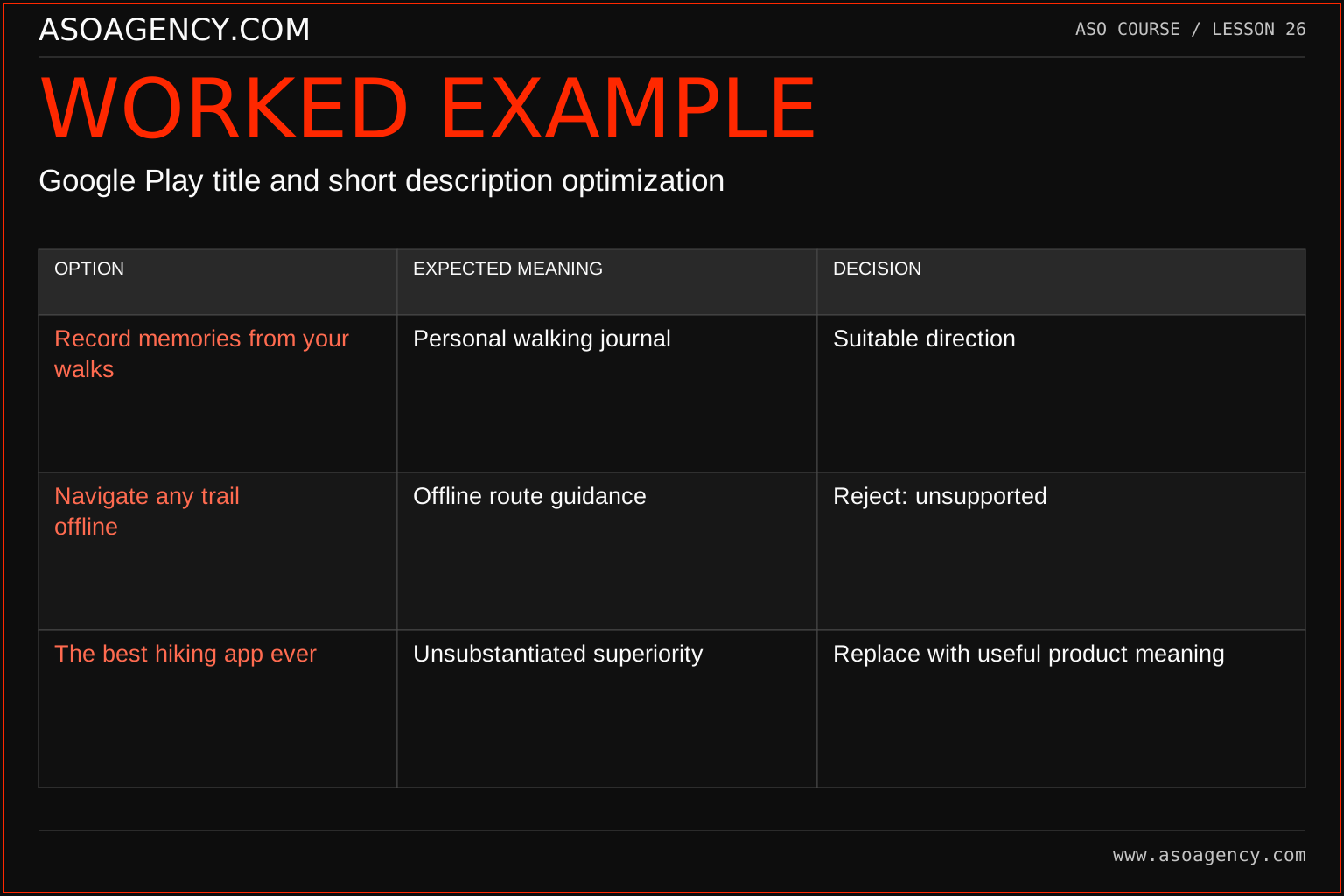
| Option | Expected meaning | Decision |
|---|---|---|
| Record memories from your walks | Personal walking journal | Suitable direction |
| Navigate any trail offline | Offline route guidance | Reject: unsupported |
| The best hiking app ever | Unsubstantiated superiority | Replace with useful product meaning |
The suitable direction still needs exact drafting, local review and console validation. It is not a proven high-converting line. The two rejected directions fail for different reasons: one promises missing functionality; the other uses an unsupported claim instead of explaining the product. Keeping those reasons separate helps the writer improve the draft rather than simply searching for a more persuasive adjective.
Build a handover someone can use
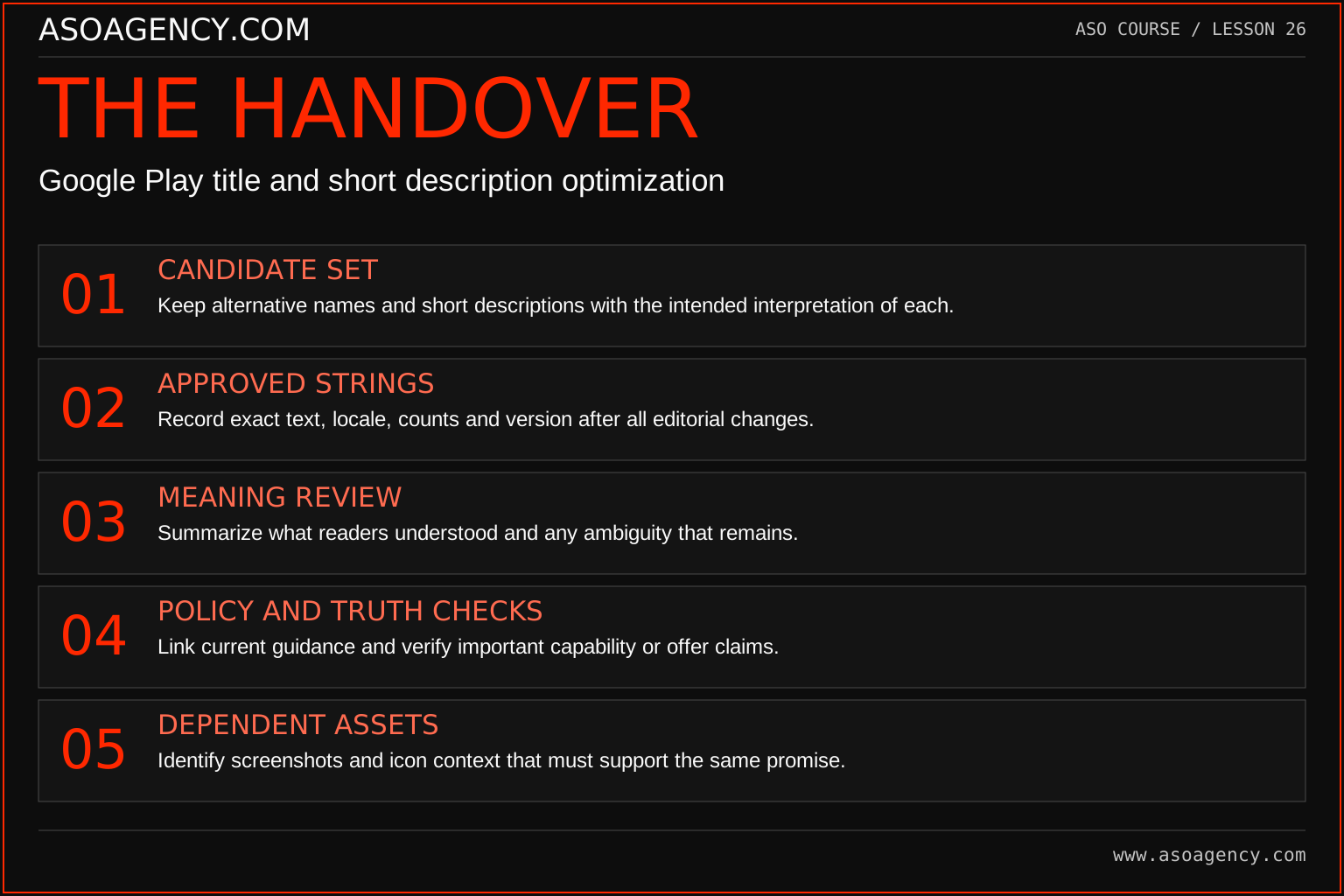
Candidate set
Keep alternative names and short descriptions with the intended interpretation of each.
Approved strings
Record exact text, locale, counts and version after all editorial changes.
Meaning review
Summarize what readers understood and any ambiguity that remains.
Policy and truth checks
Link current guidance and verify important capability or offer claims.
Dependent assets
Identify screenshots and icon context that must support the same promise.
Your ASO assignment
Use your own app and evidence, or work through the teaching case. Keep your observations separate from assumptions and explain the reasoning behind your decisions.
- Produce three alternatives for your target locale.
- Record one likely misunderstanding for each draft.
- Submit a selected pair with a product-proof note.
Scenario challenge
Rewrite a short description that says “GPS, diary, maps, fitness, travel, best hiking.” Retain only concepts the journal actually supports and explain what the new sentence helps the user understand.
Assess your work
- The short description adds meaningful value beyond the name.
- The expected product matches the current app.
- No unsupported promotional ranking or performance claim is introduced.
Common mistakes to catch
- Using every available character at the expense of readability.
- Assuming a high-demand word is harmless when it changes the expected product.
Knowledge check
A draft uses all 80 characters but sounds like a list. What is the next edit?
Read the answer and reasoning
Choose the central job and rewrite the sentence around it. Remove secondary concepts that obscure the promise rather than compressing them further with punctuation. Keep an explanation of the discarded terms in the keyword map so the strategic tradeoff remains visible.
Sources and further reading
Platform references reviewed 29 September 2026. These sources support platform capabilities and constraints; the teaching frameworks, assignments and illustrative cases are original course material.
- Google Play — Create and set up your app — Listing fields, language and text limits.
- Google Play — Metadata policy — Accurate, relevant metadata and prohibited presentation.
Your ASO lesson notes
Use this space for your assignment, evidence and handover. Select Save to keep a draft in this browser, or download a copy to take with you.
Notes stay on this device and are not submitted to ASO Agency.
Complete your assignment with the App store metadata checker.
Loading your progress…
Progress is saved only in this browser. It does not sync across devices. Mark a lesson complete after doing its exercise.