ASO course · lesson 30 of 60
Android app quality and Google Play ASO
Recognize when technical product problems require an engineering response before acquisition expansion.
By Gabriel Machuret · Editorial methodology
Before you start: The listing audit and access to aggregate product-quality evidence or its owner.
Module 5: Google Play execution
Plan about 50 minutes for reading, practice and review
You will produce: Module project: a complete Play listing pack plus technical-quality dependencies and handoff.
Understand the decision
The store promise depends on a working app
A stronger listing can increase the number of people exposed to a broken experience. Review crash, responsiveness and relevant device issues with the product team before scaling an affected audience. Google’s Android vitals guidance identifies technical quality as relevant to user experience and potentially store visibility. This does not mean an ASO analyst should diagnose engineering causes from a single chart.
Segment before assigning a cause
A quality issue may affect a specific version, device or operating-system context. Compare the time and population of the issue with acquisition changes and review themes. Keep the metric definition and reporting window visible. A global average can hide a severe local problem, while a sudden complaint cluster can reflect a release incident rather than an enduring audience mismatch.
Create an actionable handoff
Provide engineering with evidence, affected context, user consequence and the decision blocked by the issue. Avoid prescribing an unsupported technical fix. Agree who will verify recovery and when listing or campaign activity can resume. Include the incident in the change log so later analysis does not credit a copy change for an improvement caused by a stability release.
Apply the method in practice
Treat product reliability as part of the promise
A listing can attract suitable users and still fail commercially when the app crashes or blocks the promised task. Android vitals provides product-quality signals that should be interpreted with engineering context. Do not convert a crash metric into an invented ranking penalty. Instead, identify the affected users, versions and devices, and examine whether the problem prevents first value. A severe defect may deserve priority over another screenshot iteration because the acquired audience cannot receive what the listing promises.
Segment before assigning a cause
Compare the timing of the change with releases, device distribution and acquisition mix. An overall deterioration may be concentrated in one version or device family. Keep the denominator and metric definition from the source report; different crash measures can describe different populations. Ask engineering to reproduce the issue and distinguish a product defect from a reporting change. Marketing's role is to connect the user promise and acquisition context to the investigation, not to diagnose technical root causes from a store chart alone.
Coordinate recovery and measurement
If a fix ships, record rollout timing and the versions users actually receive. Monitor whether the affected journey recovers before crediting unrelated listing work. Avoid launching many simultaneous message changes during a quality incident unless they correct inaccurate expectations or serve a clear operational need. Preserve the timeline and communicate uncertainty to stakeholders. The final readout should separate the defect, its remediation and any later acquisition experiment so learning is not lost in one blended before/after result.
Platform references for this work: Android Developers — Android vitals · Google Play — Understand and grow your user base
Your step-by-step procedure
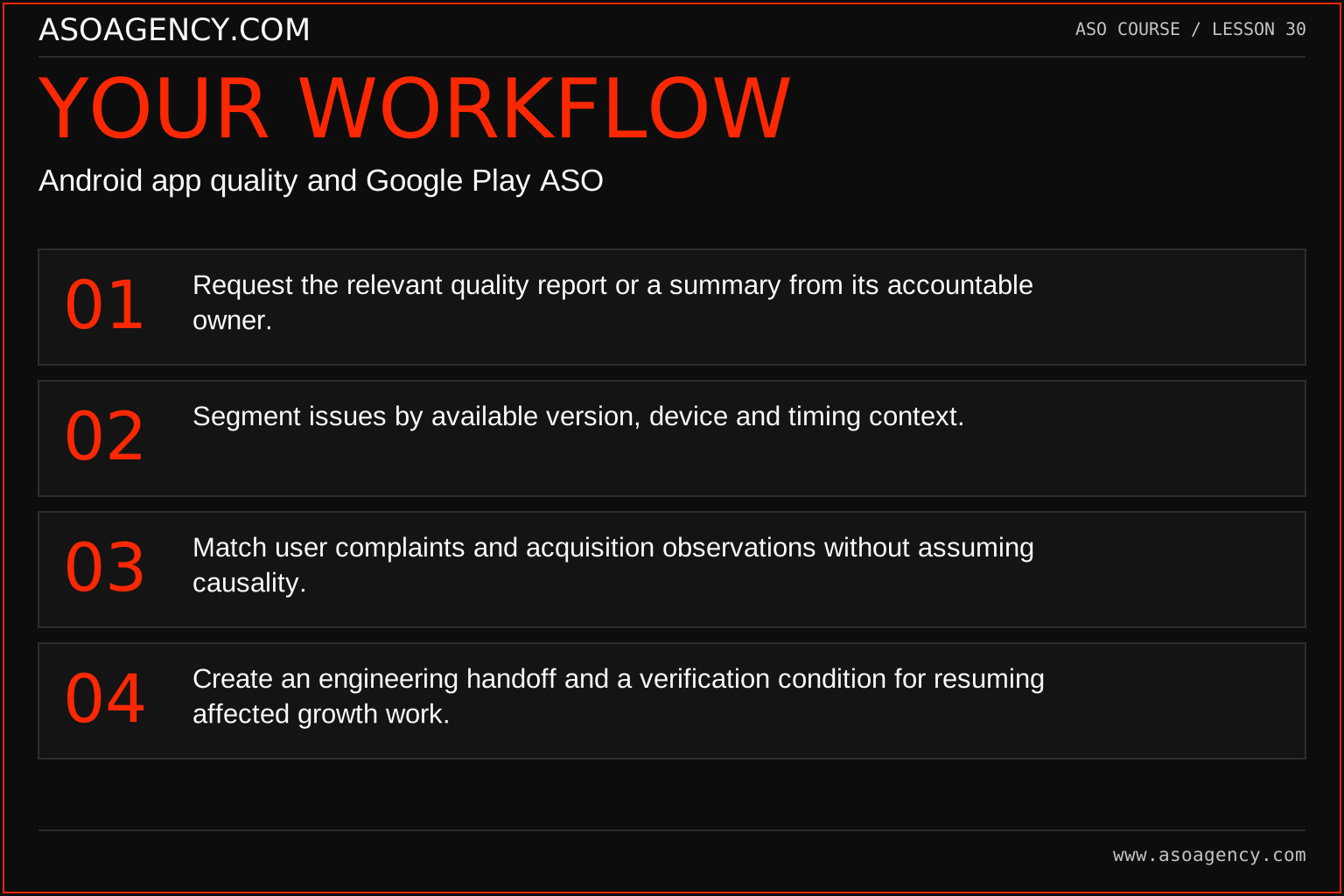
- Request the relevant quality report or a summary from its accountable owner.
- Segment issues by available version, device and timing context.
- Match user complaints and acquisition observations without assuming causality.
- Create an engineering handoff and a verification condition for resuming affected growth work.
Worked example and interpretation
Trail Notes and numerical research scenarios are fictional teaching examples. Platform limits, where shown, come from the linked official references.
After a fictional Android release, Trail Notes sees complaints about saving entries on a device family. The ASO team pauses a campaign aimed at that audience and asks engineering to investigate. When a fix ships, the report records both the technical recovery and the unchanged listing. A subsequent improvement is not attributed solely to the earlier screenshot refresh.
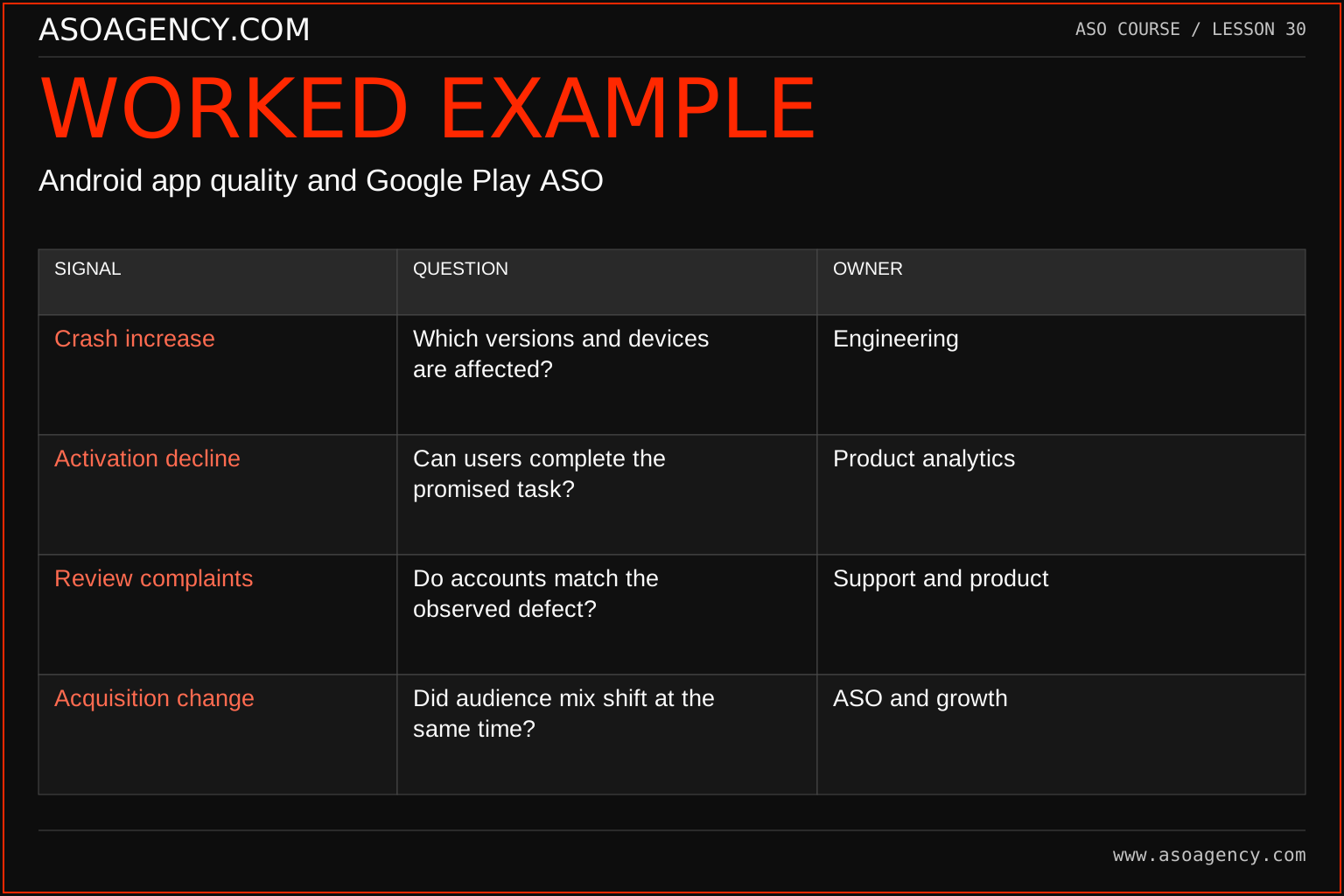
| Signal | Question | Owner |
|---|---|---|
| Crash increase | Which versions and devices are affected? | Engineering |
| Activation decline | Can users complete the promised task? | Product analytics |
| Review complaints | Do accounts match the observed defect? | Support and product |
| Acquisition change | Did audience mix shift at the same time? | ASO and growth |
No single row proves the root cause. Their value comes from connecting timing, affected populations and a reproducible user path. A complaint about saving may be consistent with a crash increase, but it still needs verification. Once the defect is confirmed, the team should fix the product and record recovery separately from creative optimization. A more persuasive listing is not a substitute for a functioning first-use experience.
Build a handover someone can use
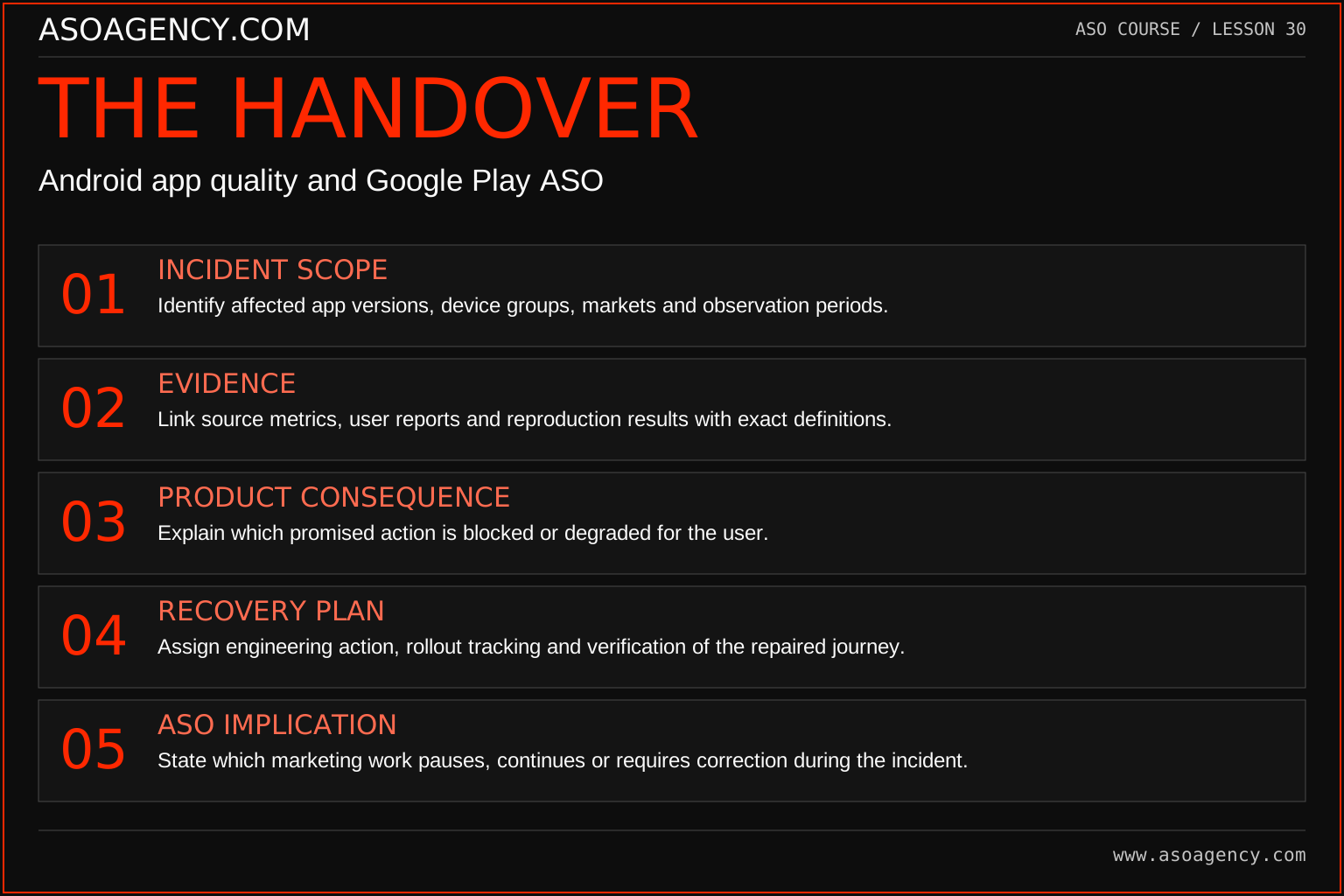
Incident scope
Identify affected app versions, device groups, markets and observation periods.
Evidence
Link source metrics, user reports and reproduction results with exact definitions.
Product consequence
Explain which promised action is blocked or degraded for the user.
Recovery plan
Assign engineering action, rollout tracking and verification of the repaired journey.
ASO implication
State which marketing work pauses, continues or requires correction during the incident.
Your ASO assignment
Use your own app and evidence, or work through the teaching case. Keep your observations separate from assumptions and explain the reasoning behind your decisions.
- Draft a quality-evidence request linked to a business decision.
- Create an incident handoff using a hypothetical affected version.
- Define the recovery evidence needed before expanding acquisition.
Scenario challenge
Downloads remain stable while activation falls after a release and crash reports rise on one device family. Write the first three checks and explain why rewriting the description is not yet a supported response.
Assess your work
- The handoff identifies affected users and evidence without inventing a root cause.
- Product and listing changes are separately logged.
- The growth decision has a clear recovery condition and owner.
Common mistakes to catch
- Trying to solve crashes with more persuasive screenshots.
- Attributing a recovery release’s effect to unrelated metadata work.
Knowledge check
Store conversion falls during a crash incident. Should the title be rewritten immediately?
Read the answer and reasoning
First understand the affected population and product incident. Correct any independent listing inaccuracy, but do not introduce unrelated changes solely to chase the metric. Stabilize the experience, preserve the timeline and reassess comparable performance before launching a new metadata hypothesis.
Sources and further reading
Platform references reviewed 29 September 2026. These sources support platform capabilities and constraints; the teaching frameworks, assignments and illustrative cases are original course material.
- Android Developers — Android vitals — Product-quality monitoring and Android performance signals.
- Google Play — Understand and grow your user base — Current listing-click reporting, completed acquisitions and segmentation.
Your ASO lesson notes
Use this space for your assignment, evidence and handover. Select Save to keep a draft in this browser, or download a copy to take with you.
Notes stay on this device and are not submitted to ASO Agency.
Complete your assignment with the Interactive ASO audit checklist.
Loading your progress…
Progress is saved only in this browser. It does not sync across devices. Mark a lesson complete after doing its exercise.