ASO course · lesson 27 of 60
Google Play full description optimization
Explain the product in a structured description without keyword-density rituals or unsupported claims.
By Gabriel Machuret · Editorial methodology
Before you start: Approved Play identity, feature evidence and audience objections.
Module 5: Google Play execution
Plan about 50 minutes for reading, practice and review
You will produce: A Play full-description draft with a claim register and publication checks.
Understand the decision
Build an explanatory sequence
Start with the main job, explain the core workflows and address important fit questions. A useful description lets the visitor decide whether the app is appropriate. Group related capabilities rather than presenting a long unordered feature dump. Use terminology from the research naturally, where it accurately names the workflow or outcome being explained.
Reject arbitrary density targets
Repeating a phrase a prescribed number of times is not a substitute for good research or clear copy. The course does not teach a universal keyword-density formula or undocumented ranking weight. Review unnecessary repetition as an editorial and policy concern. If a term is genuinely central, it can occur naturally without forcing the same sentence pattern throughout the page.
Keep commercial and support context accurate
Check whether features are free, paid, device-dependent or otherwise conditional. Do not hide a material contradiction in a vague closing paragraph. Verify links and the support route, and give time-sensitive claims a maintenance owner. Play currently allows up to 4,000 characters for the full description; use only the space needed to explain the product well.
Apply the method in practice
Build the explanation around a real workflow
Start with the outcome, then show how the user reaches it. For a walking journal, explain creating an entry, adding memories and revisiting saved walks. Group features by their contribution to that outcome instead of listing every settings toggle. Include conditions that affect the decision, such as account requirements or paid functionality, once verified. A visitor should be able to explain the product after reading the opening and understand its boundaries after reading the whole description.
Use researched language without stuffing
Bring natural customer expressions into headings and sentences where they help meaning. Do not target a universal keyword-density percentage: no such threshold can guarantee ranking. Repeating a term until the prose becomes awkward sacrifices clarity and may conflict with policy. Distinguish natural repetition of a central product concept from a block of unrelated search phrases. Read the draft aloud and remove sentences that add no new information. The description's purpose is to help a suitable user make an informed decision.
Review claims, structure and maintenance separately
A copy editor checks clarity; the product owner confirms truth; a local reviewer checks meaning in the target language. Keep an approved claim list so revisions do not quietly broaden promises. The 4,000-character allowance is a ceiling, not a reason to add filler. Record any time-sensitive offer and its review owner. When a feature or price changes, use the claim list to identify descriptions and assets that need updating across all relevant listings.
Platform references for this work: Google Play — Create and set up your app · Google Play — Metadata policy
Your step-by-step procedure
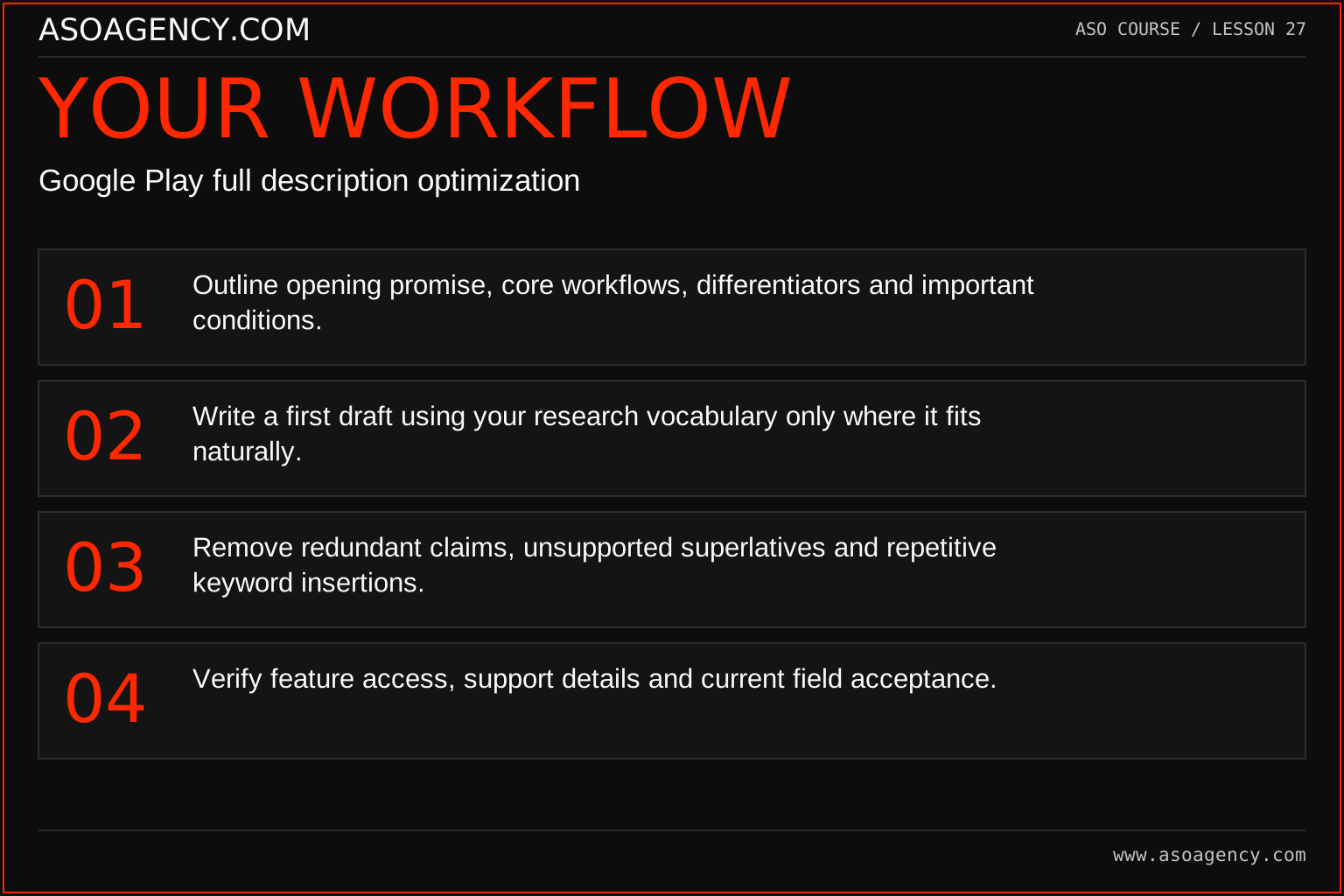
- Outline opening promise, core workflows, differentiators and important conditions.
- Write a first draft using your research vocabulary only where it fits naturally.
- Remove redundant claims, unsupported superlatives and repetitive keyword insertions.
- Verify feature access, support details and current field acceptance.
Worked example and interpretation
Trail Notes and numerical research scenarios are fictional teaching examples. Platform limits, where shown, come from the linked official references.
Trail Notes explains capturing a memory, organizing entries and exporting a journal in three short sections. The export section identifies the relevant paid access instead of implying all users receive it. The phrase “hiking journal” appears where it describes the app, not in every sentence. The team reviews whether a visitor could distinguish this product from a route planner after reading only the opening.
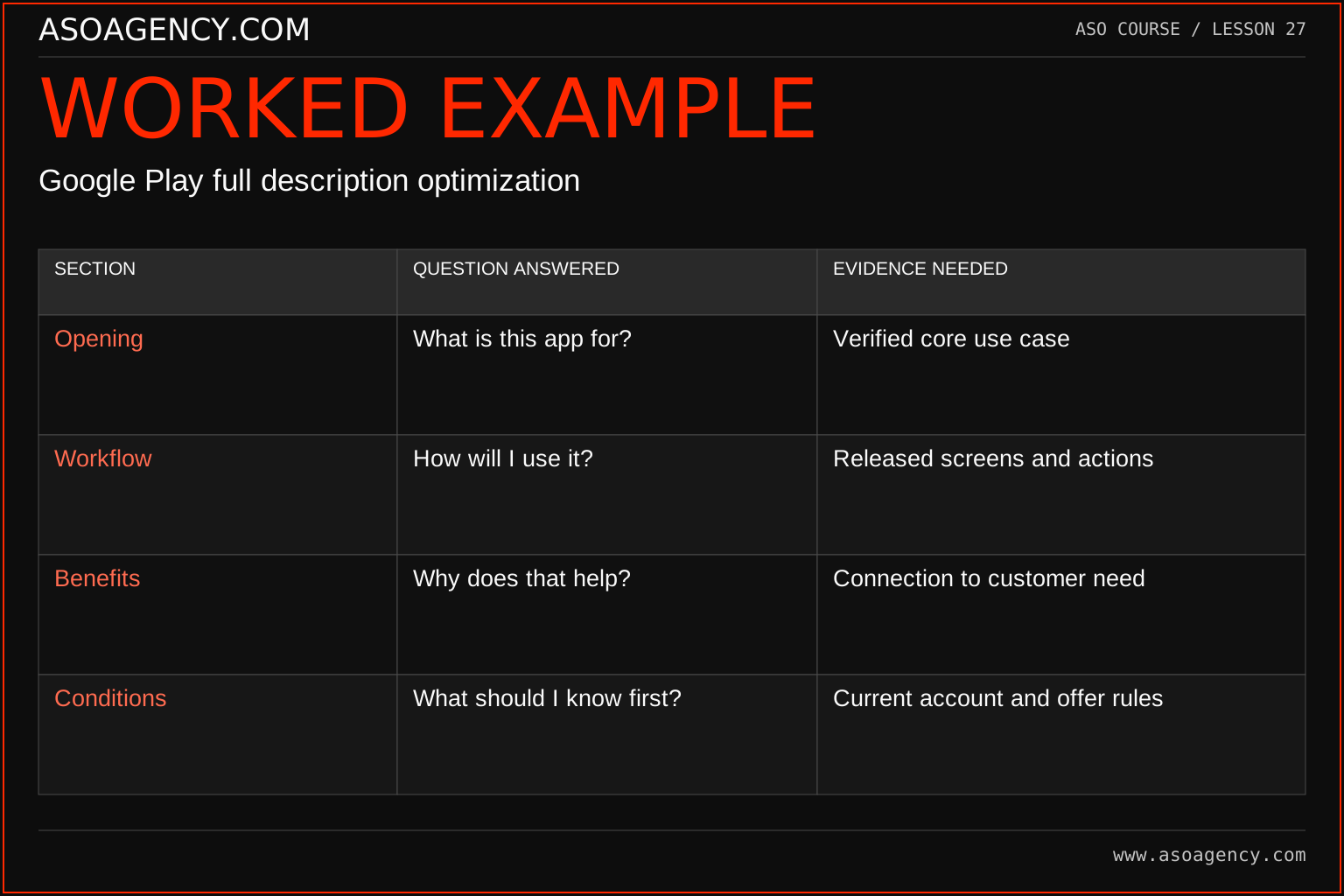
| Section | Question answered | Evidence needed |
|---|---|---|
| Opening | What is this app for? | Verified core use case |
| Workflow | How will I use it? | Released screens and actions |
| Benefits | Why does that help? | Connection to customer need |
| Conditions | What should I know first? | Current account and offer rules |
A full description can be useful without filling every character. In this outline, each section adds a distinct answer and has an evidence requirement. If the benefits section simply repeats the workflow with adjectives, revise it to explain the user's outcome. If conditions contradict the opening, correct the opening. Keep the final document readable as prose rather than a research spreadsheet pasted into a store field.
Build a handover someone can use
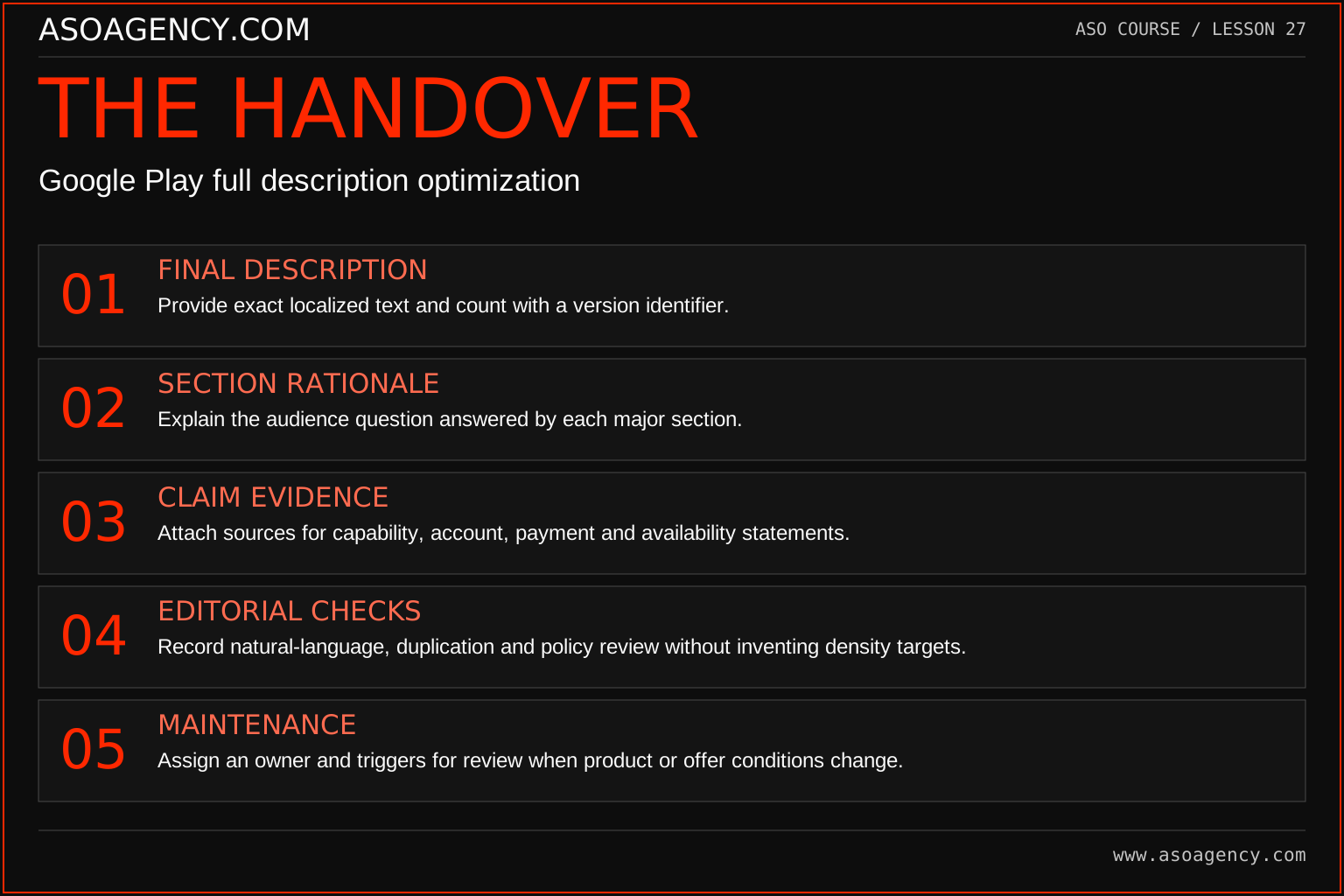
Final description
Provide exact localized text and count with a version identifier.
Section rationale
Explain the audience question answered by each major section.
Claim evidence
Attach sources for capability, account, payment and availability statements.
Editorial checks
Record natural-language, duplication and policy review without inventing density targets.
Maintenance
Assign an owner and triggers for review when product or offer conditions change.
Your ASO assignment
Use your own app and evidence, or work through the teaching case. Keep your observations separate from assumptions and explain the reasoning behind your decisions.
- Write a full-description draft with three workflow sections.
- Highlight every material claim and attach product evidence.
- Edit a deliberately stuffed paragraph into natural, useful copy.
Scenario challenge
A consultant recommends repeating hiking journal exactly 18 times. Ask what evidence supports that rule, then edit a paragraph to preserve useful meaning without following an arbitrary repetition quota.
Assess your work
- The structure helps a visitor evaluate fit.
- Research terms appear in meaningful context.
- Conditional features and support information are accurately represented.
Common mistakes to catch
- Promising a universal keyword-density threshold for ranking.
- Treating the description as a place to hide unrelated query lists.
Knowledge check
A tool recommends adding the same phrase ten more times. What should you do?
Read the answer and reasoning
Ask what evidence and policy assumptions support the recommendation. Review the current copy for clear, accurate coverage of the use case. Do not add repetition solely to satisfy an opaque target; a tool’s suggestion is not proof of a ranking requirement.
Sources and further reading
Platform references reviewed 29 September 2026. These sources support platform capabilities and constraints; the teaching frameworks, assignments and illustrative cases are original course material.
- Google Play — Create and set up your app — Listing fields, language and text limits.
- Google Play — Metadata policy — Accurate, relevant metadata and prohibited presentation.
Your ASO lesson notes
Use this space for your assignment, evidence and handover. Select Save to keep a draft in this browser, or download a copy to take with you.
Notes stay on this device and are not submitted to ASO Agency.
Complete your assignment with the App store metadata checker.
Loading your progress…
Progress is saved only in this browser. It does not sync across devices. Mark a lesson complete after doing its exercise.