Download your lesson workbook · Open the assignment tool →
Your ASO learning objective
Group candidates by the job behind the query and identify which groups the released app can credibly serve.
- Step 1Write the searcher’s task
- Step 2Group candidates by supported job
- Step 3Resolve or record ambiguous intent
Describe intent as a task, not a label
For each candidate, write what the searcher is trying to accomplish. “Outdoor” is a topic; “remember a walk with photos” is a task. A useful intent statement makes it possible to inspect the product and ask whether the app fulfills the expectation. If several interpretations are plausible, record the ambiguity and the evidence needed to resolve it.
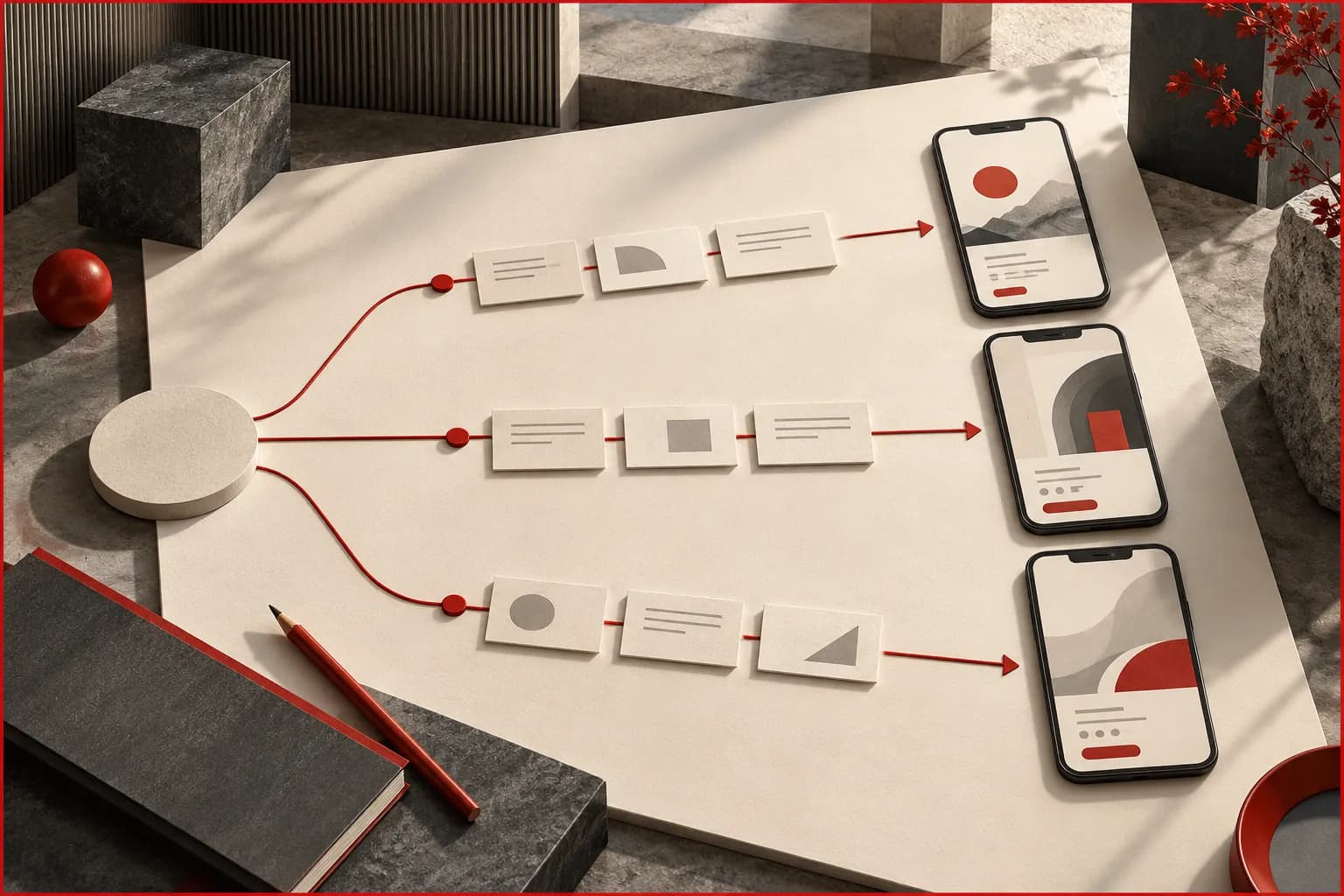
Group candidates by product job before assigning them to fields. “Hiking journal”, “walking diary” and “trail memories” may belong to a personal-record cluster. “Route planner” and “offline directions” belong elsewhere even though all phrases concern walking. Topic overlap is not enough to justify one listing promise.
Use clusters to reveal gaps and repetition
Review each cluster as a set. Does it contain several synonyms for the same need, or genuinely different tasks? Which term is clearest to the target audience? Which supporting terms deserve further investigation? Keep the original wording so a cluster label does not flatten useful differences between customer phrases.
The Workbench lets you search by candidate, intent or cluster. It does not assign intent automatically. This is deliberate: a neat category can create false confidence if nobody has read the evidence. Start with a few clusters that help a real decision, rather than dozens of categories that nobody will maintain.
Decide how to handle mixed intent
A broad phrase such as “hiking app” can include route discovery, navigation, fitness tracking or memory keeping. It may be relevant at a broad category level while remaining too ambiguous for the main product promise. Record the likely interpretations and decide whether supporting copy can clarify the job. When evidence is insufficient, keep the candidate pending instead of forcing approval to complete the spreadsheet.
Worked example: Trail Notes
This fictional hiking-journal app and its review samples are the teaching project. Treat the example as a reasoning exercise you can adapt to your own evidence.
- Original draftOne “hiking” cluster contains diary, route planner, trail safety and photo journal.
- Revised proposalSplit personal memories from navigation and safety. Approve journal language only when the evidence and intended field support it.
- Why it changesThe new grouping follows user tasks and prevents a broad topic from hiding incompatible expectations.
Your ASO assignment
- Write an intent statement for each candidate in your current review batch. Avoid repeating the keyword as its own explanation.
- Assign three or fewer initial clusters, then inspect outliers. Record why an outlier belongs elsewhere or remains uncertain.
- Choose two clusters to defer and explain the product or evidence constraint behind that decision.
Your handover and assessment criteria
Your work is ready for review when each deliverable below can be understood without a verbal explanation. Include the source or product reference, the decision owner and any unresolved evidence gap. If a reviewer cannot verify a claim, record the missing evidence before treating the proposal as approved.
- Deliverable 1Candidate-to-intent mapping
- Deliverable 2Cluster definitions and product references
- Deliverable 3Deferred clusters with reasons and revisit conditions
Check your understanding
Two terms share the word “trail”. Must they belong to the same intent cluster?
Read the interpretation
No. “Trail diary” and “trail directions” describe different tasks. Cluster by the user’s job and the product capability required, not by a shared word.
Record your progress
Mark this lesson complete after checking your assignment against the handover criteria. Progress stays in this browser, separately from your tool project.
Sources and further reading
Platform references checked 30 September 2026.
App Store keyword research guide · Check final metadata fields