ASO course · lesson 52 of 60
App launch ASO checklist and release planning
Create a launch sequence that coordinates product readiness, listing publication and measurement.
By Gabriel Machuret · Editorial methodology
Before you start: The app brief, current release plan and accountable product/publishing owners.
Module 9: Measurement and growth integration
Plan about 55 minutes for reading, practice and review
You will produce: A launch schedule with readiness gates, verification and early-learning responsibilities.
Understand the decision
Define what launch-ready means
A launch is more than approved screenshots. Confirm the core workflow, availability, support route, commercial offer and measurement readiness. Record what must be true before acquisition begins. Separate a marketing target date from platform review or product dependencies that the team does not fully control. A clear gate prevents public promises from outrunning delivery.
Sequence preparation and verification
Prepare metadata, assets, localizations, tracking definitions and support material early enough for review. Assign owners for submission, publication verification and issue response. A pre-order or pre-registration strategy has store-specific requirements and should be checked in current guidance if used. Do not introduce it automatically simply because it appears on a generic launch checklist.
Build a launch learning plan
Specify what to inspect immediately for operational correctness and what requires more time for meaningful interpretation. An early traffic spike may come from existing followers, press or campaigns, so it is not a neutral long-term baseline. Record source mix and launch events. Plan the first learning review around data readiness rather than an arbitrary promise of instant optimization.
Apply the method in practice
Build readiness gates around the user journey
A launch is ready when the product, listing, acquisition routes and support can deliver the intended experience. Define gates with evidence, owners and deadlines. Product availability is separate from approved screenshots; a campaign link is separate from an approved campaign concept. Include account, locale, payment and first-use checks relevant to the audience. Avoid treating the launch date as proof that unresolved dependencies will disappear. A gate should identify what must be true and who verifies it.
Plan the sequence and recovery path
Work backward from the desired availability window while allowing for platform review and operational uncertainty. Do not promise a fixed review duration. Prepare accurate assets, submission responsibilities, tracking and fallback messaging. If a dependency misses its date, decide whether to reduce scope, delay promotion or postpone the launch. Keep previous approved materials and a correction path. A smaller coherent launch can be more useful than a broad launch whose promise varies across markets and channels.
Define the first learning cycle
Choose initial acquisition, activation and quality observations with realistic reporting delays. Record the actual release and campaign times. Early data may be unusual because of existing fans, press or paid promotion, so do not treat it as a stable organic baseline. Review user feedback and technical quality alongside volume. The first post-launch meeting should produce prioritized actions and owners, not merely celebrate downloads. Save the launch context for later comparisons.
Platform references for this work: Apple — Creating your product page · Google Play — Create and set up your app
Your step-by-step procedure
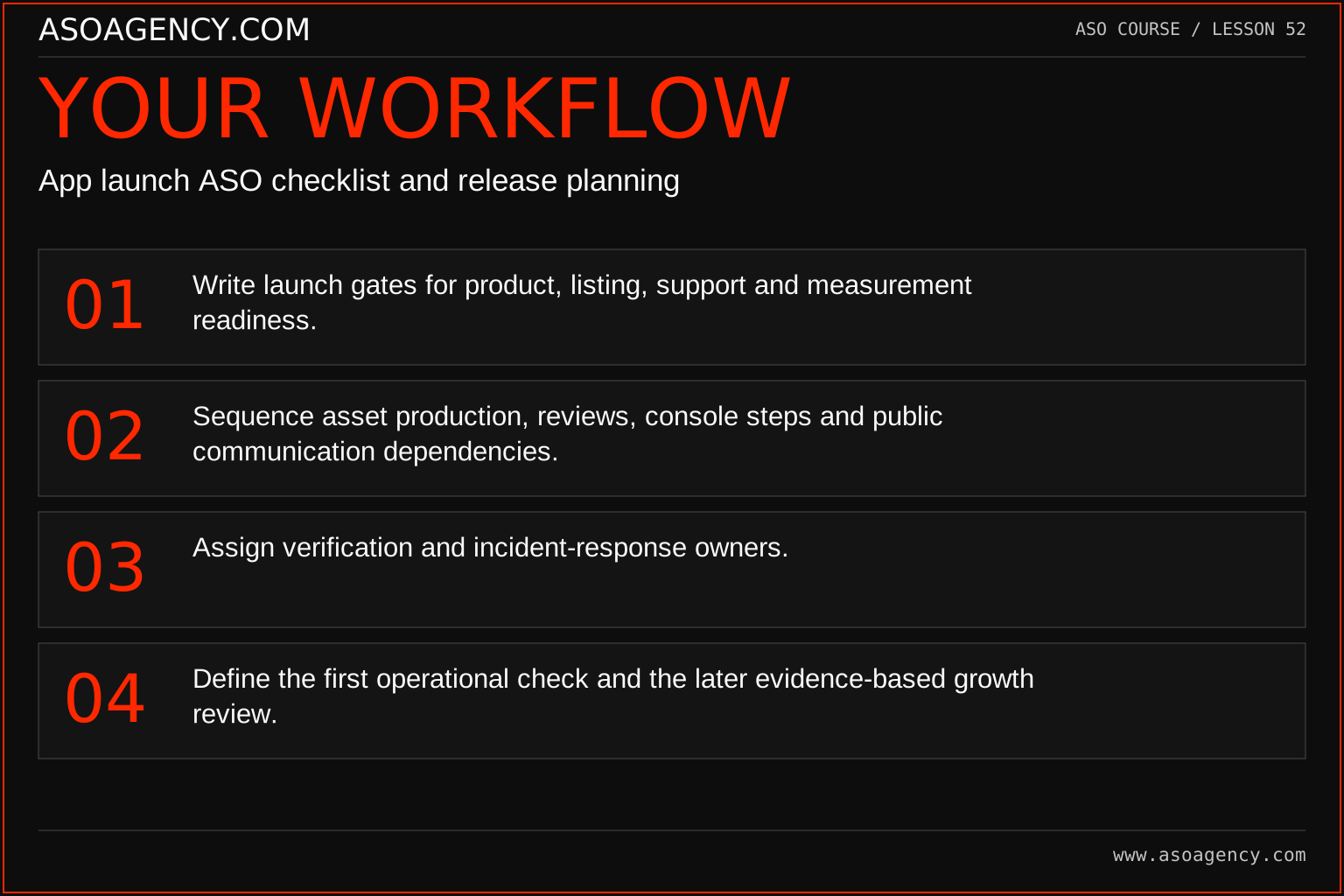
- Write launch gates for product, listing, support and measurement readiness.
- Sequence asset production, reviews, console steps and public communication dependencies.
- Assign verification and incident-response owners.
- Define the first operational check and the later evidence-based growth review.
Worked example and interpretation
Trail Notes and numerical research scenarios are fictional teaching examples. Platform limits, where shown, come from the linked official references.
A fictional puzzle game plans a launch campaign while its tutorial completion event is still unverified. The team separates a publication test from campaign expansion and fixes the event before interpreting onboarding performance. It also verifies that store screenshots show actual gameplay rather than an unrelated ad concept. The first-week report identifies launch sources instead of treating all traffic as organic discovery.
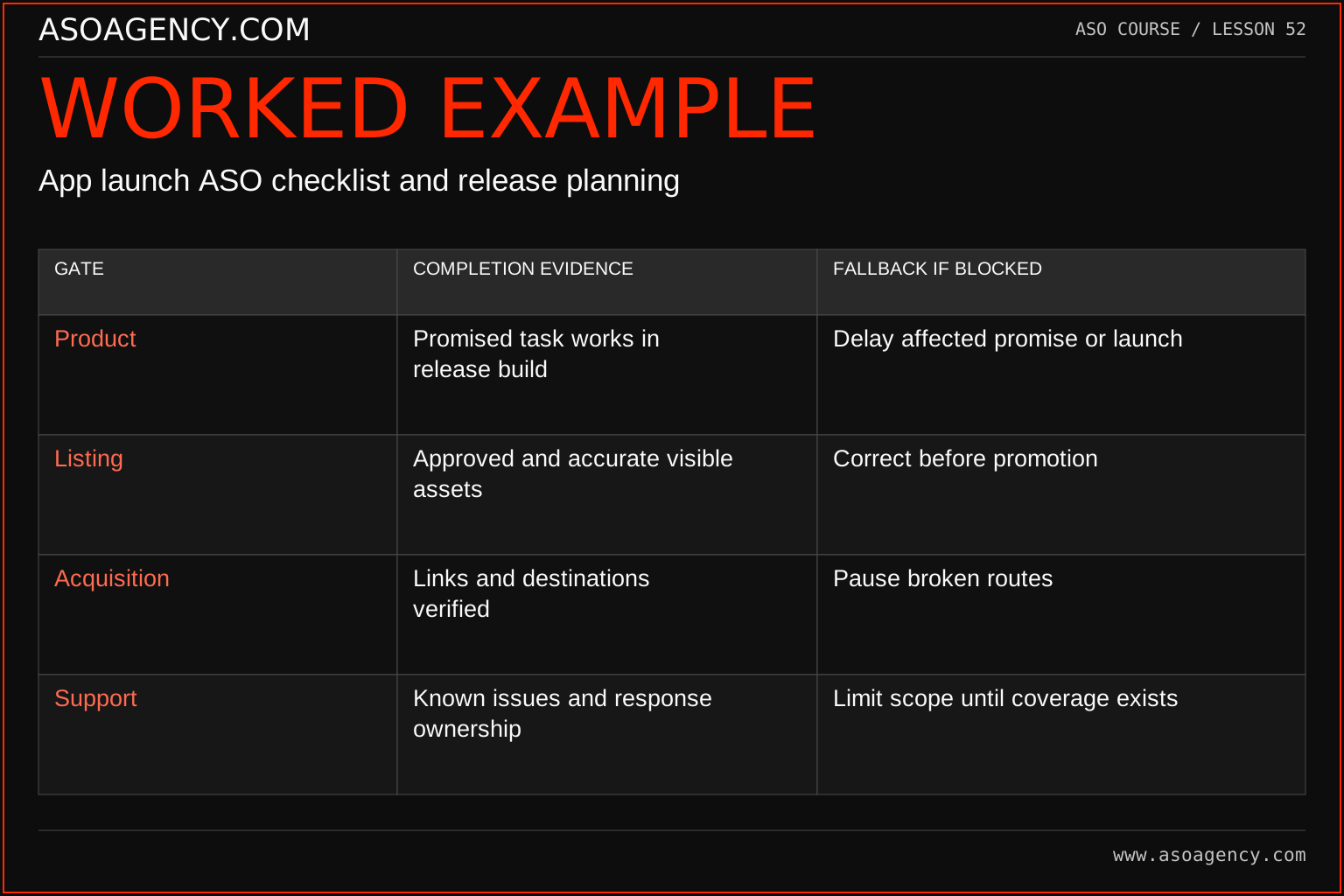
| Gate | Completion evidence | Fallback if blocked |
|---|---|---|
| Product | Promised task works in release build | Delay affected promise or launch |
| Listing | Approved and accurate visible assets | Correct before promotion |
| Acquisition | Links and destinations verified | Pause broken routes |
| Support | Known issues and response ownership | Limit scope until coverage exists |
A gate is an operational decision, not a decorative checklist. If the product cannot fulfill a highlighted feature, publishing a more cautious claim may be possible only if the remaining offer is coherent and approved. If a campaign link is broken, pausing that route is more direct than assuming users will find the app themselves. Record who made each decision and the evidence available at the time.
Build a handover someone can use
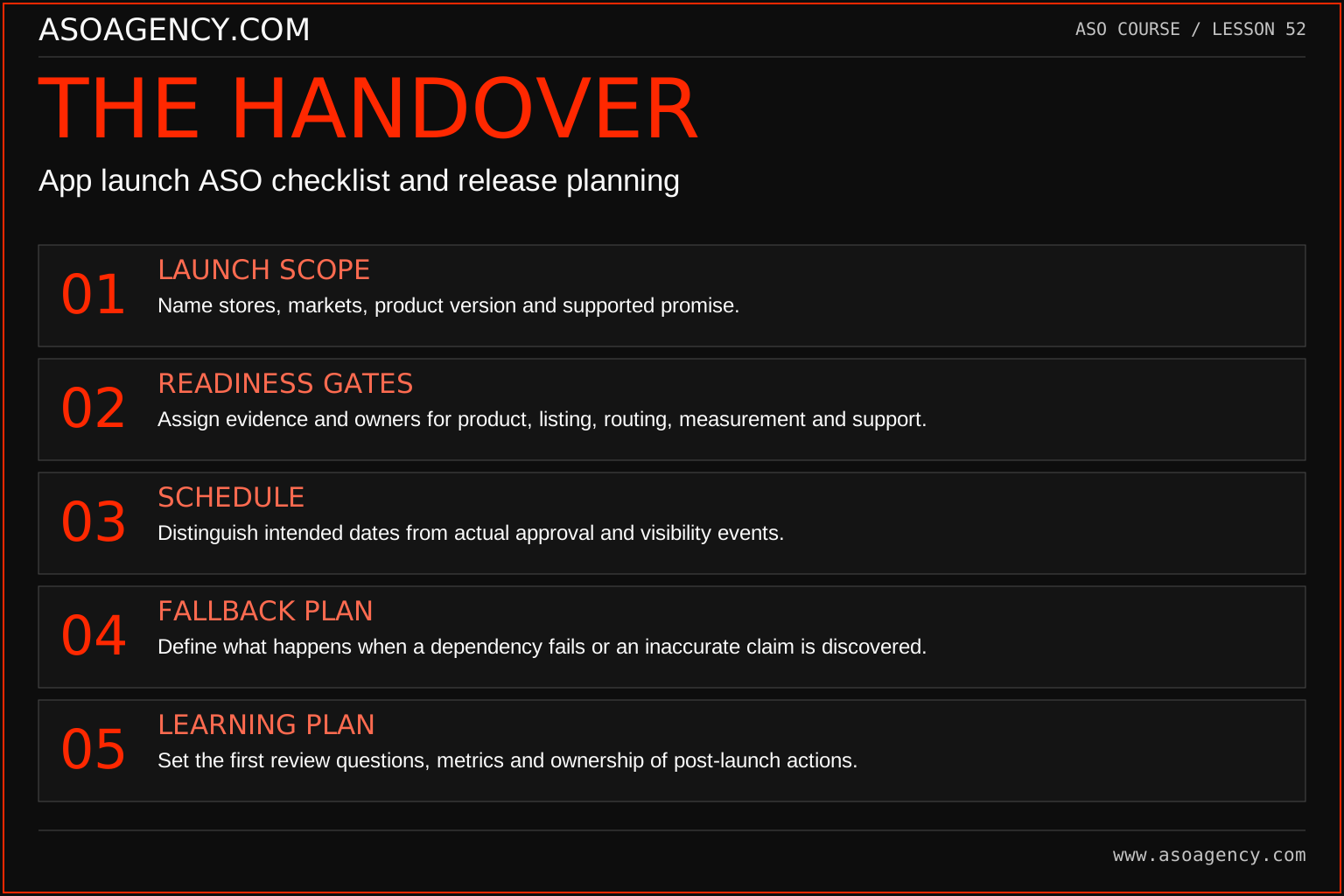
Launch scope
Name stores, markets, product version and supported promise.
Readiness gates
Assign evidence and owners for product, listing, routing, measurement and support.
Schedule
Distinguish intended dates from actual approval and visibility events.
Fallback plan
Define what happens when a dependency fails or an inaccurate claim is discovered.
Learning plan
Set the first review questions, metrics and ownership of post-launch actions.
Your ASO assignment
Use your own app and evidence, or work through the teaching case. Keep your observations separate from assumptions and explain the reasoning behind your decisions.
- Create a launch checklist with owners and dependencies.
- Write go/no-go conditions for three critical workstreams.
- Prepare a first-week observation plan without promising statistical conclusions.
Scenario challenge
The listing is approved but the promoted feature is delayed. Present two honest launch options and explain which teams must update their materials before promotion continues.
Assess your work
- The public promise matches the shipped product.
- Review and release dependencies are explicit.
- Operational checks are separated from longer-term performance evaluation.
Common mistakes to catch
- Treating a target date as proof all platform and product dependencies will be ready.
- Using launch-day source mix as a permanent conversion benchmark.
Knowledge check
The listing is approved but the advertised core feature is not ready. Launch the campaign?
Read the answer and reasoning
Resolve the mismatch first. Delay or narrow the campaign and listing promise to the available product, with an explicit owner decision. Approval of assets does not make an unavailable feature real, and a short-term launch target should not override product truth.
Sources and further reading
Platform references reviewed 29 September 2026. These sources support platform capabilities and constraints; the teaching frameworks, assignments and illustrative cases are original course material.
- Apple — Creating your product page — Product-page fields and presentation guidance.
- Google Play — Create and set up your app — Listing fields, language and text limits.
Your ASO lesson notes
Use this space for your assignment, evidence and handover. Select Save to keep a draft in this browser, or download a copy to take with you.
Notes stay on this device and are not submitted to ASO Agency.
Complete your assignment with the Interactive ASO audit checklist.
Loading your progress…
Progress is saved only in this browser. It does not sync across devices. Mark a lesson complete after doing its exercise.