ASO course · lesson 44 of 60
App store localization: transcreation and terminology
Give language reviewers the context needed to preserve meaning rather than translate words mechanically.
By Gabriel Machuret · Editorial methodology
Before you start: A selected pilot market, product proof and source-language copy.
Module 8: Localization and customer feedback
Plan about 50 minutes for reading, practice and review
You will produce: A transcreation brief, terminology glossary and approval record.
Understand the decision
Provide the intent behind the sentence
A reviewer needs to know who the copy addresses, what the user wants and what the app actually does. Include screenshots, feature conditions and the communication role of each field. Mark terms that are brand names and phrases that can be freely adapted. Without this context, even fluent translation can preserve the wrong meaning or lose an essential qualification.
Create a shared glossary
Record approved product terms, rejected alternatives, tone and reasons for important choices. Include words with ambiguous category meanings. A glossary is a living decision record, not just a bilingual list. It should help future reviewers maintain consistency across metadata, screenshots, onboarding and support, especially when different people work on different surfaces.
Review meaning and fit together
Ask the reviewer to explain significant departures from the source wording. Check the adapted text in its actual field and design context, including length and line breaks. A literal back-translation can reveal discrepancies but is not proof of quality. The final acceptance should combine local linguistic judgment, product truth and the intended user situation.
Apply the method in practice
Explain the meaning that must survive
Give the reviewer the audience situation, intended benefit, product proof and important limitations. Include screenshots and the actual field context. A string without context can be translated correctly but communicate the wrong task. Mark brand terms that must remain unchanged and concepts that can be expressed naturally. Explain why particular English phrases were chosen, but do not require literal word order. The goal is equivalent useful meaning for the local audience, not a sentence that mirrors the source language.
Create a glossary that records decisions
For each important concept, store the approved local term, alternatives considered, forbidden implications and usage notes. Include grammatical variants where context requires them. Keep the glossary connected to the product and screenshot copy so one feature does not acquire several inconsistent names. A glossary is not frozen forever: record who can change it and what evidence supports a revision. If a term is uncertain, label it as provisional rather than allowing different contributors to make silent independent choices.
Review the final layout with the language specialist
Translation approval before design is only one stage. Shortening, line breaks and UI truncation can change meaning. Give the reviewer the exported artwork and actual console strings after layout. Back-translation can help identify meaning drift, but naturalness and local search intent require direct local judgment. Record unresolved questions, such as whether a term sounds like navigation, and resolve them before approving the promise. Keep the final wording linked to its research rationale.
Platform references for this work: Apple — Localize app information · Google Play — Translate and localize your app
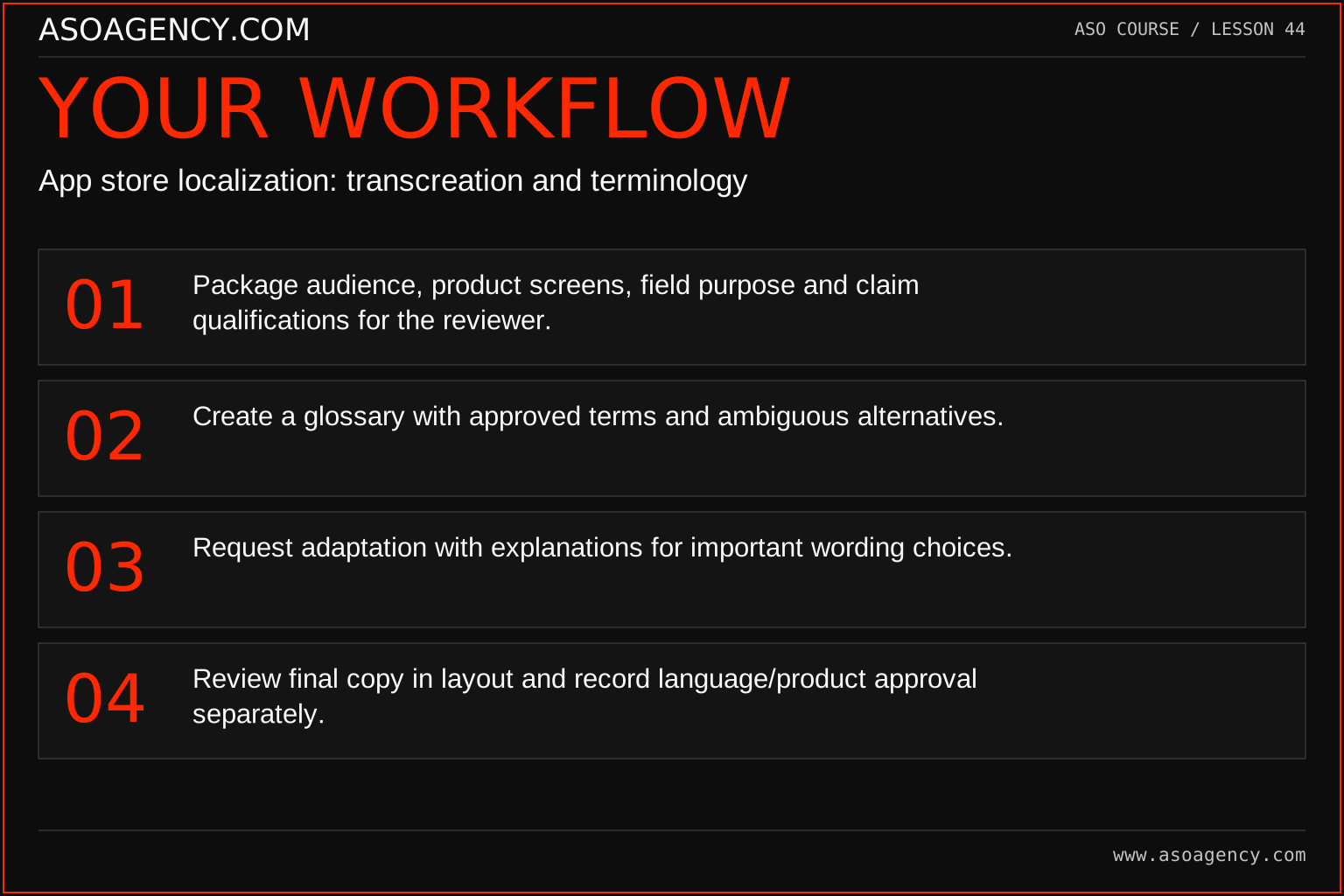
Your step-by-step procedure
- Package audience, product screens, field purpose and claim qualifications for the reviewer.
- Create a glossary with approved terms and ambiguous alternatives.
- Request adaptation with explanations for important wording choices.
- Review final copy in layout and record language/product approval separately.
Worked example and interpretation
Trail Notes and numerical research scenarios are fictional teaching examples. Platform limits, where shown, come from the linked official references.
Trail Notes’ source phrase “capture your trail” could mean recording a GPS route. The brief explains that the intended benefit is preserving memories. A local reviewer adapts the phrase accordingly and records the rejected route-recording interpretation in the glossary. That decision is then reused in screenshots and onboarding, preventing another translator from reintroducing the same ambiguity later.
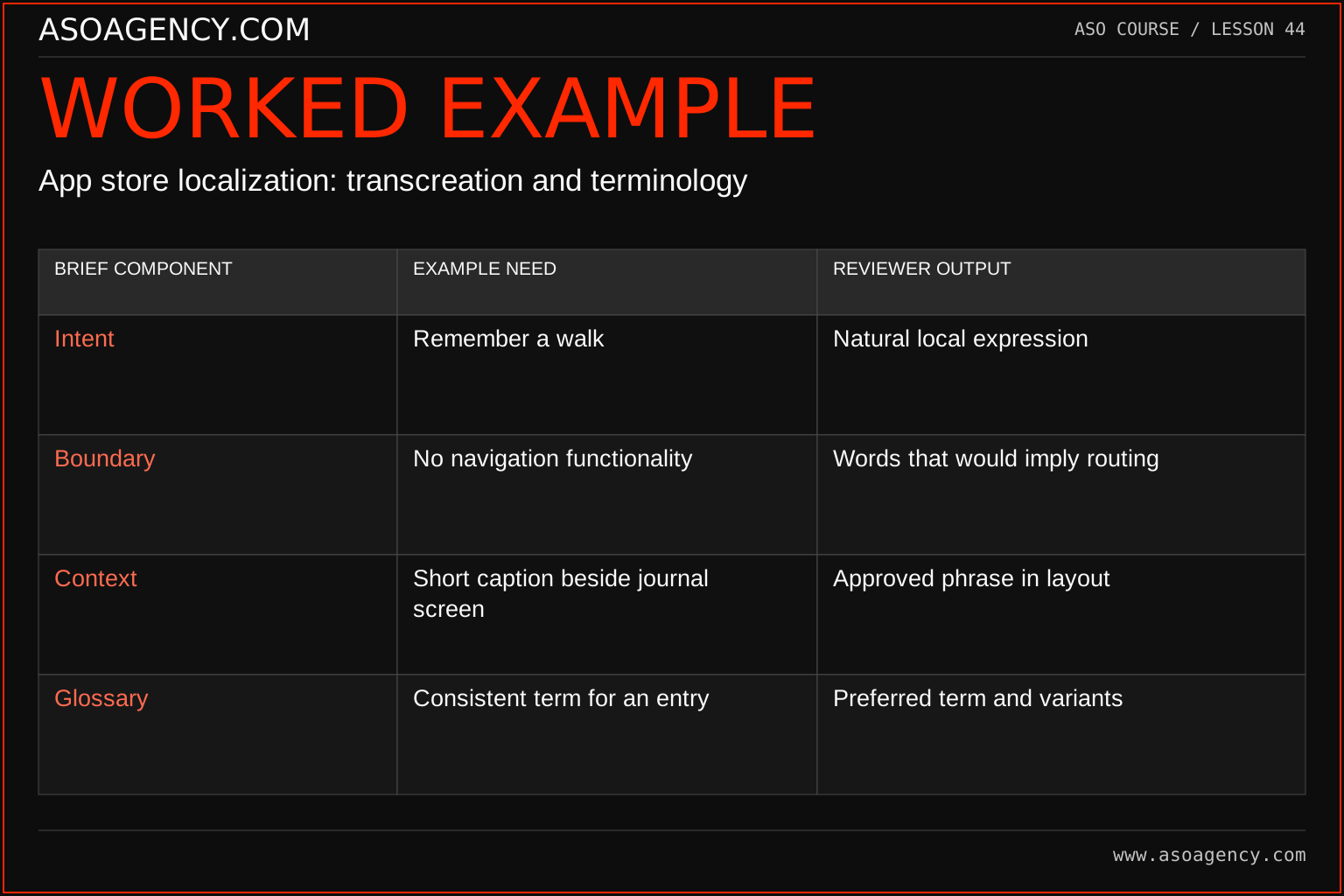
| Brief component | Example need | Reviewer output |
|---|---|---|
| Intent | Remember a walk | Natural local expression |
| Boundary | No navigation functionality | Words that would imply routing |
| Context | Short caption beside journal screen | Approved phrase in layout |
| Glossary | Consistent term for an entry | Preferred term and variants |
The boundary row is as important as the desired message. Without it, a reviewer may choose an attractive outdoor phrase that suggests unsupported guidance. The context row prevents a sentence approved in a document from becoming awkward or misleading when shortened for artwork. A useful handover preserves reasoning so future editors can maintain the local voice without restarting every decision.
Build a handover someone can use
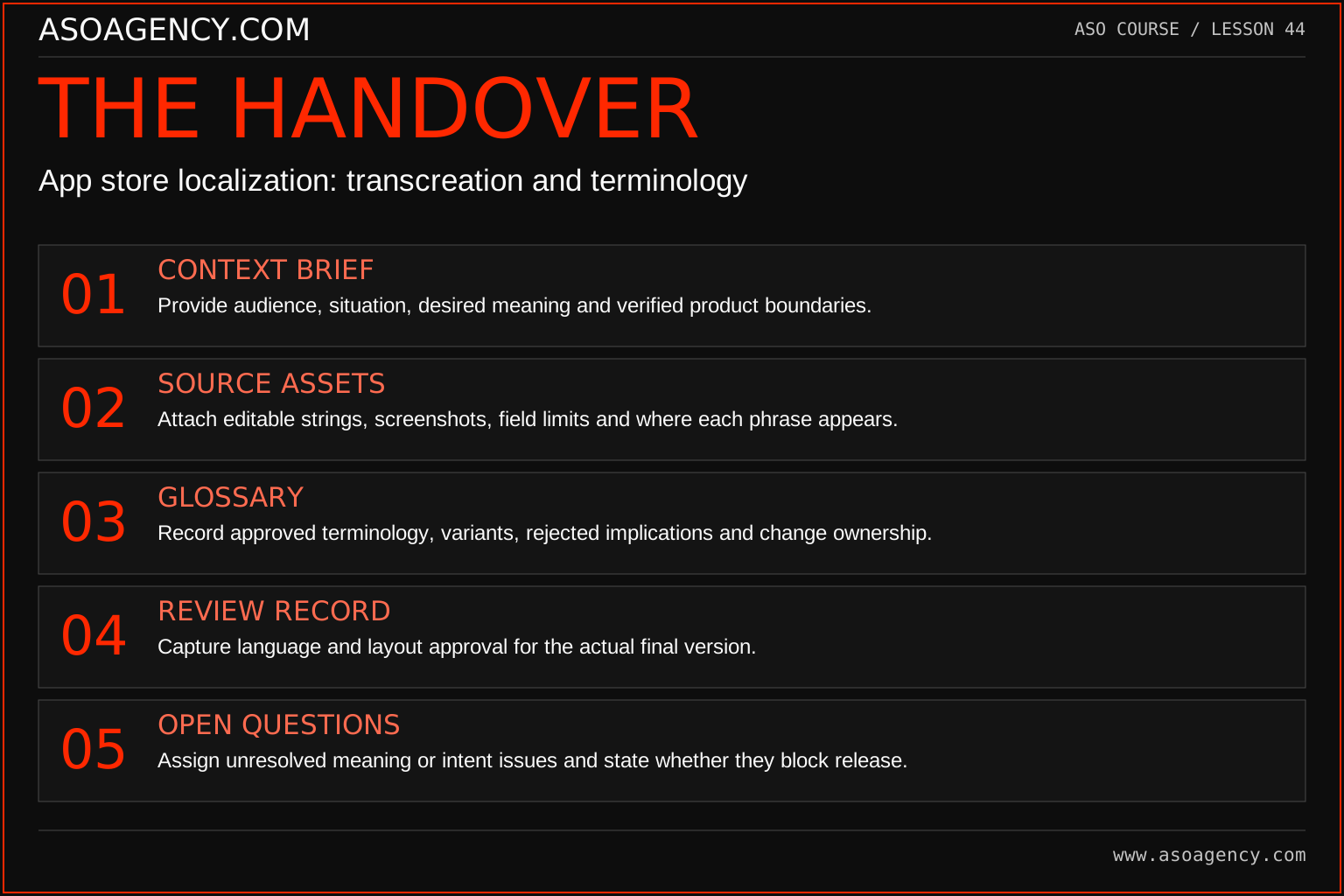
Context brief
Provide audience, situation, desired meaning and verified product boundaries.
Source assets
Attach editable strings, screenshots, field limits and where each phrase appears.
Glossary
Record approved terminology, variants, rejected implications and change ownership.
Review record
Capture language and layout approval for the actual final version.
Open questions
Assign unresolved meaning or intent issues and state whether they block release.
Your ASO assignment
Use your own app and evidence, or work through the teaching case. Keep your observations separate from assumptions and explain the reasoning behind your decisions.
- Write a language brief for five important listing strings.
- Create ten glossary entries with context, not just equivalent words.
- Record a disagreement and how product truth resolves it.
Scenario challenge
A translator asks whether trail log means a GPS route record or a written memory. Write the clarification they need, including product proof and the implication that must be avoided.
Assess your work
- The reviewer can understand the product without guessing.
- Essential qualifications survive adaptation.
- The glossary records reasons for high-impact language choices.
Common mistakes to catch
- Using back-translation as the only quality check.
- Sending isolated strings with no field or product context.
Knowledge check
A fluent translation is longer than the available field. What should happen next?
Read the answer and reasoning
Ask for a shorter adaptation that preserves the intended meaning and necessary conditions, then review it in context. Do not truncate blindly or remove an important qualifier merely to satisfy the counter. Record the approved shorter wording in the glossary.
Sources and further reading
Platform references reviewed 29 September 2026. These sources support platform capabilities and constraints; the teaching frameworks, assignments and illustrative cases are original course material.
- Apple — Localize app information — Localized metadata and language behavior.
- Google Play — Translate and localize your app — Localization workflow and language support.
Your ASO lesson notes
Use this space for your assignment, evidence and handover. Select Save to keep a draft in this browser, or download a copy to take with you.
Notes stay on this device and are not submitted to ASO Agency.
Complete your assignment with the App store metadata checker.
Loading your progress…
Progress is saved only in this browser. It does not sync across devices. Mark a lesson complete after doing its exercise.