ASO course · lesson 43 of 60
ASO localization strategy: choose your target markets
Prioritize markets using product readiness, audience evidence and operational capacity.
By Gabriel Machuret · Editorial methodology
Before you start: The source-market proposition, available geographic evidence and product roadmap.
Module 8: Localization and customer feedback
Plan about 50 minutes for reading, practice and review
You will produce: A market-priority matrix and scoped localization pilot brief.
Understand the decision
Market size is not readiness
A large potential audience is only one input. Check whether the product, payments, support, content and commercial offer can serve the market. Separate language availability from territory availability. A translated listing can attract users into an experience they cannot complete. Prioritize a market where you can both communicate and deliver the promise, not merely buy a translation cheaply.
Build a readiness matrix
Record product support, language review, existing audience signals, relevant demand evidence, operational ownership and important uncertainties. Use clear readiness categories rather than a precise-looking forecast assembled from weak estimates. Identify hard blockers such as an unavailable core service. A weighted score should not let an attractive market-size estimate cancel a missing product capability.
Choose a bounded pilot
Select one market or coherent locale group with a defined learning question. Specify the assets, product dependencies, reviewer, rollout plan and measurement. A pilot should tell you whether to expand, adapt or stop. Preserve the source-market baseline and avoid launching many unrelated markets at once if the team cannot maintain or interpret them.
Apply the method in practice
Separate demand from the ability to serve it
A large audience does not make a market ready. Review product language, content, units, payments, support and any location-specific functionality. Keep demand evidence in a separate column from readiness. Existing downloads may signal interest, but they may also reflect a small unusual audience. Record the source and period of each signal. Choose a market because the product can deliver a relevant experience and the team can maintain it, not simply because a language has many speakers.
Compare total operating effort
Localization includes research, translation or transcreation, design adaptation, product checks, console work and ongoing updates. Estimate effort with the people responsible. A market that requires a new payment flow is different from one needing only reviewed copy. Mark dependencies and distinguish launch effort from maintenance. If the app is not ready, define the product work needed before listing expansion. This allows the team to keep a promising market in the plan without making an inaccurate local promise today.
Choose a pilot with a learning objective
A first market should produce information the team can use: whether the proposition is understood, whether the product journey works and whether acquisition quality justifies further investment. Define a review period that respects reporting delays and cohort maturity. Use staged scope rather than launching many languages with no reviewer capacity. Record conditions for expansion, revision or pause. A decision to defer is useful when it identifies a specific readiness gap and owner.
Platform references for this work: Apple — Localize app information · Google Play — Translate and localize your app
Your step-by-step procedure
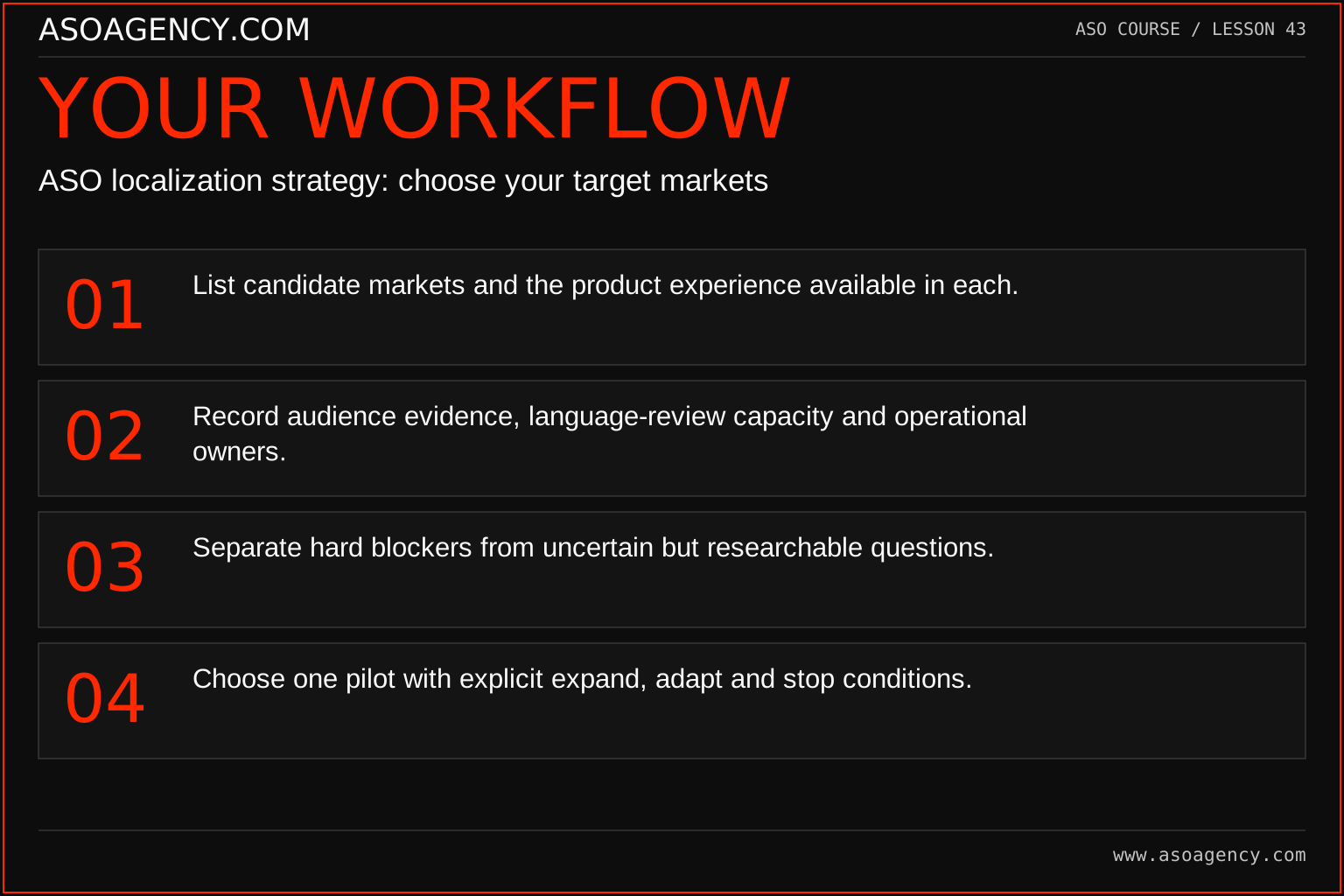
- List candidate markets and the product experience available in each.
- Record audience evidence, language-review capacity and operational owners.
- Separate hard blockers from uncertain but researchable questions.
- Choose one pilot with explicit expand, adapt and stop conditions.
Worked example and interpretation
Trail Notes and numerical research scenarios are fictional teaching examples. Platform limits, where shown, come from the linked official references.
Trail Notes considers three markets. One has promising observed interest but no competent language reviewer; another has lower apparent demand but a supported product and local review capacity. The team selects the latter for a bounded pilot. The first remains a research candidate. This decision reflects execution readiness and product fit rather than a claim that the selected market has the highest theoretical volume.
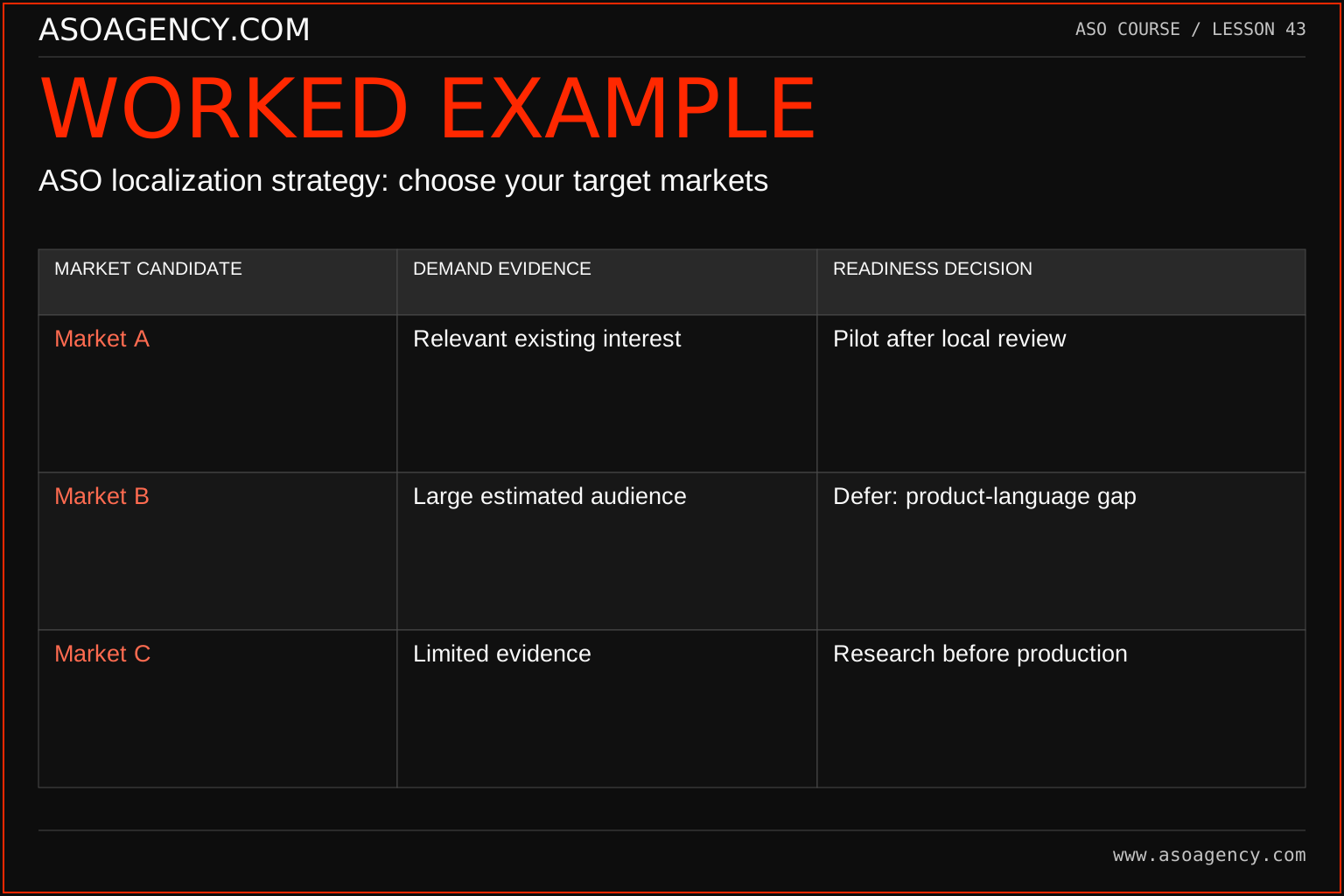
| Market candidate | Demand evidence | Readiness decision |
|---|---|---|
| Market A | Relevant existing interest | Pilot after local review |
| Market B | Large estimated audience | Defer: product-language gap |
| Market C | Limited evidence | Research before production |
The fictional matrix deliberately avoids invented country rankings or market-size numbers. It demonstrates why demand, readiness and confidence need separate treatment. Market A is not guaranteed to succeed; it has a feasible learning path. Market B may be commercially attractive but cannot be responsibly launched with the current experience. Market C needs research rather than an automatic rejection based on missing information.
Build a handover someone can use
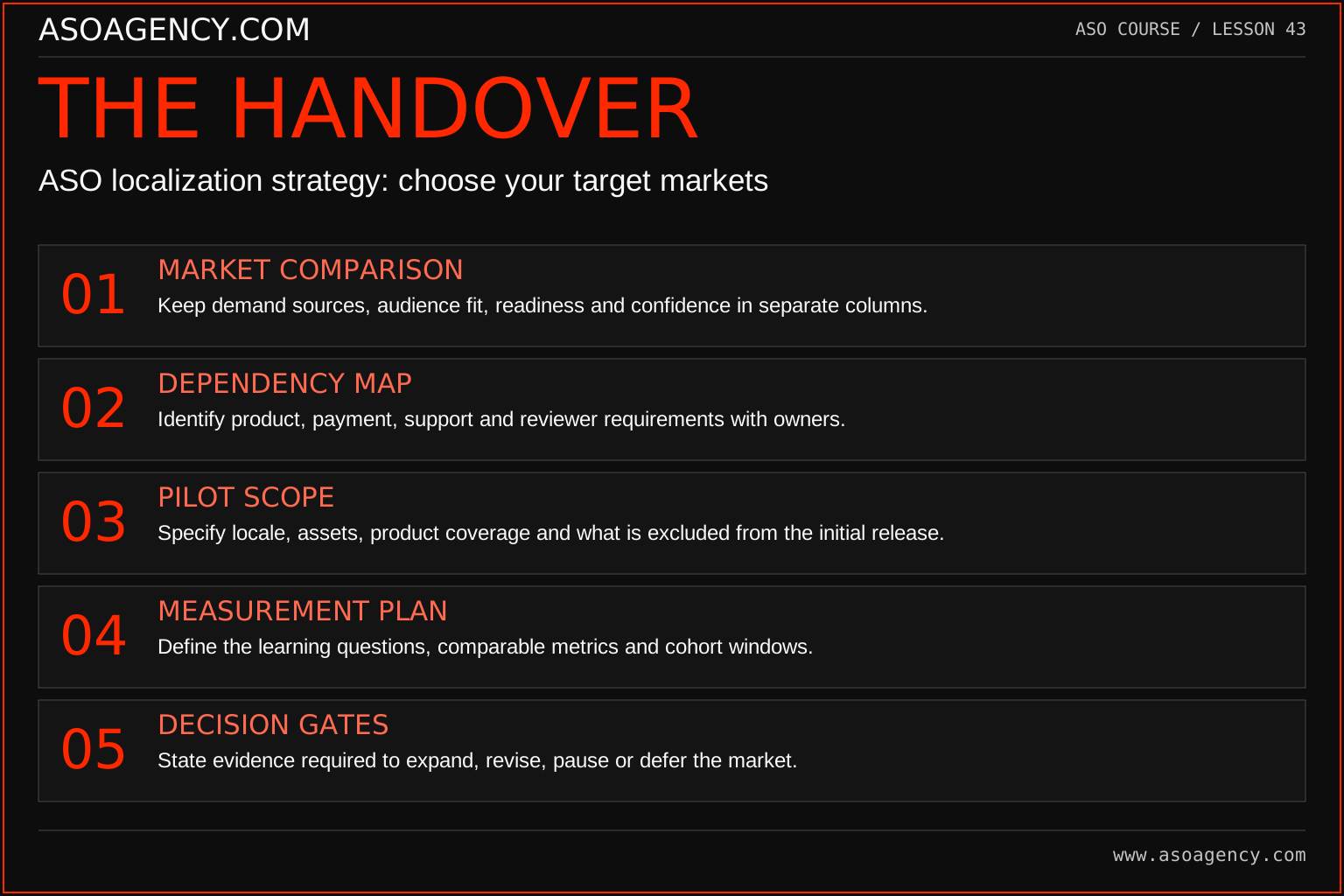
Market comparison
Keep demand sources, audience fit, readiness and confidence in separate columns.
Dependency map
Identify product, payment, support and reviewer requirements with owners.
Pilot scope
Specify locale, assets, product coverage and what is excluded from the initial release.
Measurement plan
Define the learning questions, comparable metrics and cohort windows.
Decision gates
State evidence required to expand, revise, pause or defer the market.
Your ASO assignment
Use your own app and evidence, or work through the teaching case. Keep your observations separate from assumptions and explain the reasoning behind your decisions.
- Build a three-market readiness matrix.
- Name one hard blocker and one evidence gap for each market.
- Write a one-market pilot decision and what would reverse it.
Scenario challenge
A stakeholder asks for ten languages because translation is inexpensive. Build a readiness checklist that reveals the design, product, support and maintenance work hidden by that estimate.
Assess your work
- Product support is assessed before listing translation.
- Language and territory assumptions are explicit.
- The pilot has an owner and learning-based decision conditions.
Common mistakes to catch
- Selecting markets only by population or a vendor score.
- Advertising a local experience that the product cannot deliver.
Knowledge check
Demand looks strong but support and core content are unavailable locally. Launch the translated listing?
Read the answer and reasoning
Resolve or explicitly narrow the product promise first. Translation does not create service readiness. Investigate what a user can actually complete and choose a smaller truthful scope or delay the affected market rather than acquiring users into a known mismatch.
Sources and further reading
Platform references reviewed 29 September 2026. These sources support platform capabilities and constraints; the teaching frameworks, assignments and illustrative cases are original course material.
- Apple — Localize app information — Localized metadata and language behavior.
- Google Play — Translate and localize your app — Localization workflow and language support.
Your ASO lesson notes
Use this space for your assignment, evidence and handover. Select Save to keep a draft in this browser, or download a copy to take with you.
Notes stay on this device and are not submitted to ASO Agency.
Complete your assignment with the Interactive ASO audit checklist.
Loading your progress…
Progress is saved only in this browser. It does not sync across devices. Mark a lesson complete after doing its exercise.