ASO course · lesson 17 of 60
Localized ASO keyword research: a practical workflow
Build a local research process that goes beyond literal translation of the source keyword list.
By Gabriel Machuret · Editorial methodology
Before you start: A source-market keyword map and a candidate target locale.
Module 3: Keyword evaluation and strategy
Plan about 50 minutes for reading, practice and review
You will produce: A target-locale research brief and approved terminology shortlist.
Understand the decision
Translate the job before the phrase
Start with the user situation and product value, then ask how people in the target market express that need. A dictionary-equivalent phrase can be uncommon, ambiguous or associated with another product category. Use a reviewer familiar with the language and context. Machine-generated alternatives can help explore possibilities, but they do not independently establish local search behavior.
Keep locale context attached
Language, territory and storefront are related but not interchangeable. The same language can serve markets with different vocabulary, expectations and commercial readiness. Maintain separate evidence notes rather than assuming one translated file covers every region. Also check whether the app itself, support and commercial offer can serve the audience the localized listing would attract.
Review meaning in the final layout
A phrase that works in a research sheet may become unclear when shortened for metadata or placed over a screenshot. Ask the local reviewer to assess the final rendered copy and the corresponding product screen. Record approved terminology and rejected literal translations in a glossary so future releases do not repeatedly rediscover the same issue.
Apply the method in practice
Research the local task, not the English word
Give the language specialist a product demonstration, target audience and source-language intent statement. Ask how someone would describe that need naturally in the target market. A literal translation can be grammatical but uncommon, overly formal or associated with a different category. Preserve alternative expressions with explanations rather than immediately selecting the one closest to English. Storefront, language and country are related but not identical; record the actual destination locale and audience so the research can be interpreted correctly.
Validate meaning with local evidence
Inspect relevant local results and use customer language where available. Ask the reviewer to explain ambiguous words and regional differences. Back-translation can reveal a meaning shift, but a phrase translating back neatly does not establish search demand or naturalness. Keep demand estimates separate from linguistic confidence. If the product experience remains English-only, evaluate whether the localized promise would imply a level of support the app cannot provide. Keyword opportunity does not remove the need for a coherent local experience.
Preserve decisions through production
Create a glossary with approved terms, rejected alternatives, grammatical notes and contexts. A short field may require a different construction from a sentence in a screenshot. Record character or byte constraints only after the reviewer has access to the actual field and design. When a designer shortens a phrase, send the revised version back for meaning review. The approved research phrase and final published string should remain linked so future maintenance does not accidentally undo the local reasoning.
Platform references for this work: Apple — Localize app information · Google Play — Translate and localize your app
Your step-by-step procedure
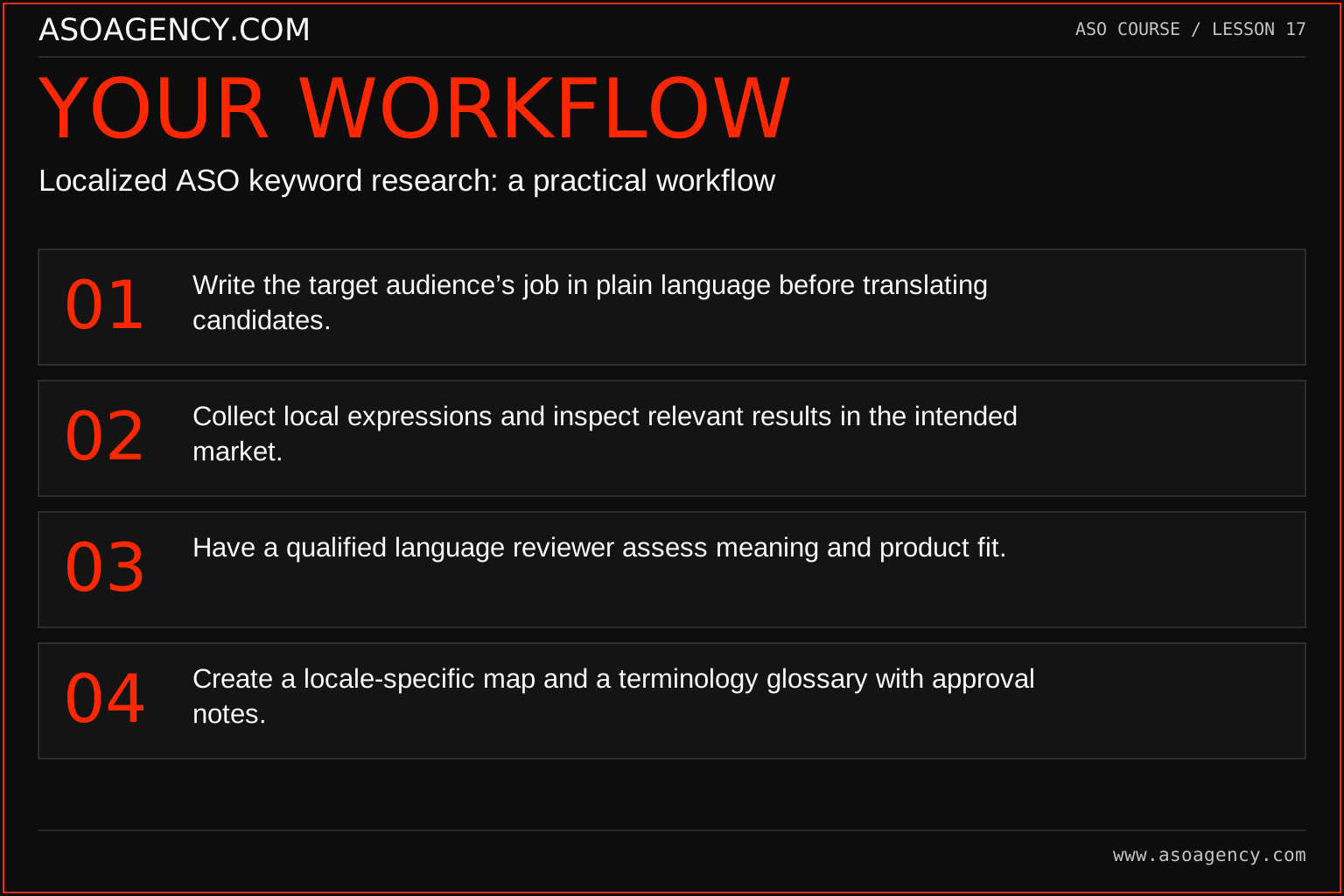
- Write the target audience’s job in plain language before translating candidates.
- Collect local expressions and inspect relevant results in the intended market.
- Have a qualified language reviewer assess meaning and product fit.
- Create a locale-specific map and a terminology glossary with approval notes.
Worked example and interpretation
Trail Notes and numerical research scenarios are fictional teaching examples. Platform limits, where shown, come from the linked official references.
Trail Notes considers a second market where a literal translation of “trail” commonly suggests a route planner. A local reviewer recommends language closer to walking memories. The team records the reason and validates the phrase against observed app categories. It does not assume the source market’s demand score can be copied into the target sheet or that translated screenshots prove the product is localized.
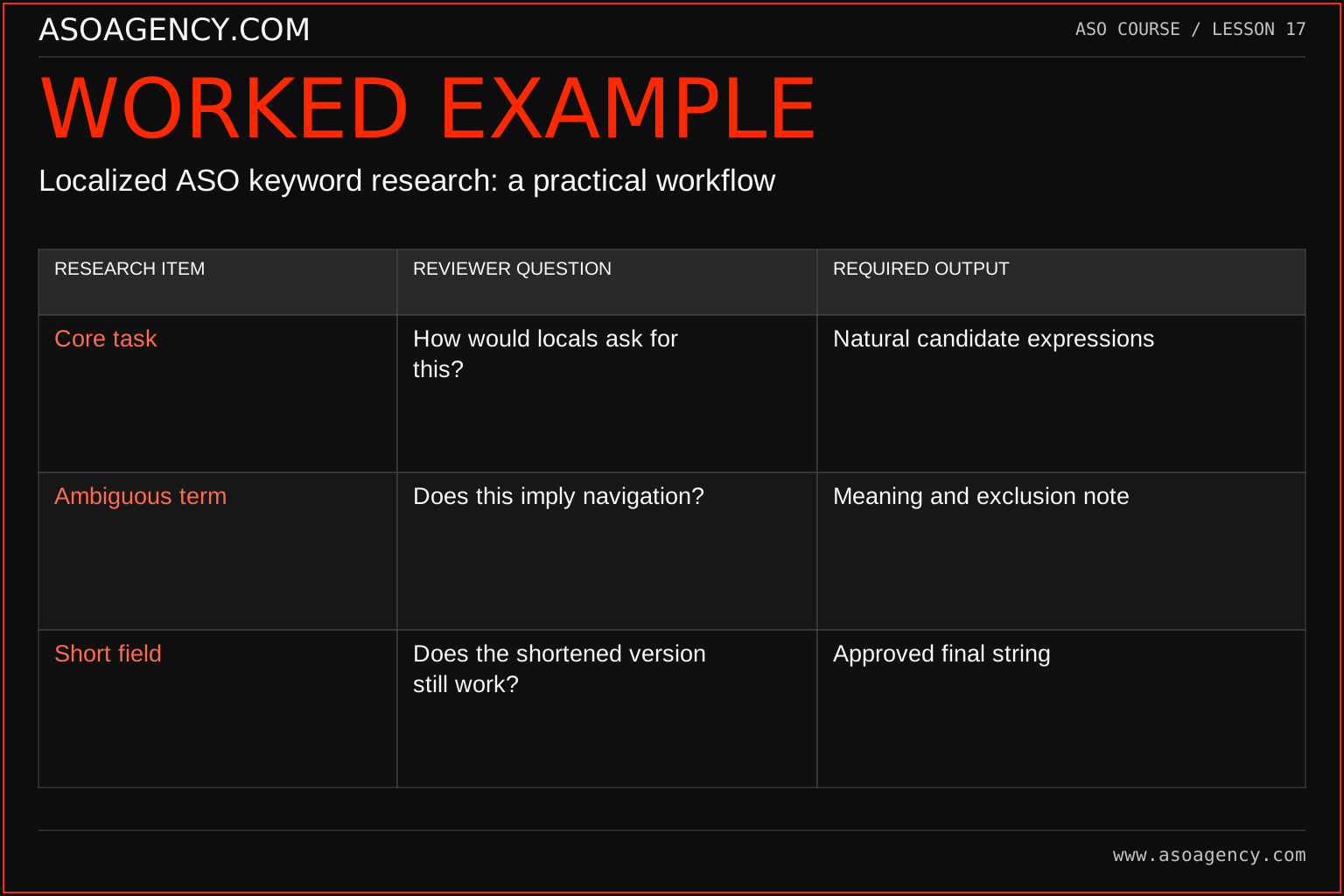
| Research item | Reviewer question | Required output |
|---|---|---|
| Core task | How would locals ask for this? | Natural candidate expressions |
| Ambiguous term | Does this imply navigation? | Meaning and exclusion note |
| Short field | Does the shortened version still work? | Approved final string |
The reviewer is contributing research and judgment, not merely replacing words. A useful response explains why one term is natural in this context and another creates the wrong expectation. Keep that rationale beside the final phrase. If demand data is unavailable, say so and prioritize a limited learning plan rather than presenting linguistic confidence as market-size evidence. Revisit the decision when the local product or audience changes.
Build a handover someone can use
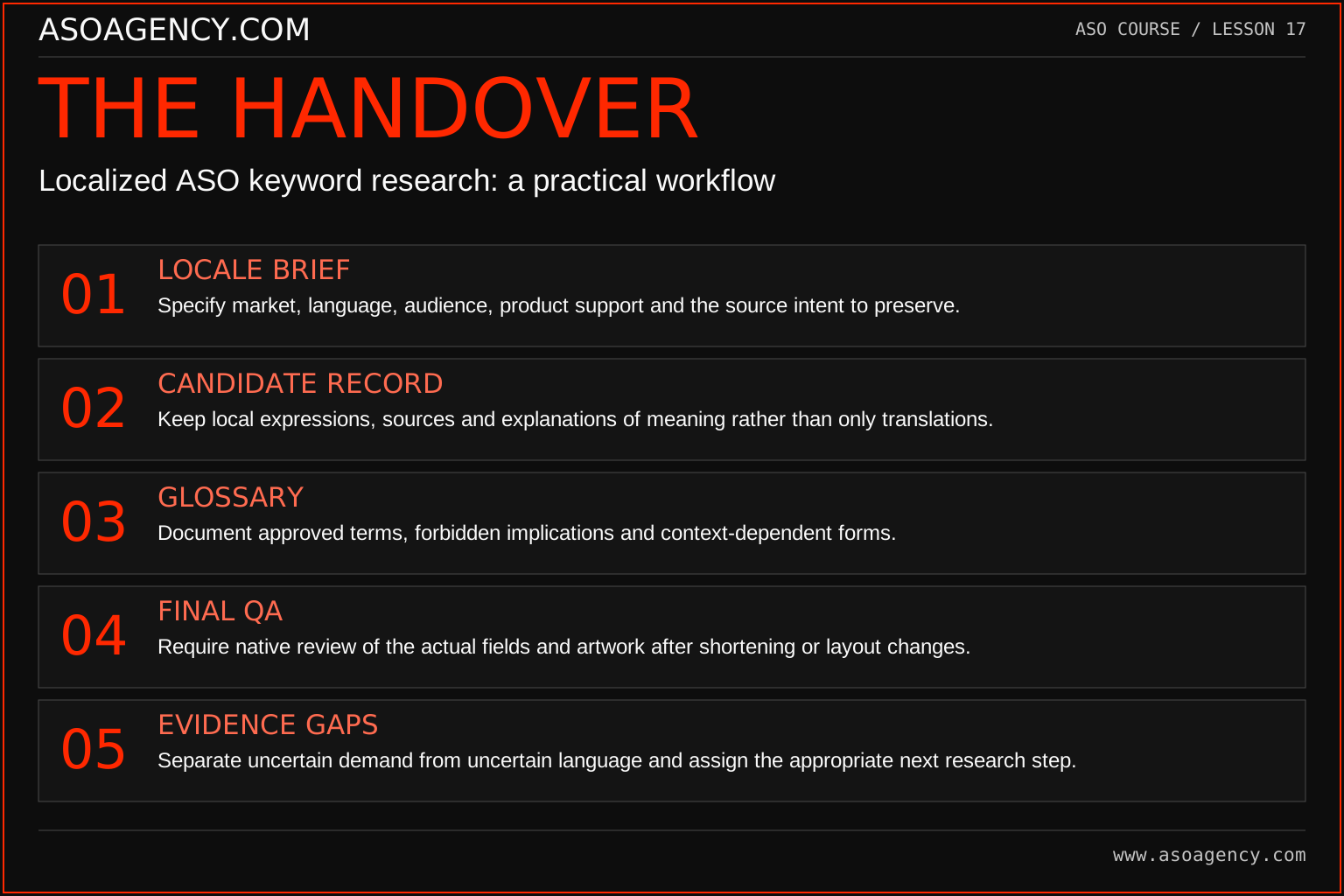
Locale brief
Specify market, language, audience, product support and the source intent to preserve.
Candidate record
Keep local expressions, sources and explanations of meaning rather than only translations.
Glossary
Document approved terms, forbidden implications and context-dependent forms.
Final QA
Require native review of the actual fields and artwork after shortening or layout changes.
Evidence gaps
Separate uncertain demand from uncertain language and assign the appropriate next research step.
Your ASO assignment
Use your own app and evidence, or work through the teaching case. Keep your observations separate from assumptions and explain the reasoning behind your decisions.
- Prepare a brief a local reviewer could use without knowing your earlier research.
- Record five translated candidates with context and unresolved questions.
- Write a fallback decision if competent local review is unavailable.
Scenario challenge
A translation reads correctly but local search results suggest a navigation meaning. Explain how you would resolve the conflict with the reviewer and why back-translation alone cannot approve the keyword.
Assess your work
- The target job survives translation.
- Language and territory assumptions are explicit.
- Unreviewed machine output is not labeled expert localization.
Common mistakes to catch
- Copying source-market demand scores onto translated words.
- Advertising full local-language support when only the listing is translated.
Knowledge check
You cannot obtain a competent reviewer this month. Is automatic translation enough to claim a localized launch?
Read the answer and reasoning
Treat it as an unverified draft and reduce the release scope. You can research and prepare assets, but should not claim language quality or product readiness you have not established. Choose a smaller reviewed market or delay the affected promise.
Sources and further reading
Platform references reviewed 29 September 2026. These sources support platform capabilities and constraints; the teaching frameworks, assignments and illustrative cases are original course material.
- Apple — Localize app information — Localized metadata and language behavior.
- Google Play — Translate and localize your app — Localization workflow and language support.
Your ASO lesson notes
Use this space for your assignment, evidence and handover. Select Save to keep a draft in this browser, or download a copy to take with you.
Notes stay on this device and are not submitted to ASO Agency.
Complete your assignment with the App Store keyword-field builder.
Loading your progress…
Progress is saved only in this browser. It does not sync across devices. Mark a lesson complete after doing its exercise.