ASO course · lesson 54 of 60
ASO troubleshooting: download and conversion drops
Investigate a decline through data validity, segmentation and competing explanations before making changes.
By Gabriel Machuret · Editorial methodology
Before you start: A metric dictionary, publication log and access to the relevant report owners.
Module 9: Measurement and growth integration
Plan about 55 minutes for reading, practice and review
You will produce: Module project: a segmented measurement report, launch plan and evidence-led decline investigation.
Understand the decision
Verify that the decline is real
Check reporting delays, date completeness, changed definitions and filters before acting. Compare counts and rates separately. A lower number of downloads may reflect fewer visitors even if conversion is stable; a lower aggregate rate may reflect source mix. Document the observation precisely so the investigation does not begin with an assumed cause such as “the algorithm changed.”
Localize the problem
Break the result into meaningful sources, markets, devices or versions where evidence allows. Review availability, publication errors, technical incidents, campaigns and known seasonal context. A decline confined to one locale suggests a different investigation from a global acquisition fall. Keep the number of comparisons focused on plausible explanations rather than searching indefinitely for an interesting correlation.
Choose the next discriminating check
List competing hypotheses and the observation that would support or weaken each. Fix a confirmed operational error promptly, but avoid making several unrelated changes that erase the evidence trail. If no cause is established, report the uncertainty and the next check. A professional investigation can conclude “not yet resolved” while still giving the team a clear sequence of work.
Apply the method in practice
Validate the signal before changing the listing
Check reporting availability, date completeness, metric definitions and filters. A partial day, delayed export or switch from acquisitions to clicks can create an apparent drop. Compare absolute counts and rates so a denominator change is visible. Confirm the affected store, market, source and version. Preserve the original observation and the corrected interpretation if a reporting issue is found. The first response should reduce uncertainty, not add several untracked changes that make the diagnosis harder.
Locate the change in the journey
Separate exposure, store decision, first use and useful product outcomes using compatible measures. A traffic decline with stable rates differs from stable traffic with weaker conversion. Segment by source, market and version where data supports it. Review recent releases, campaigns, pricing, availability and competitor context. Build competing explanations and identify the fastest check that could rule each out. Avoid treating a timing coincidence as proof that the latest metadata edit caused the problem.
Choose a proportionate intervention
Correct verified errors promptly, such as an unavailable offer or broken destination. If a product defect is confirmed, coordinate its repair and log rollout timing. For uncertain message effects, use the evidence and experiment process rather than repeatedly swapping assets. Define recovery in terms of the affected population and outcome, and keep a review date. After resolution, write the incident learning so the same measurement or release mistake is less likely to recur.
Platform references for this work: Google Play — Understand and grow your user base · Android Developers — Android vitals
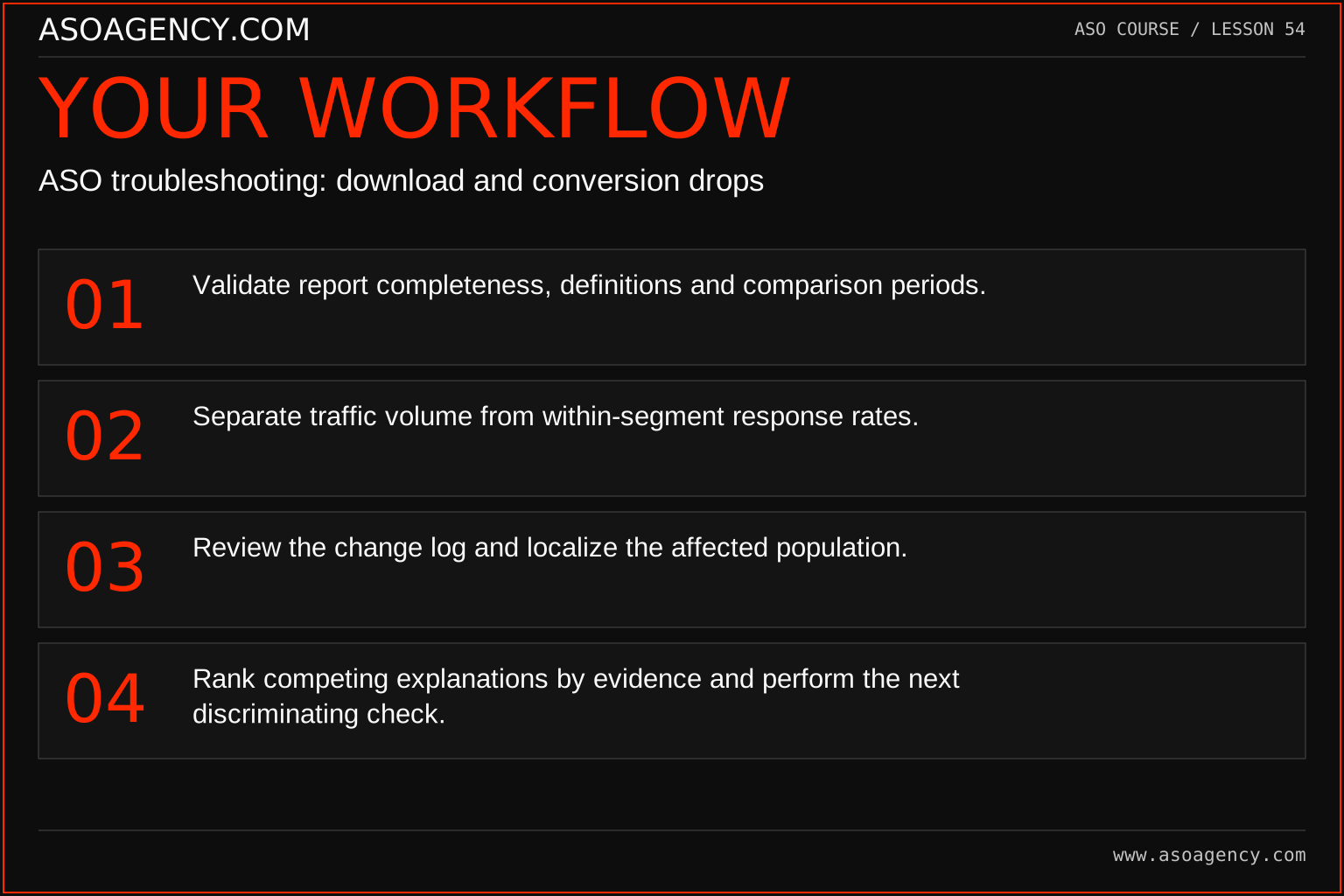
Your step-by-step procedure
- Validate report completeness, definitions and comparison periods.
- Separate traffic volume from within-segment response rates.
- Review the change log and localize the affected population.
- Rank competing explanations by evidence and perform the next discriminating check.
Worked example and interpretation
Trail Notes and numerical research scenarios are fictional teaching examples. Platform limits, where shown, come from the linked official references.
Trail Notes’ downloads fall 25% in an illustrative report. The matched visitor-to-outcome rate is unchanged, while a referral campaign has stopped. The first explanation is reduced incoming traffic, not a sudden screenshot failure. In another market, the listing is unavailable due to a publication issue; that requires an operational correction. The team treats these as separate problems instead of applying one global title rewrite.
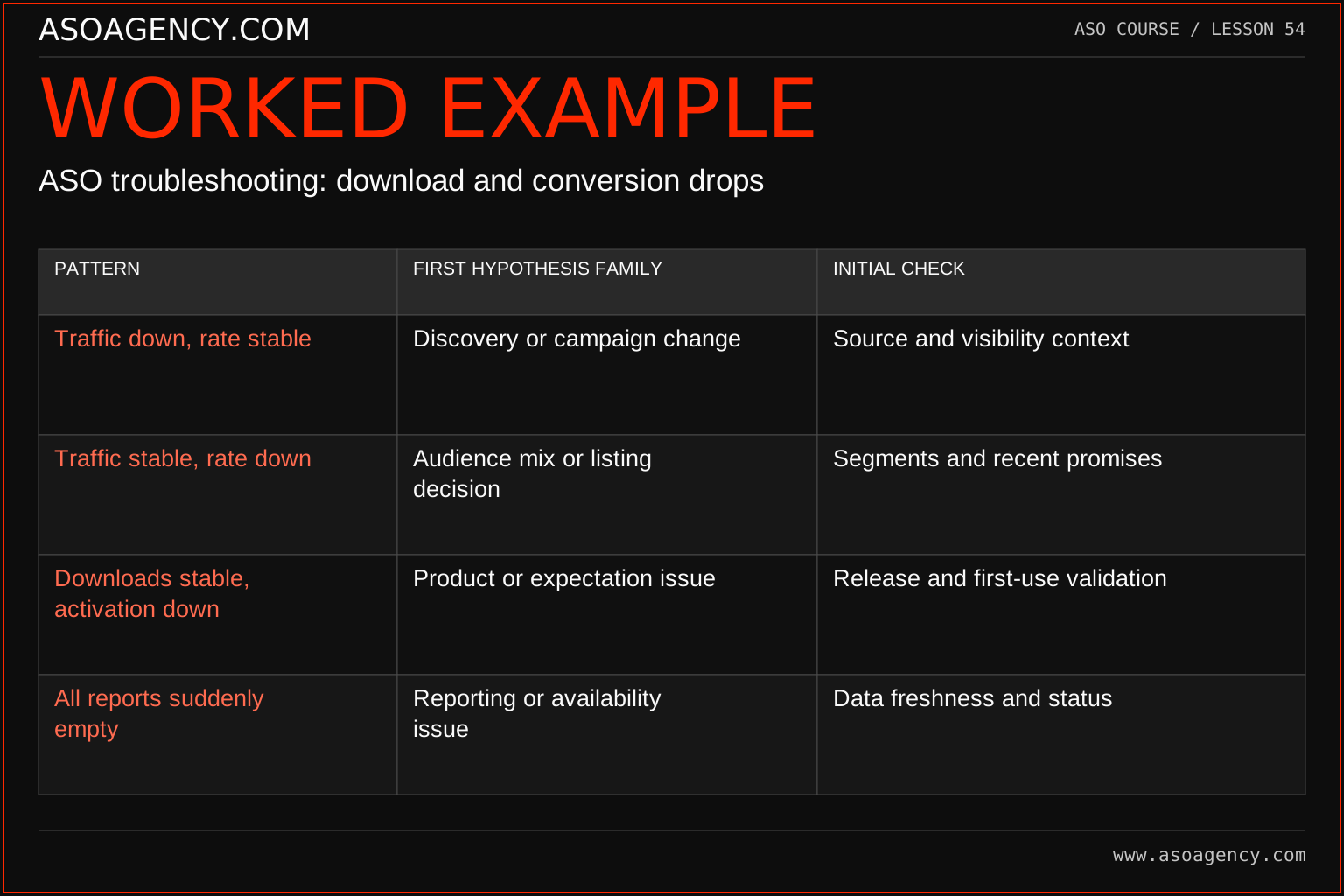
| Pattern | First hypothesis family | Initial check |
|---|---|---|
| Traffic down, rate stable | Discovery or campaign change | Source and visibility context |
| Traffic stable, rate down | Audience mix or listing decision | Segments and recent promises |
| Downloads stable, activation down | Product or expectation issue | Release and first-use validation |
| All reports suddenly empty | Reporting or availability issue | Data freshness and status |
The patterns direct investigation; they are not diagnoses by themselves. Several mechanisms can produce the same pattern, and multiple changes can occur together. Start with data validity and the narrowest affected population. A careful incident note should state what is known, what is suspected and what the next check will resolve. This is more useful than an immediate claim that an algorithm update caused the decline.
Build a handover someone can use
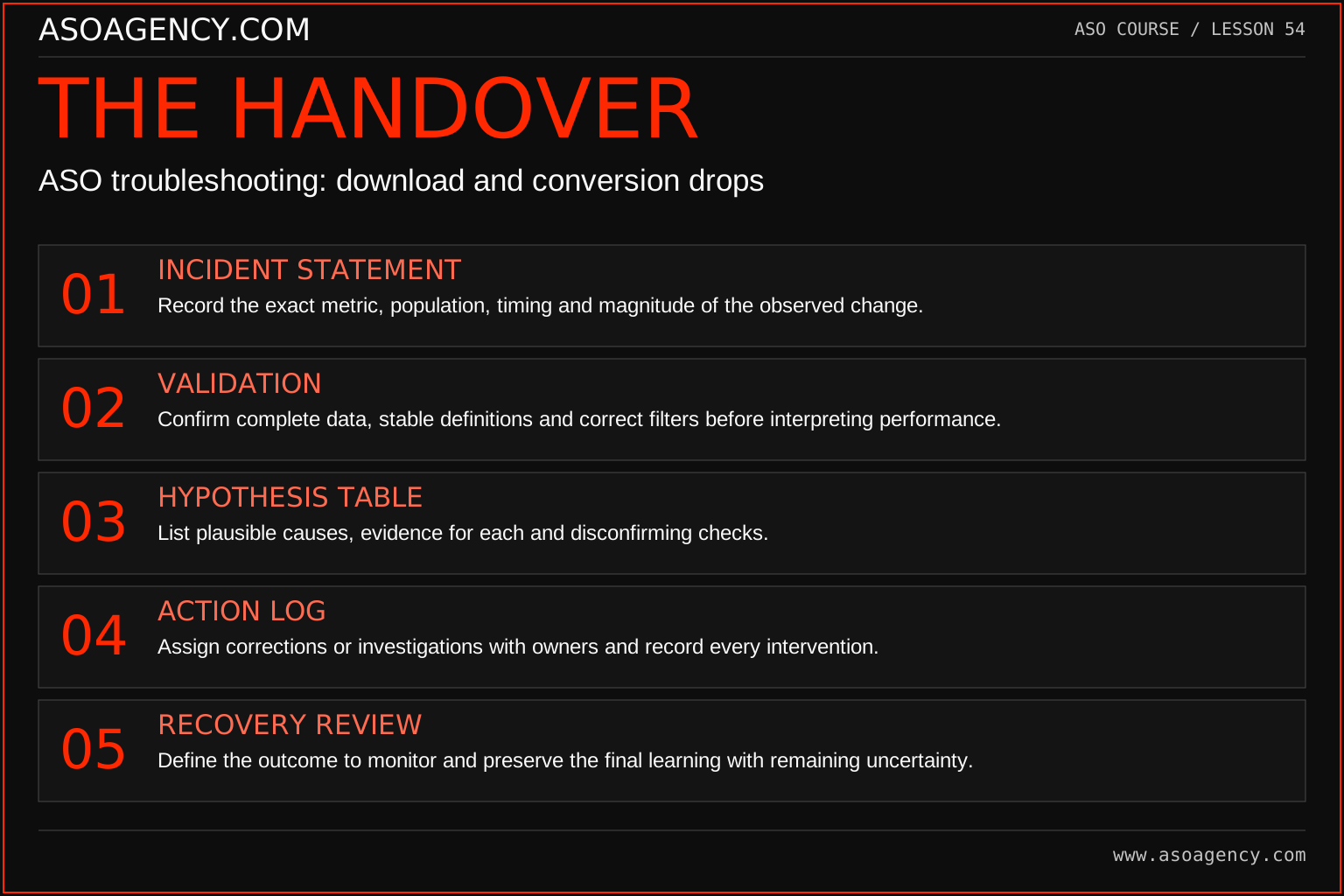
Incident statement
Record the exact metric, population, timing and magnitude of the observed change.
Validation
Confirm complete data, stable definitions and correct filters before interpreting performance.
Hypothesis table
List plausible causes, evidence for each and disconfirming checks.
Action log
Assign corrections or investigations with owners and record every intervention.
Recovery review
Define the outcome to monitor and preserve the final learning with remaining uncertainty.
Your ASO assignment
Use your own app and evidence, or work through the teaching case. Keep your observations separate from assumptions and explain the reasoning behind your decisions.
- Create a diagnostic tree for volume, rate and product-quality changes.
- Investigate a hypothetical decline with three competing explanations.
- Write an incident memo with confirmed facts, unknowns and next checks.
Scenario challenge
A 30% decline appears in a report exported halfway through the day. Explain the validation sequence before comparing it with yesterday's full-day total or changing metadata.
Assess your work
- Report and filter problems are checked before strategic changes.
- Traffic, conversion and product outcomes are distinguished.
- Actions follow evidence and preserve a useful change history.
Common mistakes to catch
- Blaming an unspecified algorithm change before checking availability or reporting.
- Changing title, screenshots and targeting simultaneously during an unresolved incident.
Knowledge check
Downloads fall while comparable conversion is stable. Where should the first investigation focus?
Read the answer and reasoning
Examine incoming traffic volume and its sources, along with availability and reporting completeness. Stable conversion does not prove the listing is perfect, but it weakens the claim that a conversion failure alone explains the decline. Use the evidence to sequence the investigation rather than defaulting to a rewrite.
Sources and further reading
Platform references reviewed 29 September 2026. These sources support platform capabilities and constraints; the teaching frameworks, assignments and illustrative cases are original course material.
- Google Play — Understand and grow your user base — Current listing-click reporting, completed acquisitions and segmentation.
- Android Developers — Android vitals — Product-quality monitoring and Android performance signals.
Your ASO lesson notes
Use this space for your assignment, evidence and handover. Select Save to keep a draft in this browser, or download a copy to take with you.
Notes stay on this device and are not submitted to ASO Agency.
Complete your assignment with the Interactive ASO audit checklist.
Loading your progress…
Progress is saved only in this browser. It does not sync across devices. Mark a lesson complete after doing its exercise.