ASO course · lesson 56 of 60
ASO operations: build a sustainable workflow
Create a review rhythm that turns evidence into completed decisions without constant unplanned editing.
By Gabriel Machuret · Editorial methodology
Before you start: A prioritized backlog, change log and named contributors.
Module 10: Professional practice and capstone
Plan about 50 minutes for reading, practice and review
You will produce: An operating calendar, review agenda and decision log with clear responsibilities.
Understand the decision
Separate monitoring from decisions
Monitoring identifies changes that deserve attention. A decision review assesses evidence and assigns action. Combining them into continuous reactive editing makes it difficult to understand what changed. Define which alerts require immediate correction and which belong in the next planned review.
Give meetings an output
A review should end with keep, change, stop or investigate decisions, each with an owner. Distribute relevant evidence beforehand. Do not use a dashboard tour as a substitute for interpreting the result or resolving a blocked dependency. Track decisions separately from general discussion.
Maintain the learning record
Connect completed work to its original hypothesis and result. Revisit stale assets, unresolved research and upcoming product changes. The cadence should fit release timing and traffic rather than a universal weekly optimization rule. Leave space for incidents without abandoning the longer-term objective.
Apply the method in practice
Design different rhythms for different decisions
Operational checks may need prompt attention, while research and experiment decisions depend on evidence accumulation. Do not force everything into a weekly metadata rewrite. Define a monitoring rhythm for accuracy and availability, a planning rhythm for capacity and a learning rhythm for results. The exact intervals should fit traffic, release cadence and team availability. State the output of each review so people know whether they are checking status, approving work or making an investment decision.
Prepare evidence before the meeting
Assign someone to summarize the question, current evidence, limits and recommendation. Link the relevant artifacts rather than rebuilding a presentation from memory. The meeting should resolve decisions or blockers, not discover that metric definitions are missing. If the required evidence is unavailable, identify the owner and next action. Keep routine updates concise so discussion can focus on tradeoffs. A decision log should capture what was agreed, why and when it will be revisited.
Prevent maintenance from disappearing
Reserve capacity for expired offers, changed product screens, localization updates and broken destinations. These may not produce a new growth story but preserve the accuracy of the existing promise. Connect product release notes to the asset inventory so affected materials are reviewed. Close completed experiments with a readout before opening many new ones. The operating system should make knowledge reusable and reduce repeated mistakes, not merely increase the number of activities reported.
Platform references for this work: Apple — Acquisition analytics · Google Play — Understand and grow your user base
Your step-by-step procedure
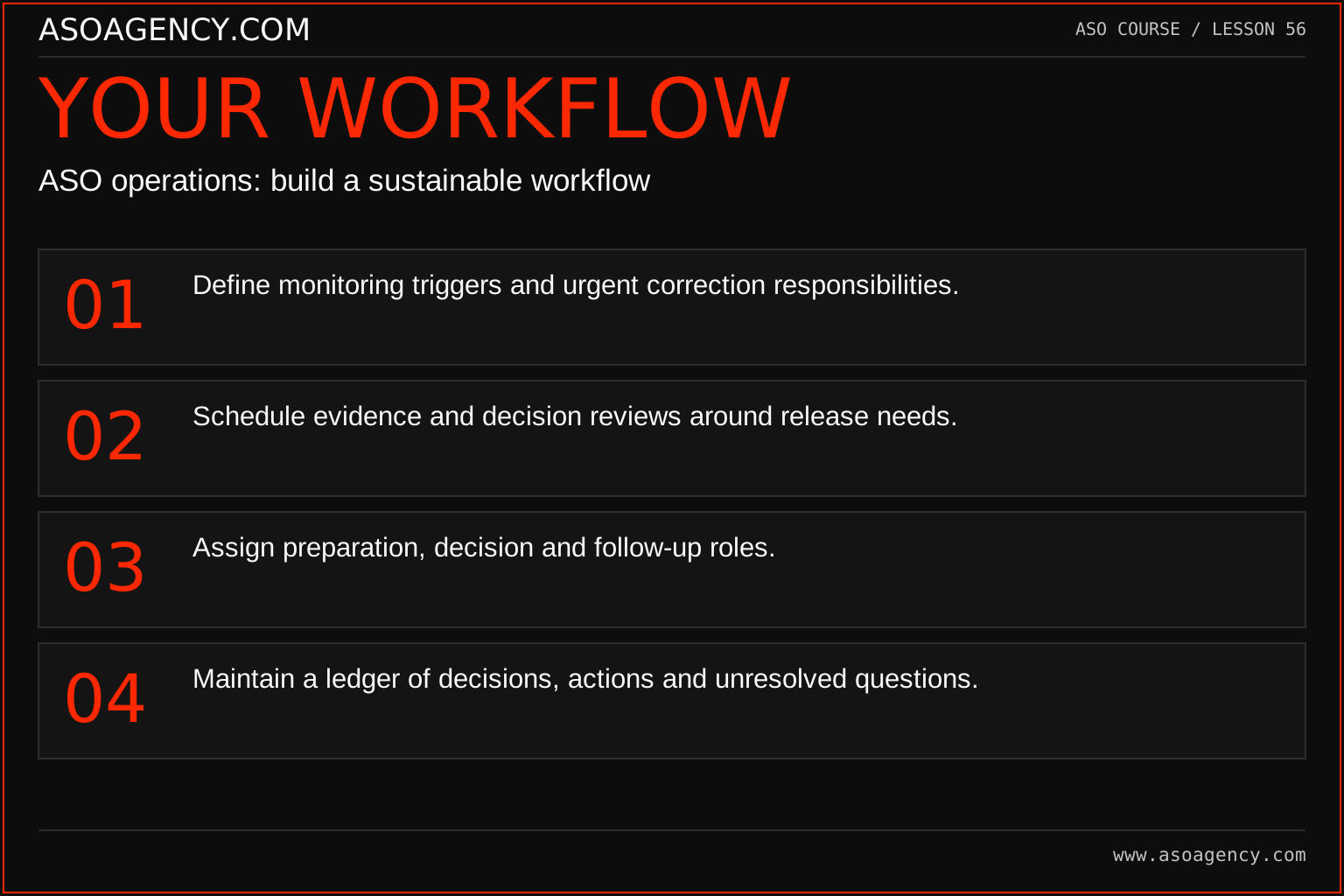
- Define monitoring triggers and urgent correction responsibilities.
- Schedule evidence and decision reviews around release needs.
- Assign preparation, decision and follow-up roles.
- Maintain a ledger of decisions, actions and unresolved questions.
Worked example and interpretation
Trail Notes and numerical research scenarios are fictional teaching examples. Platform limits, where shown, come from the linked official references.
Trail Notes checks operational issues routinely, reviews evidence at agreed intervals and prepares a new test only when the previous learning has been interpreted. An urgent false offer is corrected immediately rather than waiting for a monthly meeting.
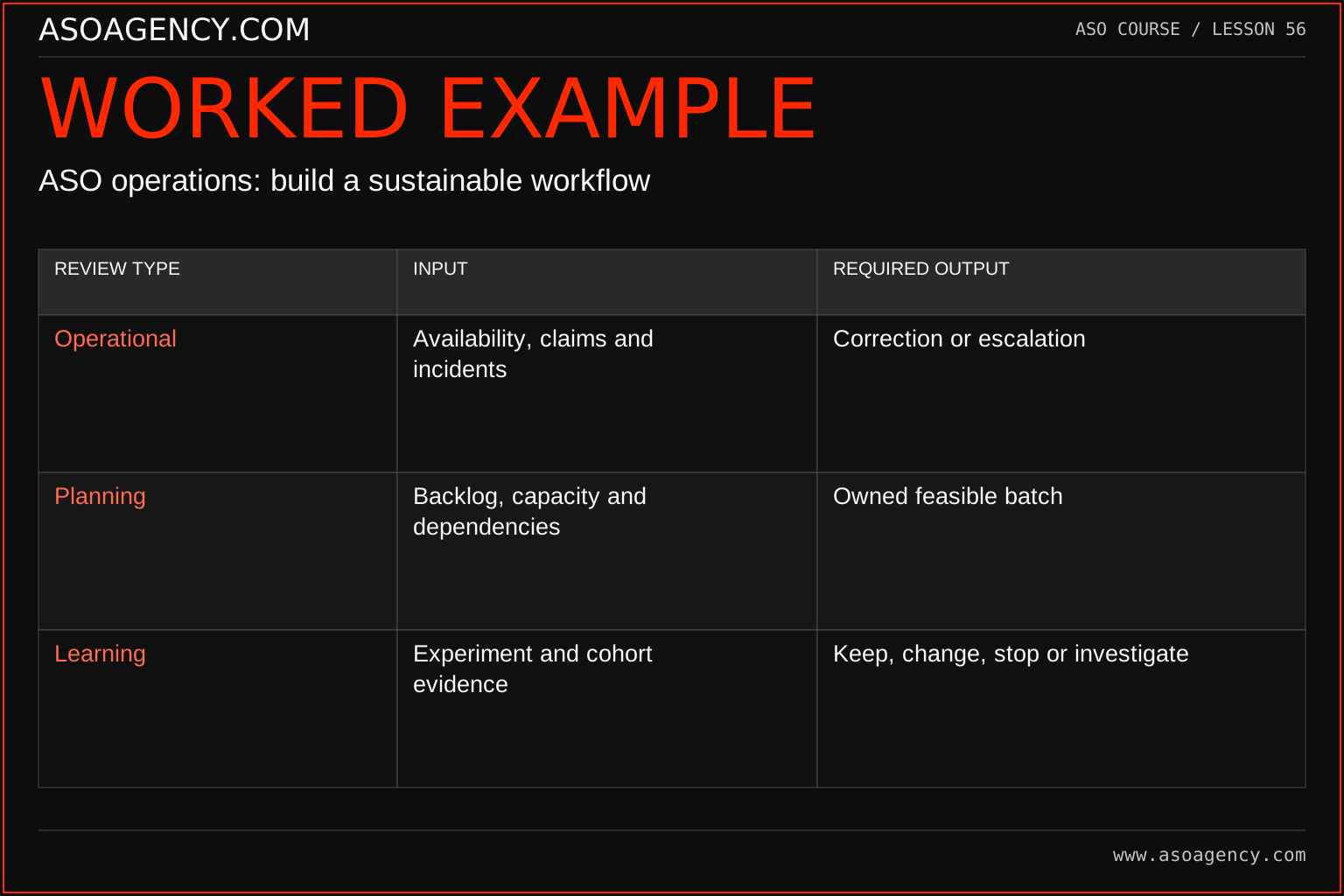
| Review type | Input | Required output |
|---|---|---|
| Operational | Availability, claims and incidents | Correction or escalation |
| Planning | Backlog, capacity and dependencies | Owned feasible batch |
| Learning | Experiment and cohort evidence | Keep, change, stop or investigate |
These reviews can be combined in a small team, but their decisions should remain distinct. A product incident may interrupt the plan; record why and what moves. A learning review may decide to keep the current listing because evidence is insufficient for a change. That is a useful outcome when the rationale and next evidence are explicit. Constant editing is not a measure of professional discipline.
Build a handover someone can use
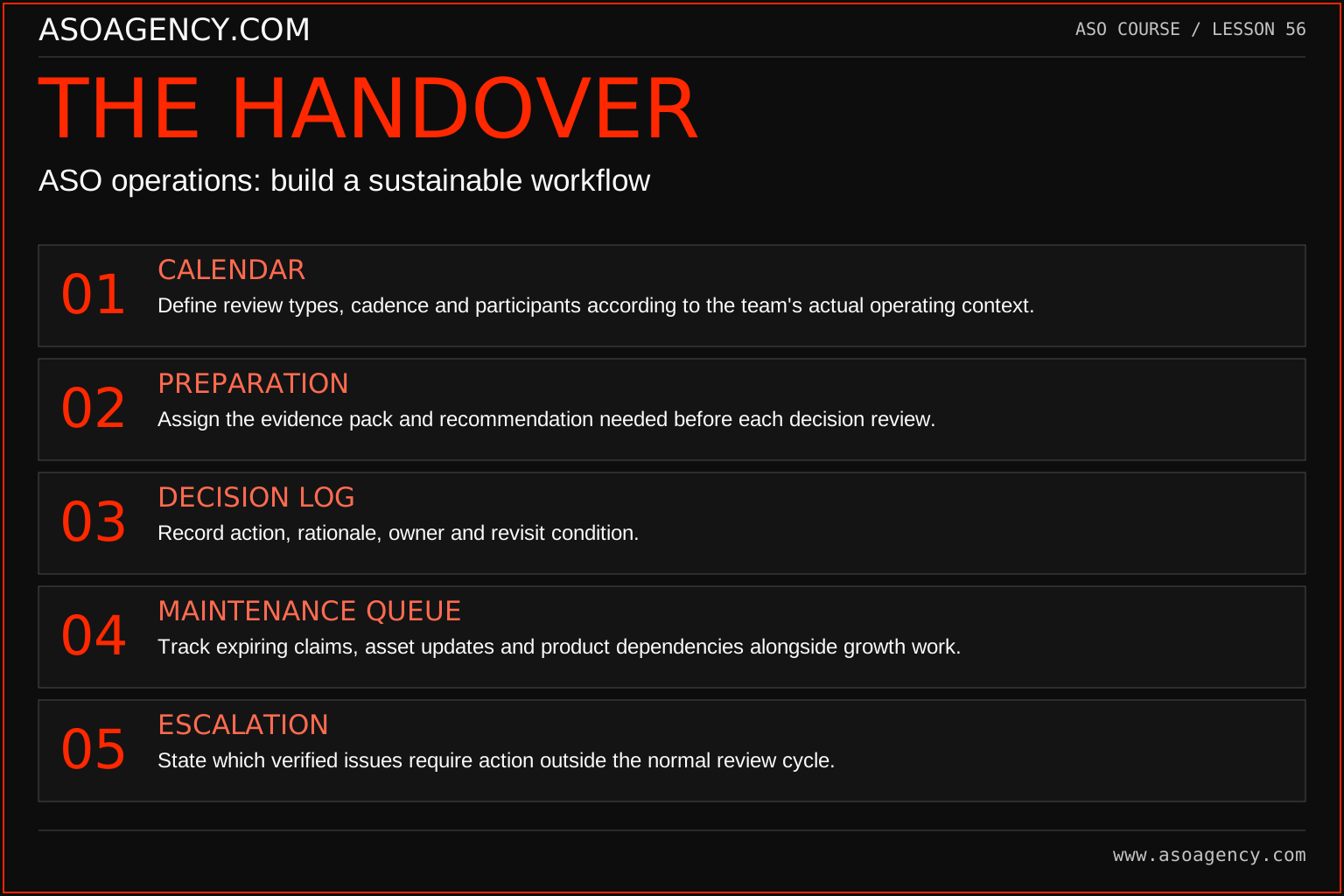
Calendar
Define review types, cadence and participants according to the team's actual operating context.
Preparation
Assign the evidence pack and recommendation needed before each decision review.
Decision log
Record action, rationale, owner and revisit condition.
Maintenance queue
Track expiring claims, asset updates and product dependencies alongside growth work.
Escalation
State which verified issues require action outside the normal review cycle.
Your ASO assignment
Use your own app and evidence, or work through the teaching case. Keep your observations separate from assumptions and explain the reasoning behind your decisions.
- Design a four-week operating calendar.
- Write the input and output of each review.
- Define one urgent trigger and one issue that can wait.
Scenario challenge
A weekly meeting repeatedly ends with “refresh screenshots.” Redesign its agenda so the team must identify the problem, evidence, owner and decision before committing to another production task.
Assess your work
- The cadence produces decisions rather than activity counts.
- Urgent accuracy or product issues have an escalation route.
- Review and interpretation capacity are included in the schedule.
Common mistakes to catch
- Changing metadata every week merely to show activity.
- Closing a test without preserving its result and rationale.
Knowledge check
What should happen when a review has no new decision-relevant evidence?
Read the answer and reasoning
Avoid manufacturing a change. Confirm whether existing actions remain appropriate, resolve blockers and identify the next evidence needed. A justified decision to keep the current version is a legitimate output.
Sources and further reading
Platform references reviewed 29 September 2026. These sources support platform capabilities and constraints; the teaching frameworks, assignments and illustrative cases are original course material.
- Apple — Acquisition analytics — Acquisition metric definitions and source attribution.
- Google Play — Understand and grow your user base — Current listing-click reporting, completed acquisitions and segmentation.
Your ASO lesson notes
Use this space for your assignment, evidence and handover. Select Save to keep a draft in this browser, or download a copy to take with you.
Notes stay on this device and are not submitted to ASO Agency.
Complete your assignment with the ASO experiment planner.
Loading your progress…
Progress is saved only in this browser. It does not sync across devices. Mark a lesson complete after doing its exercise.