ASO course · lesson 46 of 60
How to launch and measure an ASO localization pilot
Release a bounded localization and evaluate it without confusing market growth with translation impact.
By Gabriel Machuret · Editorial methodology
Before you start: A reviewed local pack, readiness matrix and measurement definitions.
Module 8: Localization and customer feedback
Plan about 50 minutes for reading, practice and review
You will produce: A localization pilot readout with evidence limits and an owned next-market decision.
Understand the decision
Separate market entry from creative effect
Opening a market, changing pricing and publishing local assets at the same time can all influence acquisition. A before-and-after increase does not isolate translation impact. Record each change and define the claim your design can support. You can still evaluate operational readiness and audience response without pretending that every incremental user was caused by localized copy.
Use comparable segments carefully
Review the relevant language, territory, source and device context where data permits. Keep absolute counts beside rates, and note suppressed or unavailable small segments. A source-market benchmark may be useful context but is not a guaranteed target for another population. Consider product activation and support load alongside store behavior to see whether the new audience receives value.
Make expansion conditional
Define what would justify adding another locale: accurate delivery, manageable support, plausible qualified demand and a maintained asset process. A pilot with limited data may still reveal a hard product blocker or language problem. Resolve those findings before expanding. The objective is repeatable learning and delivery, not a growing count of translated listing variants.
Apply the method in practice
Establish the pre-launch context
Record the target market's existing traffic, source mix, product availability and measurement definitions. A low baseline may be too unstable for a precise percentage comparison. Save absolute counts and note seasonal or campaign context. Define what changed in the pilot: text, creative, product language, support or several components together. If the rollout is a package, the later result concerns that package. Do not attribute all movement to translation alone when the product experience also changed.
Follow mature comparable cohorts
Give downstream measures enough time to mature. Compare the same store, market and outcome definitions where possible, and keep new versus returning populations explicit. If acquisition sources change, examine them separately rather than hiding the mix shift in an overall average. Some data may not support a clean causal conclusion; an observational pilot can still inform whether the experience works and whether further investment is justified. State which question each measure can answer.
Decide whether to expand, repair or pause
Review language feedback, product support burden, acquisition and useful product outcomes together. A rise in downloads with confused users may call for message or product repair before expansion. A small but coherent audience may justify continued learning rather than immediate abandonment. Define the next market or next iteration only after examining maintenance capacity. Document what must remain true for the pilot to continue and who owns unresolved local issues.
Platform references for this work: Google Play — Understand and grow your user base · Apple — Acquisition analytics
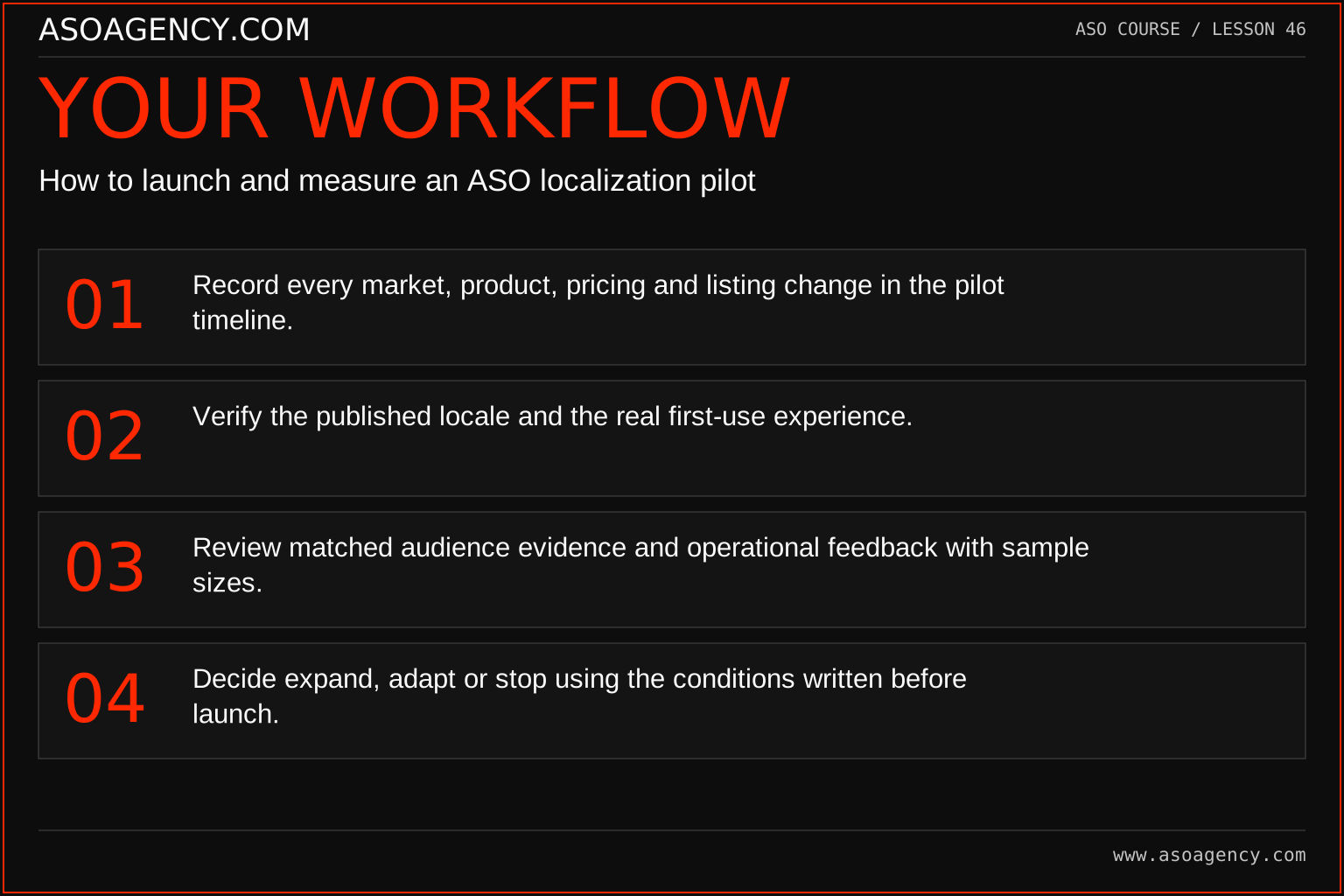
Your step-by-step procedure
- Record every market, product, pricing and listing change in the pilot timeline.
- Verify the published locale and the real first-use experience.
- Review matched audience evidence and operational feedback with sample sizes.
- Decide expand, adapt or stop using the conditions written before launch.
Worked example and interpretation
Trail Notes and numerical research scenarios are fictional teaching examples. Platform limits, where shown, come from the linked official references.
Trail Notes’ pilot receives more visitors after a local campaign begins. The team reports combined launch performance and does not assign all growth to translated screenshots. Support messages reveal a confusing export term, which the glossary and product text are updated to address. Expansion waits until the correction is verified and an owner can maintain the next locale.
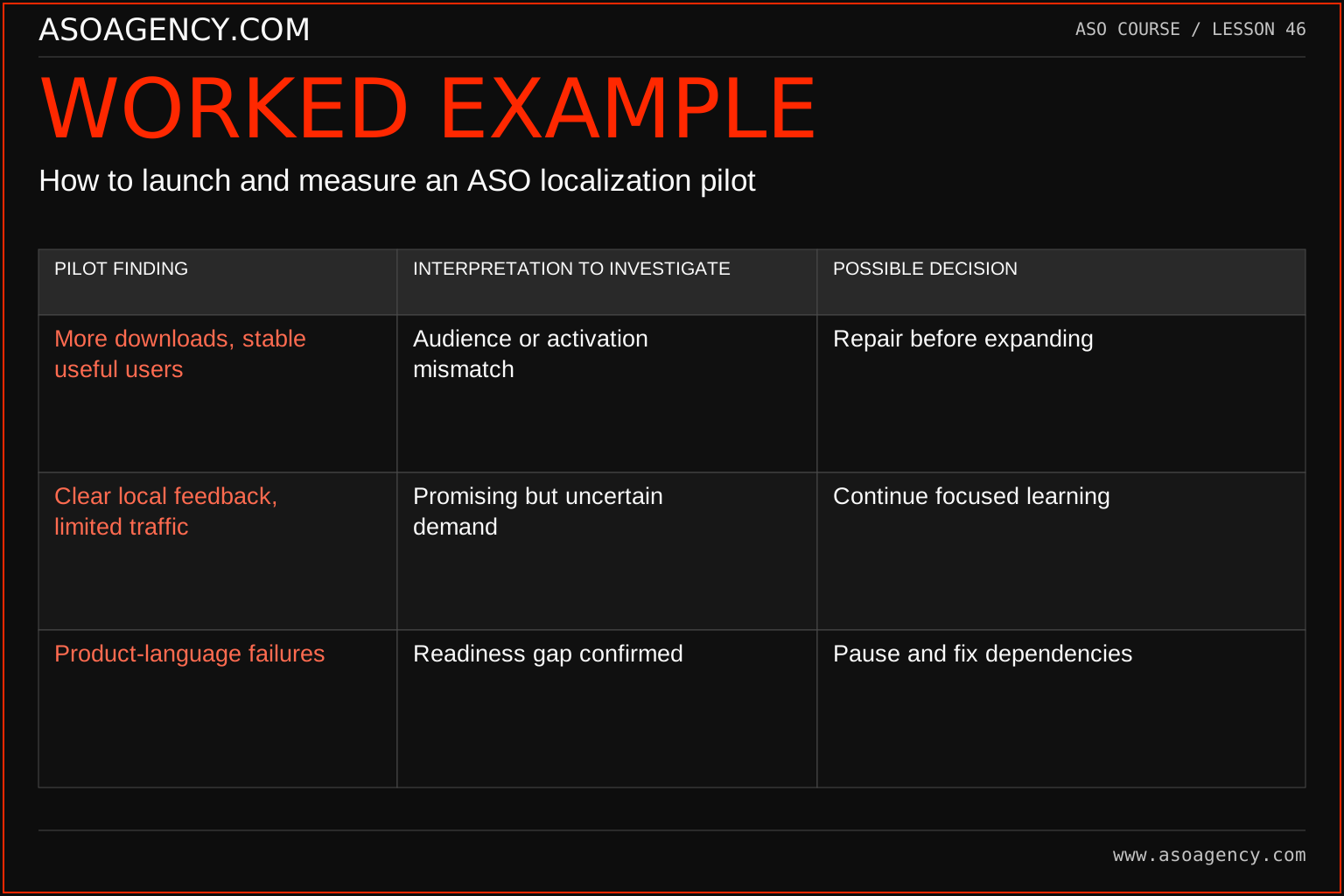
| Pilot finding | Interpretation to investigate | Possible decision |
|---|---|---|
| More downloads, stable useful users | Audience or activation mismatch | Repair before expanding |
| Clear local feedback, limited traffic | Promising but uncertain demand | Continue focused learning |
| Product-language failures | Readiness gap confirmed | Pause and fix dependencies |
These are decision patterns, not universal thresholds. The right action depends on the business objective, evidence quality and cost. A pilot report should avoid framing every increase as success or every small sample as failure. Its value is a bounded recommendation that connects measured outcomes with the local experience and the team's ability to maintain it.
Build a handover someone can use
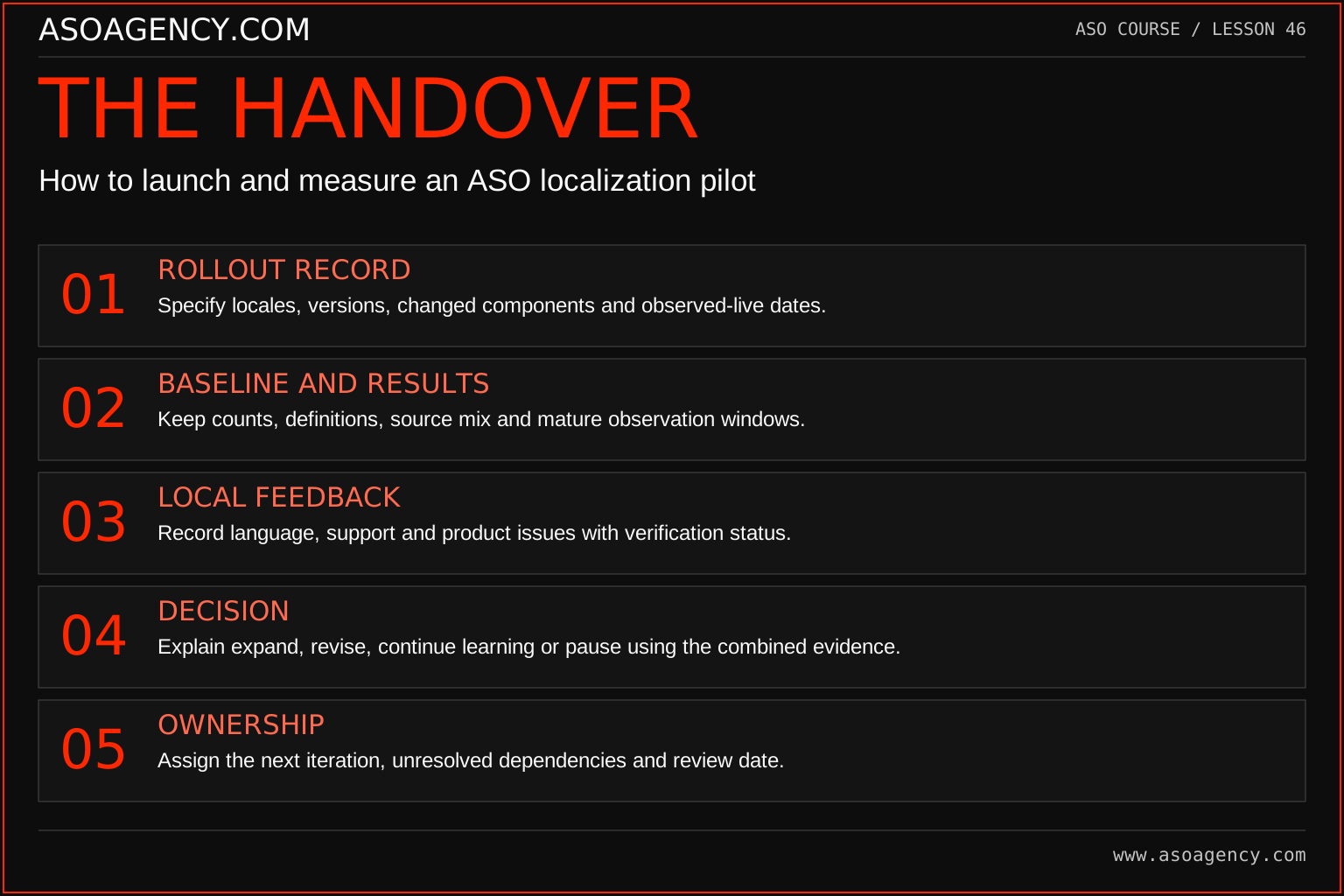
Rollout record
Specify locales, versions, changed components and observed-live dates.
Baseline and results
Keep counts, definitions, source mix and mature observation windows.
Local feedback
Record language, support and product issues with verification status.
Decision
Explain expand, revise, continue learning or pause using the combined evidence.
Ownership
Assign the next iteration, unresolved dependencies and review date.
Your ASO assignment
Use your own app and evidence, or work through the teaching case. Keep your observations separate from assumptions and explain the reasoning behind your decisions.
- Write a pilot monitoring sheet with store and product outcomes.
- Create a change timeline that includes non-ASO activity.
- Prepare expansion decisions for positive, mixed and low-data outcomes.
Scenario challenge
A localization launch includes new screenshots and a paid campaign. Write a result statement that acknowledges the package and audience change instead of claiming the translation alone caused the download increase.
Assess your work
- The conclusion matches the changes and comparison design.
- Source mix and sample size remain visible.
- Expansion depends on product and operational readiness, not traffic alone.
Common mistakes to catch
- Attributing all market-launch growth to translation.
- Comparing country totals that contain different languages and acquisition sources.
Knowledge check
Localized traffic doubles during a new paid campaign. Can you call it an organic localization win?
Read the answer and reasoning
Not from that observation. Separate available sources and record the campaign’s role. If the data cannot isolate organic acquisition or translation effect, report the combined outcome and its limits. Use a better-defined future comparison for the narrower claim.
Sources and further reading
Platform references reviewed 29 September 2026. These sources support platform capabilities and constraints; the teaching frameworks, assignments and illustrative cases are original course material.
- Google Play — Understand and grow your user base — Current listing-click reporting, completed acquisitions and segmentation.
- Apple — Acquisition analytics — Acquisition metric definitions and source attribution.
Your ASO lesson notes
Use this space for your assignment, evidence and handover. Select Save to keep a draft in this browser, or download a copy to take with you.
Notes stay on this device and are not submitted to ASO Agency.
Complete your assignment with the Interactive ASO audit checklist.
Loading your progress…
Progress is saved only in this browser. It does not sync across devices. Mark a lesson complete after doing its exercise.