ASO course · lesson 11 of 60
App store keyword intent: evaluate search opportunities
Group candidates by the outcome a searcher expects, including ambiguity and brand intent.
By Gabriel Machuret · Editorial methodology
Before you start: Your seed library and observed search-result examples.
Module 2: Audience and market research
Plan about 50 minutes for reading, practice and review
You will produce: An intent taxonomy with target, exclusion and investigation groups.
Understand the decision
A word can contain several jobs
“Tracker” can describe location, exercise, habits or packages. Classify the expected job using the surrounding phrase and the visible result mix rather than the word alone. A relevant-looking token can sit inside an irrelevant query. Your objective is a coherent relationship between the search situation, listing promise and product behavior, not maximal token coverage.
Separate brand, category and task intent
Brand searches often indicate a known destination. Category searches invite comparison. Task searches may name a specific outcome such as saving walks privately. These are useful analytical groups, not universal conversion rankings. An unfamiliar task phrase may have little demand, while a broad category term may bring mixed visitors. Record the uncertainty instead of assigning automatic value to the label.
Use ambiguity as a research trigger
Mark a candidate ambiguous when plausible interpretations lead to different products. Review the result landscape, customer language and any available query evidence. If the current evidence cannot resolve the meaning, allocate a small research step rather than forcing the term into a confident target group. A disciplined “not yet” is better than a misleading listing promise.
Apply the method in practice
Describe the task behind the phrase
For each candidate, write what a reasonable searcher would expect to accomplish. Include the required capability and any implied condition such as offline access or a particular content type. “Hiking tracker” is ambiguous: it might mean route recording, fitness analysis or keeping a record of walks. Do not resolve ambiguity in favor of your product simply because you want the term. Inspect the target-language results and customer context. If evidence remains mixed, mark uncertainty and decide whether the opportunity justifies further research.
Separate relevance gates from opportunity scores
Product truth is a gate. A term that requires an unavailable function should not survive because its demand estimate is high. After the gate, compare stronger and weaker fits, including how clearly the listing can explain the intended use. A broad phrase may attract some suitable people and many unsuitable ones; a specific phrase may match closely but have limited observed demand. Keep those tradeoffs visible rather than treating relevance as a single number that can be canceled out by volume.
Record exclusions so they remain excluded
An exclusion log is part of the strategy. Give each rejected candidate a reason tied to capability, audience, policy or evidence. Record the current product version and the condition that would permit reconsideration. If navigation is added later, the term may become relevant after product verification and renewed market research. Until then, the rejection prevents the same attractive idea entering a subtitle, screenshot or paid campaign through another team. Review the whole promise, because intent mismatch can arise from imagery as well as words.
Platform references for this work: Apple — App Store search · Google Play — Metadata policy
Your step-by-step procedure
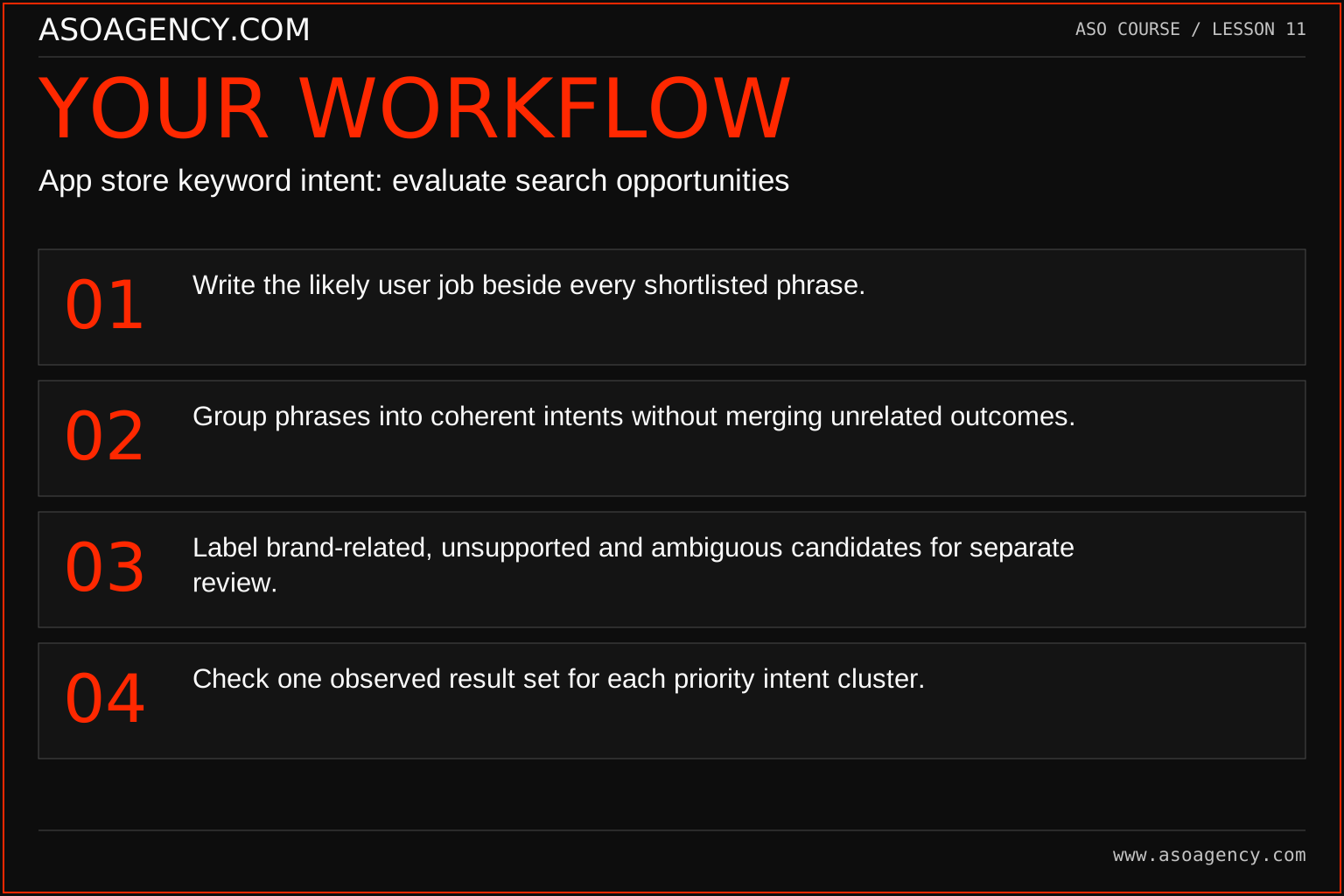
- Write the likely user job beside every shortlisted phrase.
- Group phrases into coherent intents without merging unrelated outcomes.
- Label brand-related, unsupported and ambiguous candidates for separate review.
- Check one observed result set for each priority intent cluster.
Worked example and interpretation
Trail Notes and numerical research scenarios are fictional teaching examples. Platform limits, where shown, come from the linked official references.
“Trail tracker” appears promising for Trail Notes, but observed results emphasize route recording and navigation. “Hiking diary” more directly describes the app’s memory workflow. The team keeps tracker as ambiguous and prioritizes diary research. They do not assert that every tracker searcher wants navigation; they record why the current evidence is insufficient to lead with that word.
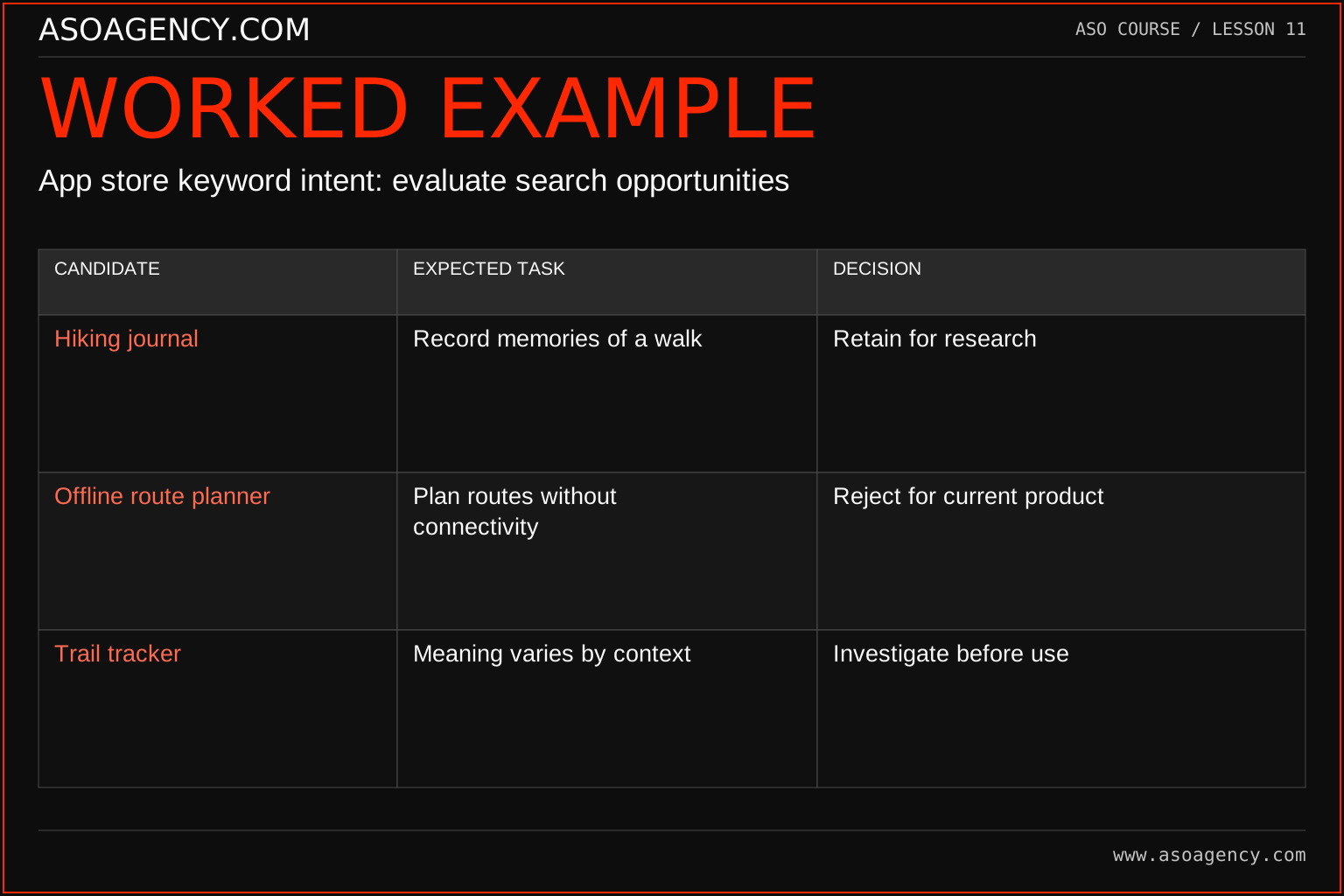
| Candidate | Expected task | Decision |
|---|---|---|
| Hiking journal | Record memories of a walk | Retain for research |
| Offline route planner | Plan routes without connectivity | Reject for current product |
| Trail tracker | Meaning varies by context | Investigate before use |
The middle row fails the product gate even if a tool gives it an appealing demand score. The last row is not automatically acceptable or unacceptable: the ambiguity requires evidence. A defensible recommendation might reserve scarce metadata space for clearer journal intent while investigating tracker in interviews and local results. The decision is about serving a searcher's task, not winning a scoring exercise. Repeat this check when product capabilities change.
Build a handover someone can use
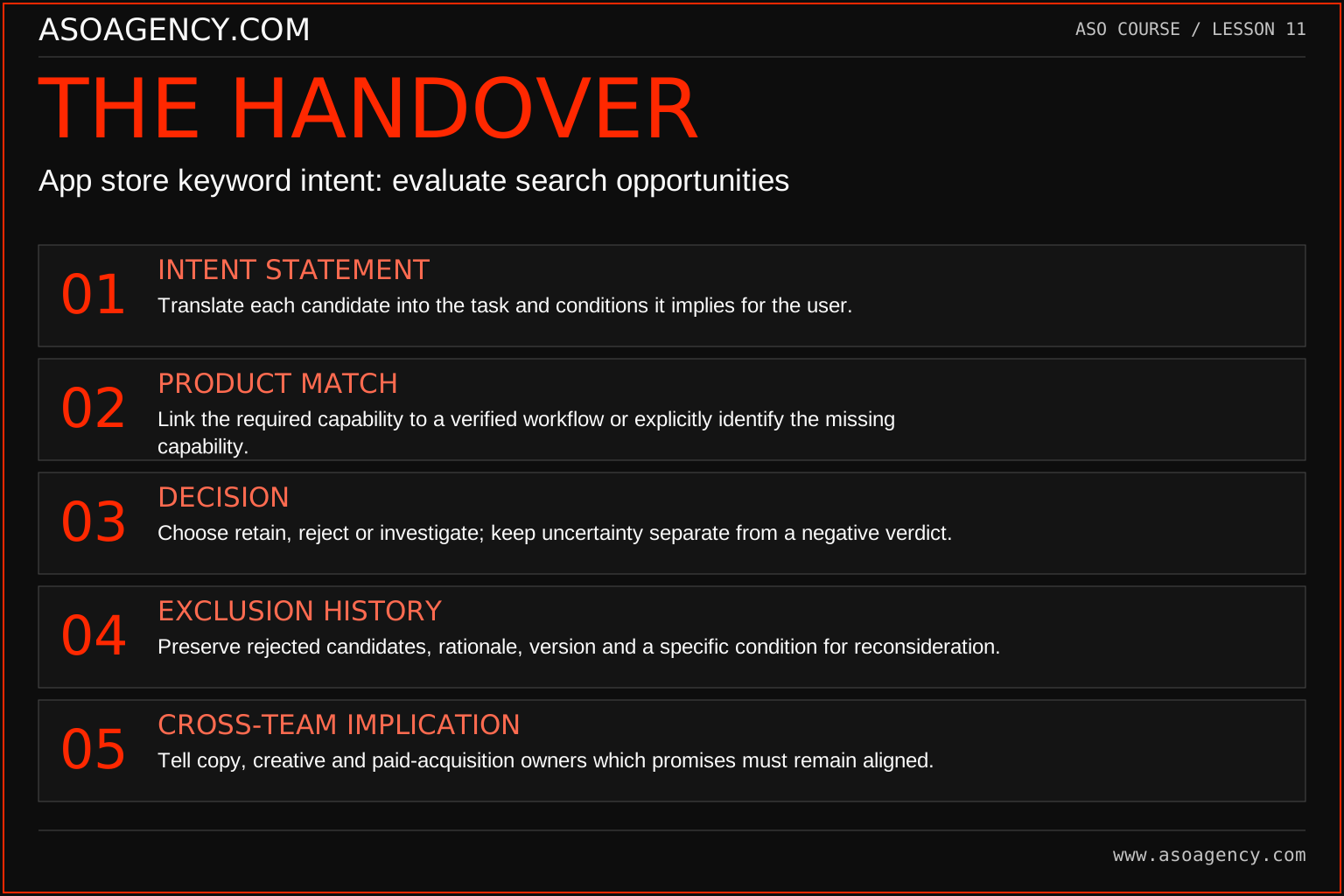
Intent statement
Translate each candidate into the task and conditions it implies for the user.
Product match
Link the required capability to a verified workflow or explicitly identify the missing capability.
Decision
Choose retain, reject or investigate; keep uncertainty separate from a negative verdict.
Exclusion history
Preserve rejected candidates, rationale, version and a specific condition for reconsideration.
Cross-team implication
Tell copy, creative and paid-acquisition owners which promises must remain aligned.
Your ASO assignment
Use your own app and evidence, or work through the teaching case. Keep your observations separate from assumptions and explain the reasoning behind your decisions.
- Cluster 20 candidates into intent groups.
- Explain three ambiguous terms using competing interpretations.
- Choose a target intent and write the promise a visitor should encounter.
Scenario challenge
A high-demand term has a partial fit: the app stores a trail name but cannot map the route. Explain why a small related feature does not automatically satisfy route-tracking intent and identify the research that could clarify the phrase.
Assess your work
- Clusters are based on expected outcomes rather than shared spelling alone.
- Ambiguous language carries a research action.
- The selected promise matches a real product workflow.
Common mistakes to catch
- Targeting a competitor brand because its demand looks attractive.
- Assuming broad relevance makes every phrase containing a token suitable.
Knowledge check
Two phrases share “walk” but one implies directions and the other a diary. Should they share the same opening message?
Read the answer and reasoning
Not automatically. They imply different jobs. If the app supports only diary use, qualify the promise clearly and avoid suggesting navigation. If both jobs are supported, investigate whether separate audience experiences are warranted before combining the messages.
Sources and further reading
Platform references reviewed 29 September 2026. These sources support platform capabilities and constraints; the teaching frameworks, assignments and illustrative cases are original course material.
- Apple — App Store search — Search presentation, relevant keywords and metadata guidance.
- Google Play — Metadata policy — Accurate, relevant metadata and prohibited presentation.
Your ASO lesson notes
Use this space for your assignment, evidence and handover. Select Save to keep a draft in this browser, or download a copy to take with you.
Notes stay on this device and are not submitted to ASO Agency.
Complete your assignment with the App Store keyword-field builder.
Loading your progress…
Progress is saved only in this browser. It does not sync across devices. Mark a lesson complete after doing its exercise.