ASO course · lesson 7 of 60
ASO keyword research: discover customer language
Collect useful search and problem language without turning interviews into a validation exercise.
By Gabriel Machuret · Editorial methodology
Before you start: The audience brief and permission to use anonymized research notes.
Module 2: Audience and market research
Plan about 50 minutes for reading, practice and review
You will produce: A customer-language sheet with quotation, situation, interpretation, use case and evidence type.
Understand the decision
Ask about a real situation
An interview is most useful when it reconstructs a recent event. Ask what triggered the need, how the person looked for help, which alternatives they considered and what they expected to happen. Avoid leading with your preferred keyword. “Would you search hiking diary?” mostly measures agreement with the interviewer; “What did you type?” can recover actual language.
Separate quotations from interpretation
Capture the person’s words separately from your summary. Record the context, including whether they are a new user, returning user or someone who abandoned the product. One memorable phrase is a candidate, not proof of common demand. Look for repeated patterns and contradictory examples. Do not silently merge different needs because they share a word such as tracking.
Turn research into testable candidates
A candidate term needs both an audience reason and a product reason. Map each phrase to a use case and the feature that fulfills it. Mark whether the evidence is a recollection, an observed search or an analyst interpretation. This creates an audit trail that survives disagreement and prevents the keyword list from becoming a pile of attractive phrases with no owner.
Apply the method in practice
Recruit for the behavior you need to understand
Choose participants who recently faced the relevant situation, including people who used a different solution or abandoned yours. Existing enthusiasts alone can describe your brand fluently without revealing how a newcomer searches. Write the recruitment criterion before contacting people: for example, someone who tried to record a walk in the last month. Record how they were recruited and which situations are missing. A small interview study can reveal language and mechanisms; it cannot establish how common each need is across the whole market. Treat it as input to keyword and proposition research.
Ask for a recent episode before asking for opinions
Start with “Tell me about the last time you wanted to remember a walk.” Follow the sequence: trigger, search or workaround, alternatives considered, decision and outcome. Ask what words they used before revealing your proposed keywords. “Would you search hiking diary?” invites agreement and contaminates the language you wanted to discover. Request clarification when a term is ambiguous: “What does tracking mean to you here?” It could mean recording memories, monitoring performance or live navigation. Preserve that meaning beside the phrase, because identical words can represent different jobs.
Turn an account into a traceable research input
Separate the participant's exact language from your interpretation. Give the note an anonymous research ID, capture the situation and attach the derived candidate term. Do not convert every phrase into a keyword: some express an objection, a benefit or a product defect instead. Compare recurring themes across accounts while keeping exceptions visible. If everyone uses different words for the same outcome, the research may suggest several seed families. Test those families in the relevant storefront next; interview language alone does not establish search volume or ranking feasibility.
Platform references for this work: Apple — App Store search
Your step-by-step procedure
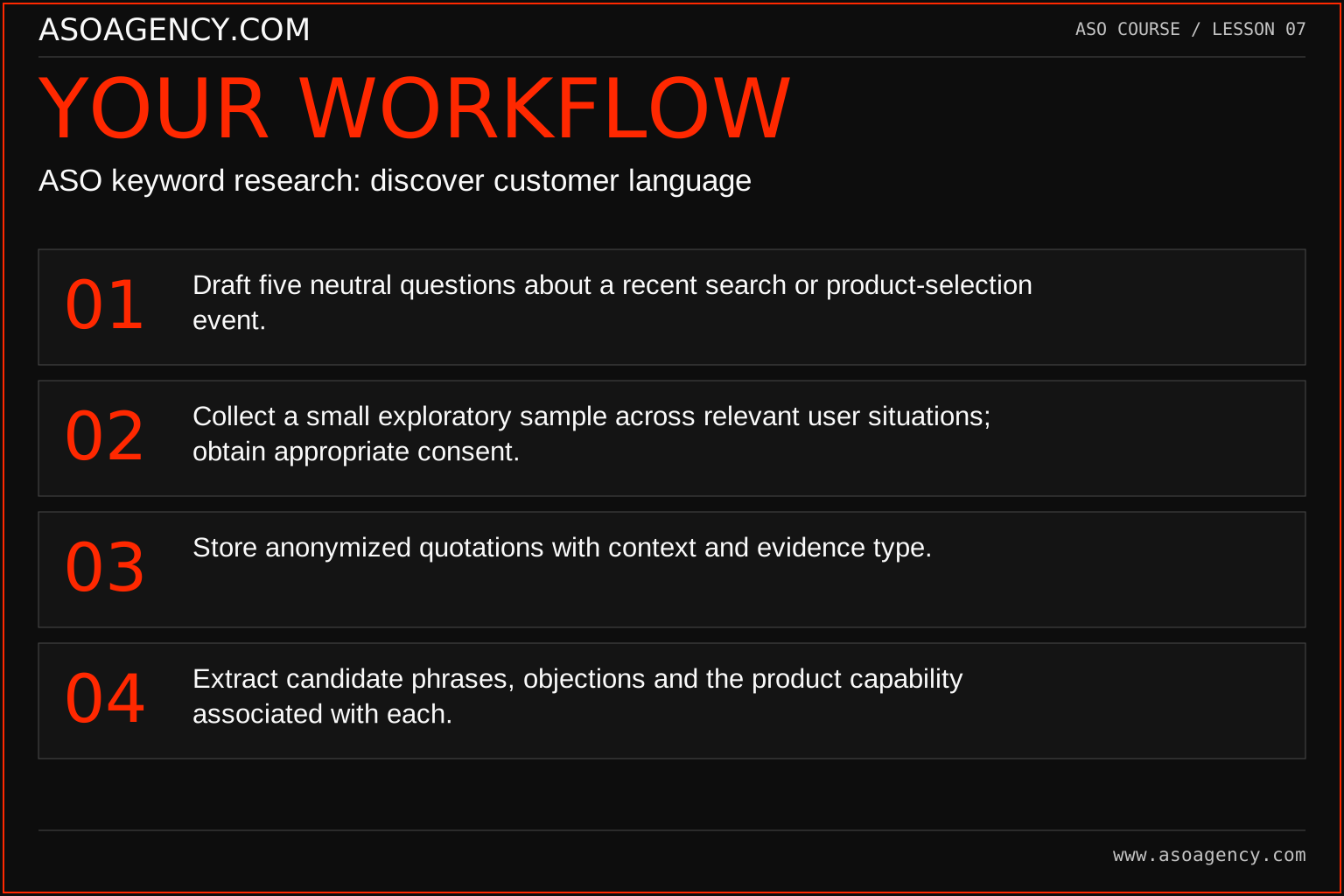
- Draft five neutral questions about a recent search or product-selection event.
- Collect a small exploratory sample across relevant user situations; obtain appropriate consent.
- Store anonymized quotations with context and evidence type.
- Extract candidate phrases, objections and the product capability associated with each.
Worked example and interpretation
Trail Notes and numerical research scenarios are fictional teaching examples. Platform limits, where shown, come from the linked official references.
Three Trail Notes users describe “remembering walks,” while one says “planning a route.” Further questioning reveals that the latter expected navigation, which the app does not offer. The team keeps the first language cluster as a research candidate and labels route planning as a mismatch. They do not claim that three interviews establish market search volume. The finding informs the next research step: examine relevant store results and available query evidence.
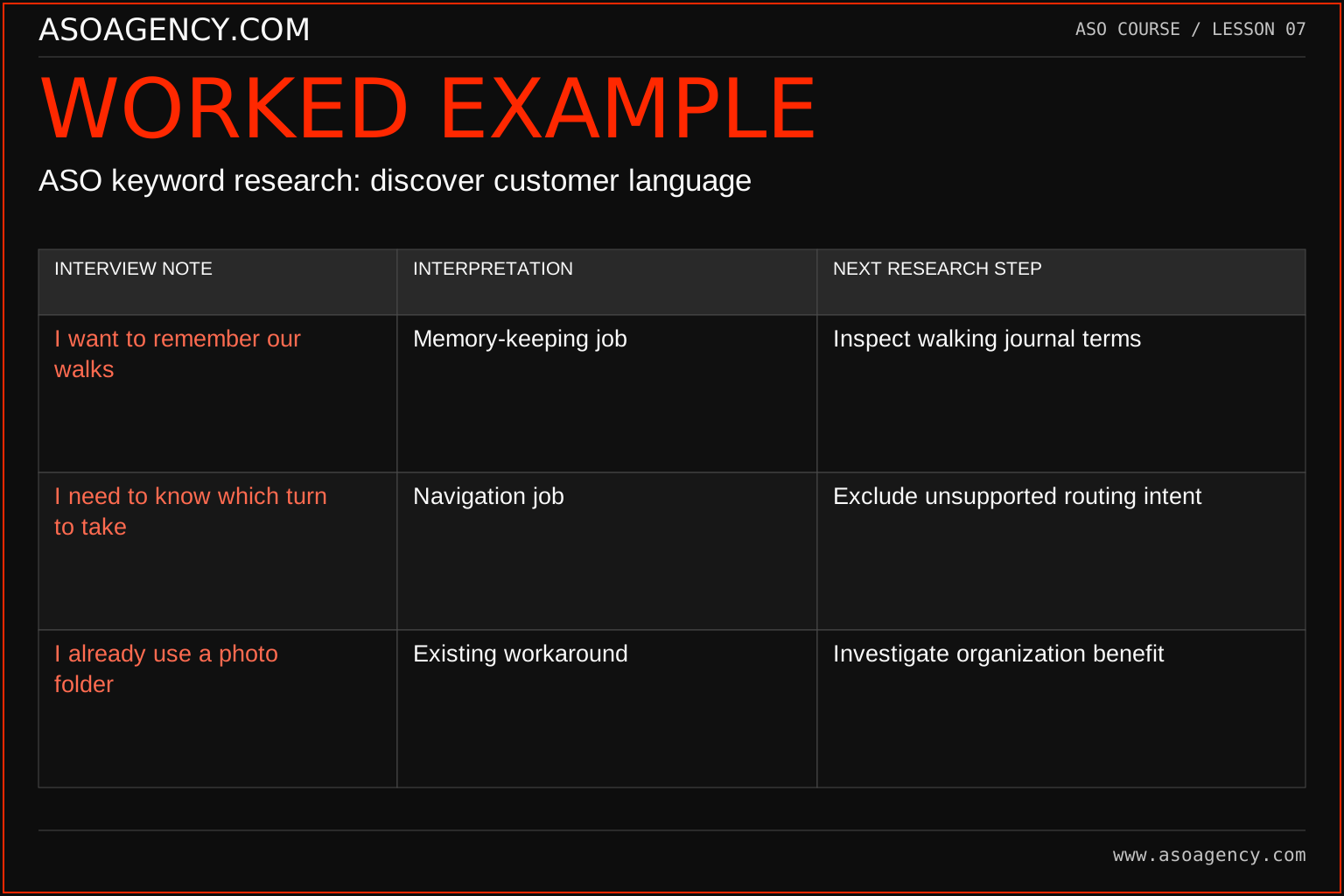
| Interview note | Interpretation | Next research step |
|---|---|---|
| I want to remember our walks | Memory-keeping job | Inspect walking journal terms |
| I need to know which turn to take | Navigation job | Exclude unsupported routing intent |
| I already use a photo folder | Existing workaround | Investigate organization benefit |
The first and third observations can support a journaling proposition, but in different ways. One describes the desired outcome; the other suggests the app must justify why it is better than an existing habit. The navigation observation remains valuable even though its terms are unsuitable: it helps the team avoid attracting the wrong audience. Do not count three notes as three votes for a keyword. Their value lies in context, meaning and the next decision they inform.
Build a handover someone can use
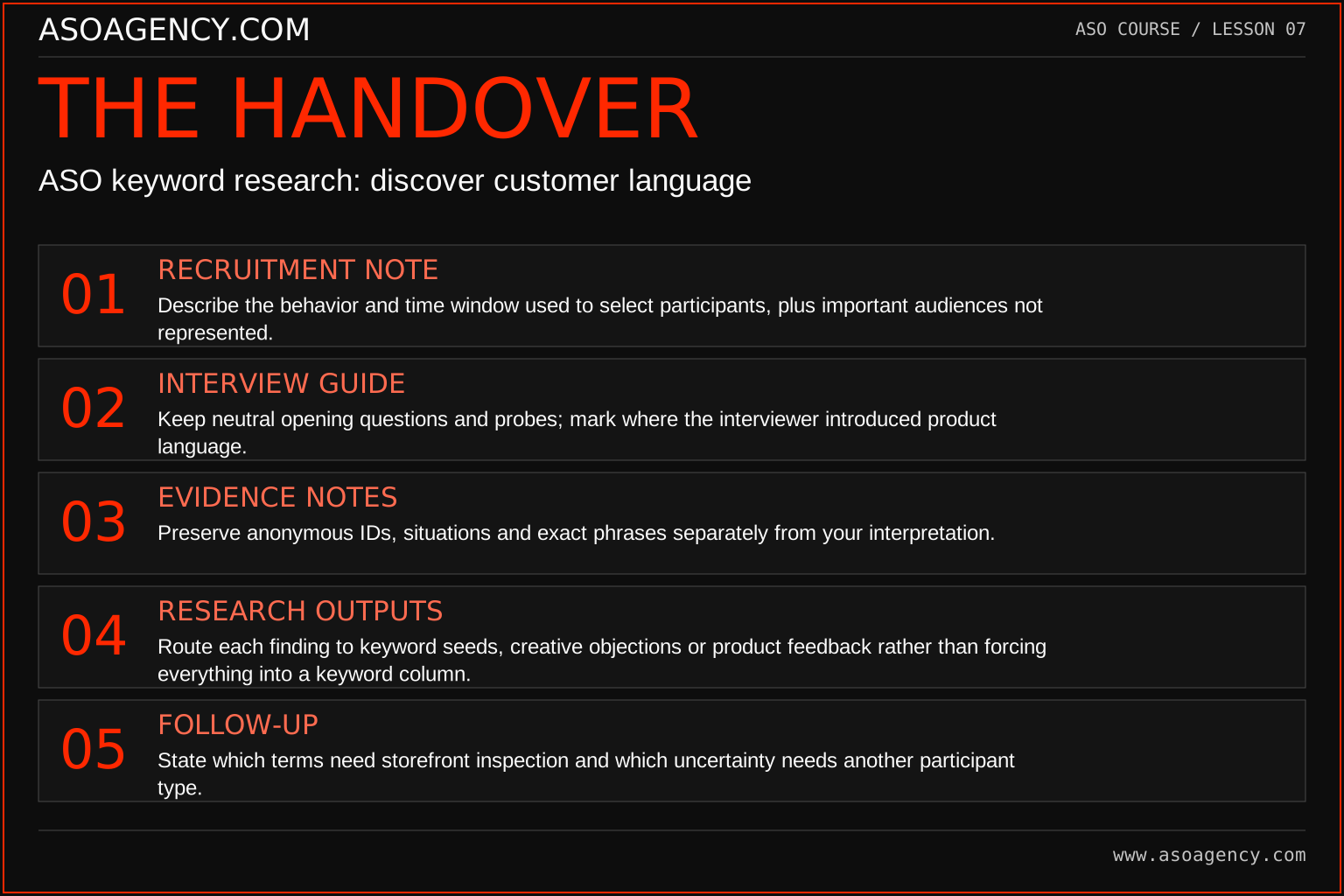
Recruitment note
Describe the behavior and time window used to select participants, plus important audiences not represented.
Interview guide
Keep neutral opening questions and probes; mark where the interviewer introduced product language.
Evidence notes
Preserve anonymous IDs, situations and exact phrases separately from your interpretation.
Research outputs
Route each finding to keyword seeds, creative objections or product feedback rather than forcing everything into a keyword column.
Follow-up
State which terms need storefront inspection and which uncertainty needs another participant type.
Your ASO assignment
Use your own app and evidence, or work through the teaching case. Keep your observations separate from assumptions and explain the reasoning behind your decisions.
- Write an interview guide with no proposed answers embedded in its questions.
- Code five anonymized observations or clearly labeled practice observations.
- Separate supported candidates from phrases the product cannot fulfill.
Scenario challenge
Rewrite “Would you use an amazing hiking diary?” into three neutral questions about a recent experience. Explain which answers could generate keywords and which would instead change the product or screenshot brief.
Assess your work
- Questions recover behavior rather than invite praise.
- Candidate terms retain their original context.
- Research limitations and contradictions remain visible.
Common mistakes to catch
- Inventing customer quotations to make the brief look evidence-based.
- Treating frequent language in a tiny sample as a search-volume estimate.
Knowledge check
A customer repeats your suggested phrase. Is it independent evidence of their search vocabulary?
Read the answer and reasoning
No. Record that the phrase was prompted. Ask about the last actual search and compare with unprompted language elsewhere. Prompted agreement can still reveal understanding, but it should not be presented as an observed search term.
Sources and further reading
Platform references reviewed 29 September 2026. These sources support platform capabilities and constraints; the teaching frameworks, assignments and illustrative cases are original course material.
- Apple — App Store search — Search presentation, relevant keywords and metadata guidance.
Your ASO lesson notes
Use this space for your assignment, evidence and handover. Select Save to keep a draft in this browser, or download a copy to take with you.
Notes stay on this device and are not submitted to ASO Agency.
Complete your assignment with the Interactive ASO audit checklist.
Loading your progress…
Progress is saved only in this browser. It does not sync across devices. Mark a lesson complete after doing its exercise.