ASO course · lesson 18 of 60
ASO keyword tracking: monitor rankings and decisions
Build a review routine that connects visibility signals to listing changes and audience quality.
By Gabriel Machuret · Editorial methodology
Before you start: A versioned keyword allocation plan and baseline definitions.
Module 3: Keyword evaluation and strategy
Plan about 50 minutes for reading, practice and review
You will produce: Module project: a keyword portfolio, allocation plan and monitoring playbook.
Understand the decision
Track the decision, not just the position
A monitoring sheet should identify the target intent, why it matters, what changed and the observation context. Rank movement alone cannot show incremental qualified acquisition. Pair visibility observations with compatible acquisition evidence and downstream signals where possible. Preserve gaps rather than implying that every movement can be attributed to the latest metadata edit.
Use a stable observation routine
Choose a consistent source, storefront and review cadence. Keep a change log for metadata, product releases, campaigns and competitor observations. Reacting to every daily fluctuation creates a cycle in which the listing changes faster than you can learn from it. Escalate concrete breakages quickly, but distinguish operational incidents from ordinary variation and longer-term strategic review.
Define keep, investigate and retire decisions
Before reviewing results, say what evidence would support each action. Keep accurate core identity even when short-term signals are noisy; investigate unexpected audience behavior; retire misleading or persistently unsupported targets. The cadence should produce an updated decision record, not merely a screenshot pack. Document the unresolved explanation and the next evidence request when a result is inconclusive.
Apply the method in practice
Define what a monitoring change could mean
Track a dated keyword set with storefront, tool and collection method held as consistent as possible. A position change can reflect query context, competitors, platform variation or your own update. It does not automatically identify the cause. Record metadata releases and product changes on the same timeline. Decide in advance which observations warrant investigation, such as a sustained shift across a relevant query family, rather than reacting to every daily movement. Monitoring should support decisions, not create a permanent cycle of unnecessary editing.
Connect visibility to useful acquisition
A term moving upward is interesting only in relation to the audience and business objective. Review available acquisition context and downstream quality without pretending you can attribute every install to an individual organic query. If the data only supports source-level interpretation, keep the conclusion at that level. A broad query can improve visibility while attracting unsuitable users. Conversely, a stable rank may coexist with increased demand. Keep absolute acquisition counts, source mix and product outcomes beside visibility observations.
Maintain a hypothesis ledger
For each metadata release, record the intended change, affected concepts, expected learning and review conditions. After reviewing the result, choose keep, revise, investigate or stop. Preserve the original hypothesis instead of rewriting it after seeing the data. When evidence is inconclusive, name what remains unknown and whether additional observation is likely to help. Repeatedly swapping terms without a stable record makes it difficult to learn which decisions were reasonable even when a later result is favorable.
Platform references for this work: Apple — Acquisition analytics · Google Play — Understand and grow your user base
Your step-by-step procedure
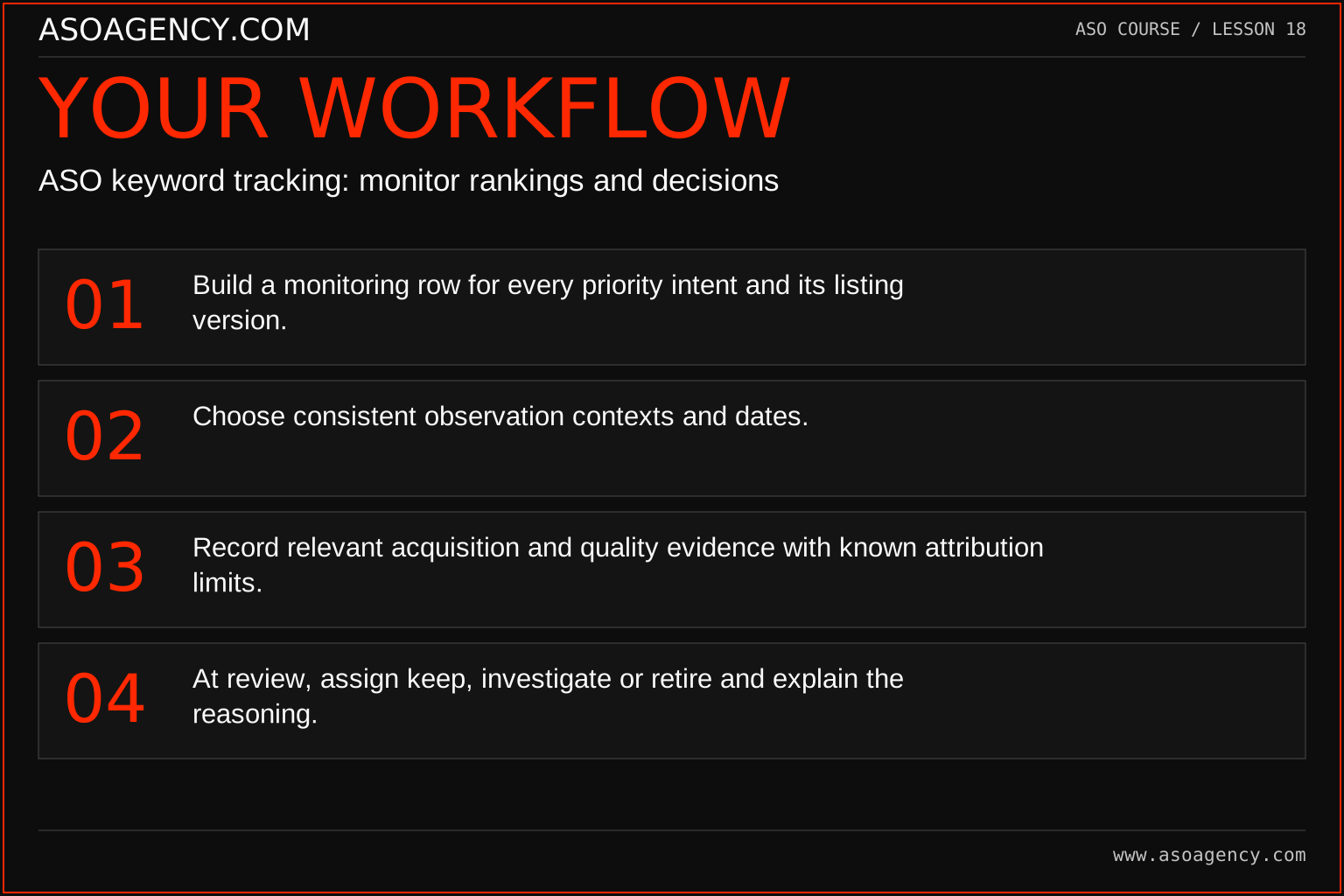
- Build a monitoring row for every priority intent and its listing version.
- Choose consistent observation contexts and dates.
- Record relevant acquisition and quality evidence with known attribution limits.
- At review, assign keep, investigate or retire and explain the reasoning.
Worked example and interpretation
Trail Notes and numerical research scenarios are fictional teaching examples. Platform limits, where shown, come from the linked official references.
Trail Notes sees one target move from an illustrative position 18 to 11 after a release, while search-attributed downloads are flat and a paid campaign changed. The analyst reports improved observed visibility, not proven incremental installs from the metadata. They keep the truthful core phrase, investigate the traffic context and wait for comparable evidence before expanding the claim into a success story.
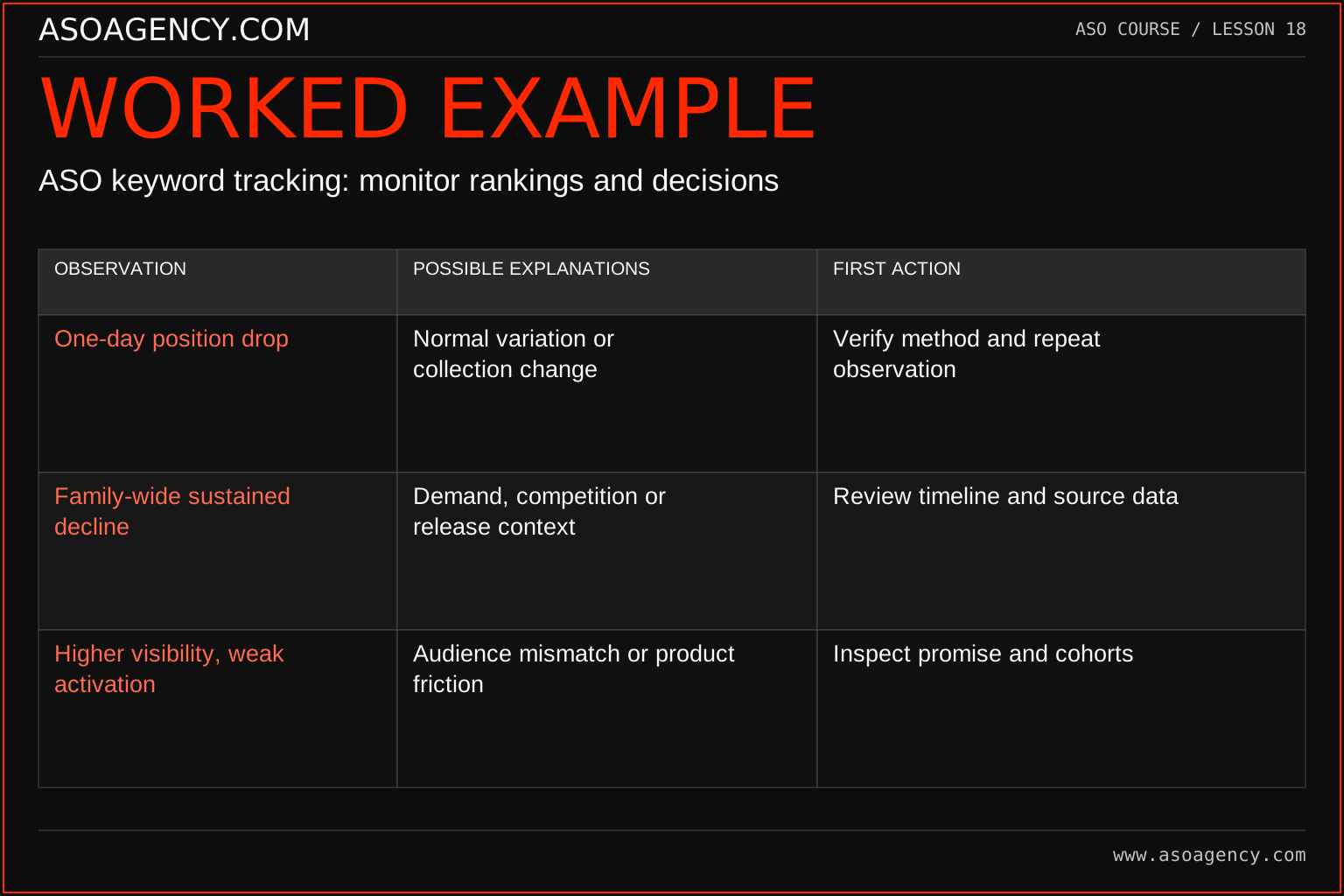
| Observation | Possible explanations | First action |
|---|---|---|
| One-day position drop | Normal variation or collection change | Verify method and repeat observation |
| Family-wide sustained decline | Demand, competition or release context | Review timeline and source data |
| Higher visibility, weak activation | Audience mismatch or product friction | Inspect promise and cohorts |
The monitoring rule is an investigation trigger, not a causal verdict. A sustained decline deserves attention, but a competitor change and a product release can occur together. Start by checking data collection and scope, then inspect the relevant context. Do not roll back approved metadata solely because one tool produced a surprising point. Accuracy corrections should remain accurate even while their commercial effects are being evaluated.
Build a handover someone can use
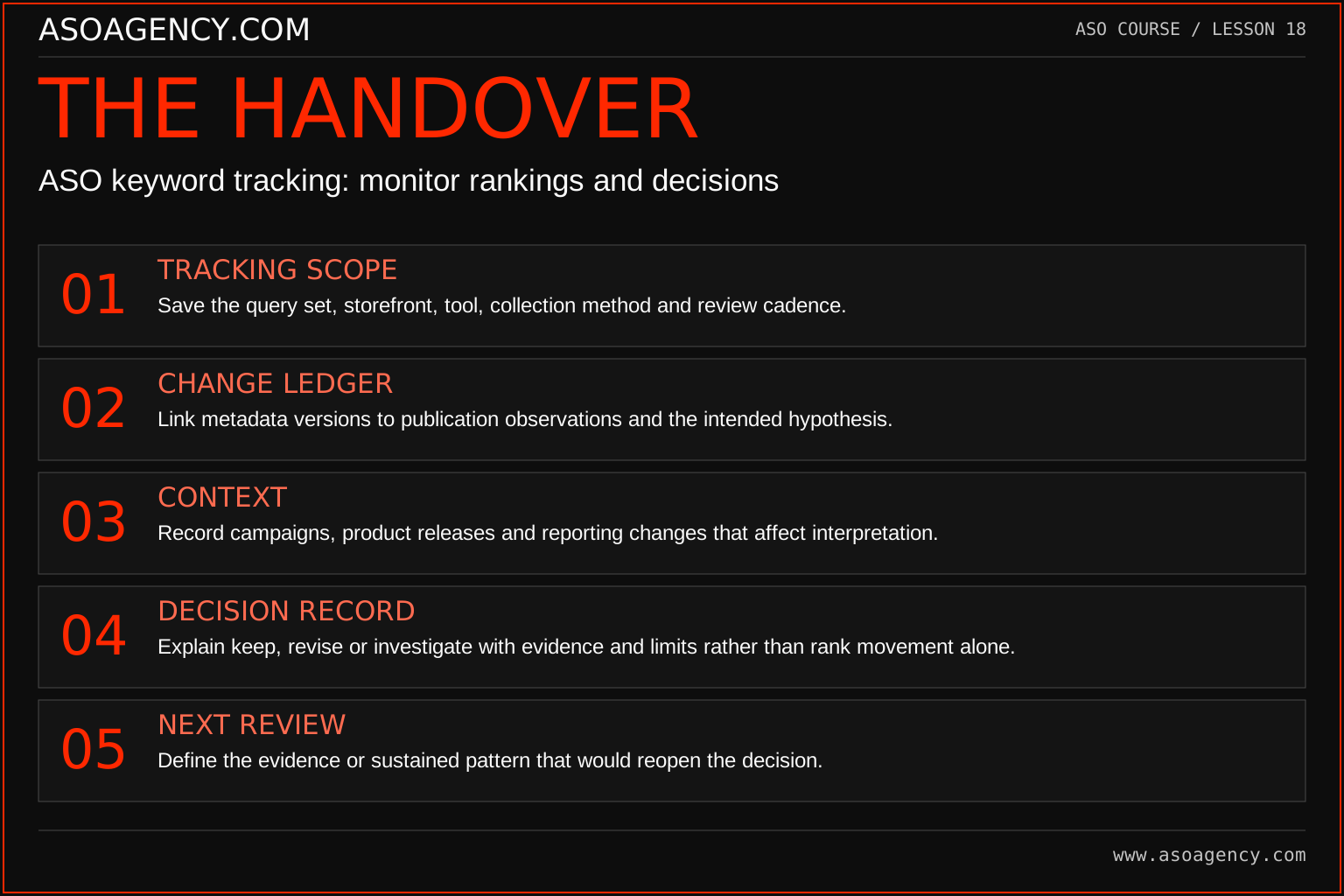
Tracking scope
Save the query set, storefront, tool, collection method and review cadence.
Change ledger
Link metadata versions to publication observations and the intended hypothesis.
Context
Record campaigns, product releases and reporting changes that affect interpretation.
Decision record
Explain keep, revise or investigate with evidence and limits rather than rank movement alone.
Next review
Define the evidence or sustained pattern that would reopen the decision.
Your ASO assignment
Use your own app and evidence, or work through the teaching case. Keep your observations separate from assumptions and explain the reasoning behind your decisions.
- Create a four-week observation template without inventing results.
- Write escalation criteria for a concrete listing error.
- Prepare a keep/investigate/retire decision for three hypothetical outcomes.
Scenario challenge
A term falls three positions the day after an update while downloads are unchanged. Write a measured status note and the next checks without claiming either that the update failed or that nothing matters.
Assess your work
- Observation contexts and listing versions are recoverable.
- Ranking changes are not automatically assigned causal credit.
- Each review produces a decision or a specific evidence request.
Common mistakes to catch
- Rewriting metadata after every small ranking movement.
- Counting all search-attributed downloads as necessarily organic-only.
Knowledge check
Rankings improve but comparable downloads do not. What belongs in the report?
Read the answer and reasoning
Report both observations and the uncertainty connecting them. Possible explanations include low demand, measurement differences, changing result presentation or offsetting traffic shifts. Do not replace the missing business result with an unsupported uplift claim. Specify the next comparison that could clarify the discrepancy.
Sources and further reading
Platform references reviewed 29 September 2026. These sources support platform capabilities and constraints; the teaching frameworks, assignments and illustrative cases are original course material.
- Apple — Acquisition analytics — Acquisition metric definitions and source attribution.
- Google Play — Understand and grow your user base — Current listing-click reporting, completed acquisitions and segmentation.
Your ASO lesson notes
Use this space for your assignment, evidence and handover. Select Save to keep a draft in this browser, or download a copy to take with you.
Notes stay on this device and are not submitted to ASO Agency.
Complete your assignment with the Interactive ASO audit checklist.
Loading your progress…
Progress is saved only in this browser. It does not sync across devices. Mark a lesson complete after doing its exercise.