ASO course · lesson 58 of 60
AI for ASO: research, writing and quality checks
Use AI to accelerate drafting and organization while retaining product truth, source accuracy and human approval.
By Gabriel Machuret · Editorial methodology
Before you start: An approved product brief, research evidence and a defined task.
Module 10: Professional practice and capstone
Plan about 50 minutes for reading, practice and review
You will produce: A reviewed AI-assisted draft with prompt context, verification notes and a named approver.
Understand the decision
Give the model a bounded job
Ask for alternatives, classification or editing against supplied constraints. Provide the audience, product capabilities, prohibited implications and output format. A generic request for winning keywords invites unsupported confidence. AI output is a draft or suggestion until its claims and usefulness have been reviewed.
Check evidence rather than fluency
Verify sources at the original destination and confirm that they support the associated statement. Recalculate numeric examples. Inspect translations with a qualified local reviewer. Do not treat a fabricated citation or confident explanation as evidence. Keep generated ideas separate from observed customer research.
Protect the approval process
Use only information appropriate for the approved working environment. Avoid including unnecessary personal or confidential customer data in prompts. Record meaningful AI assistance in the production notes and assign a human owner for publication. Automation should not bypass product, policy or language review.
Apply the method in practice
Separate source facts from generated possibilities
Give the model a verified product brief and label the evidence it may use. Ask it to distinguish supplied facts, inferences and new ideas in its output. A generated keyword suggestion is not a customer quote; a plausible statistic is not measured data. Keep the source material available to the reviewer. For tasks such as theme coding, inspect examples where the model may have merged different meanings. The tool can accelerate organization while still making errors that matter to the decision.
Use a repeatable verification pass
Check each important claim against the released product or a primary source. Open citations and verify both the destination and the specific support. Recalculate numeric examples independently. Review local language with a qualified person and inspect final artwork for text errors. If the model cannot support a claim, remove it, qualify it or turn it into a research question. Do not ask the model merely whether it is sure; confidence phrasing does not supply evidence.
Document the human decision
Preserve the task brief, useful prompt context, selected output and major edits when they explain the production decision. Assign a human approver for truth, language and publication. Use data appropriate for the approved environment and omit unnecessary personal details. A review checklist should apply equally to human and AI drafts, with extra attention to fabricated sources and plausible but unsupported capabilities. The final artifact should read as a coherent product message rather than exposing internal prompt machinery to users.
Platform references for this work: Apple — App Store search · Google Play — Metadata policy
Your step-by-step procedure
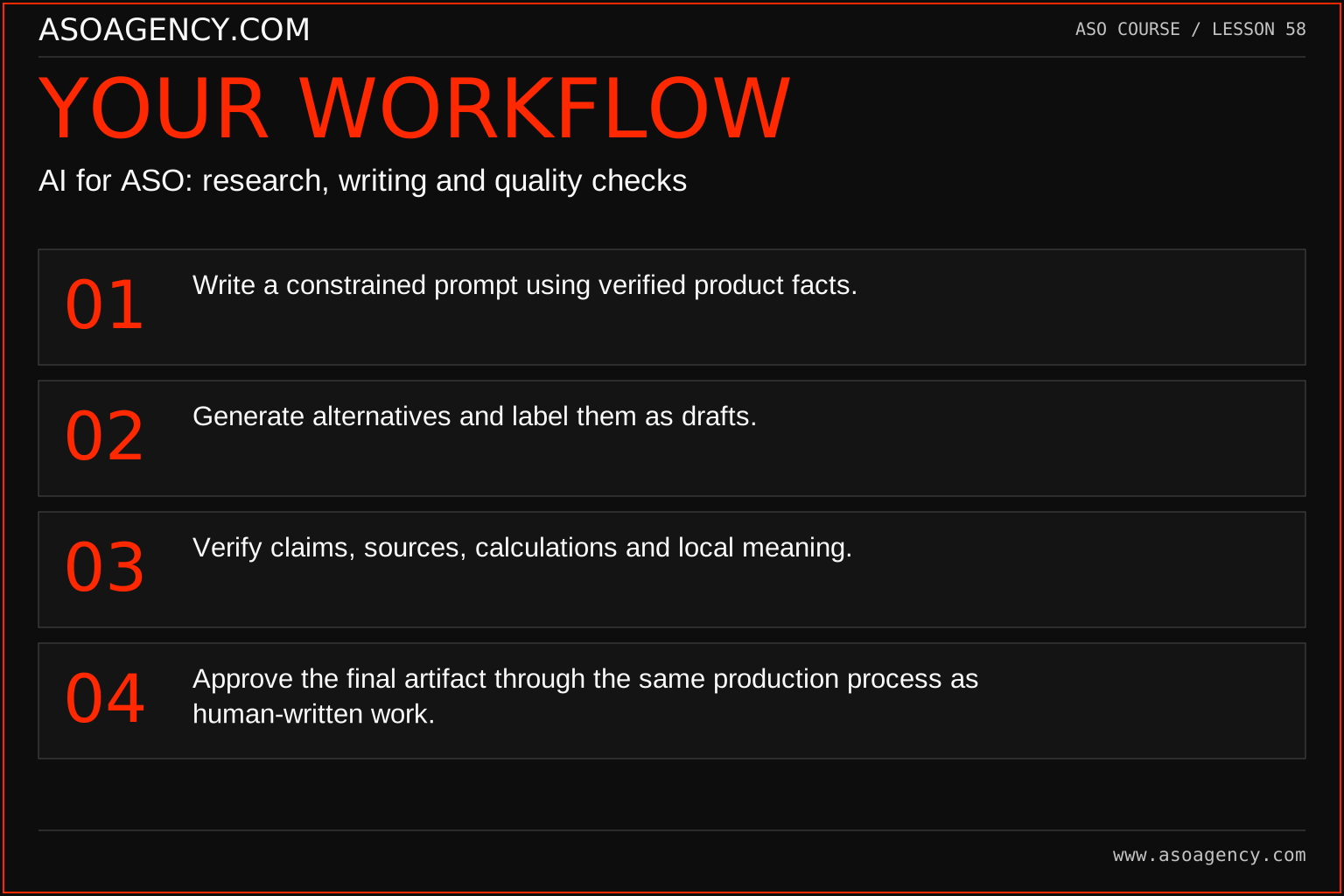
- Write a constrained prompt using verified product facts.
- Generate alternatives and label them as drafts.
- Verify claims, sources, calculations and local meaning.
- Approve the final artifact through the same production process as human-written work.
Worked example and interpretation
Trail Notes and numerical research scenarios are fictional teaching examples. Platform limits, where shown, come from the linked official references.
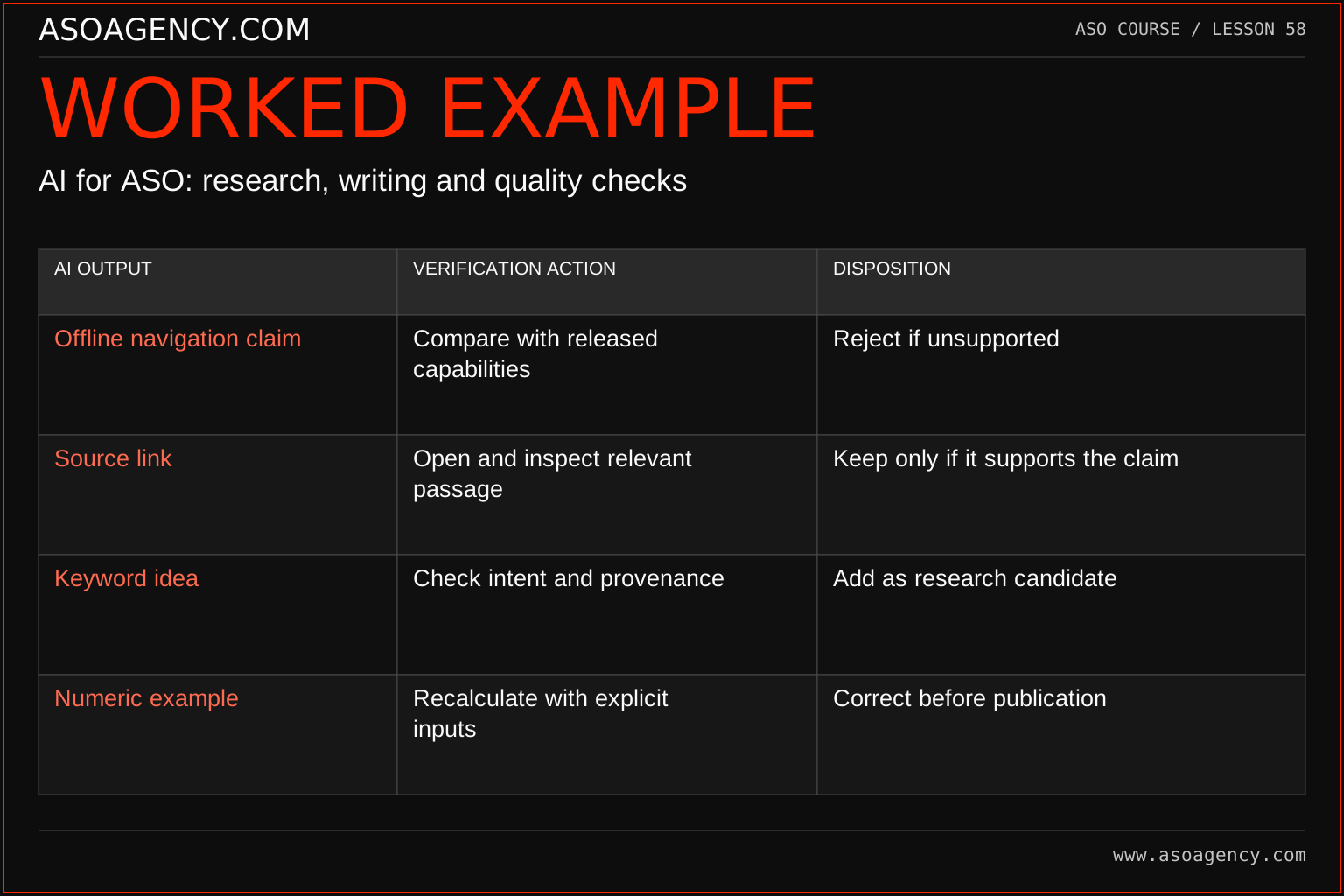
AI suggests “offline GPS navigation” for Trail Notes because the app is about hiking. The reviewer rejects it using the product capability list, then asks for journal-focused alternatives. The speed of generation does not make the unsupported suggestion suitable.
| AI output | Verification action | Disposition |
|---|---|---|
| Offline navigation claim | Compare with released capabilities | Reject if unsupported |
| Source link | Open and inspect relevant passage | Keep only if it supports the claim |
| Keyword idea | Check intent and provenance | Add as research candidate |
| Numeric example | Recalculate with explicit inputs | Correct before publication |
The verification action depends on the type of output. A source link cannot validate a product-specific capability, and a product demo cannot establish market demand. The reviewer must ask what evidence would actually support the claim. This discipline lets AI contribute speed without turning fluent guesses into the foundation of the course or a client recommendation.
Build a handover someone can use
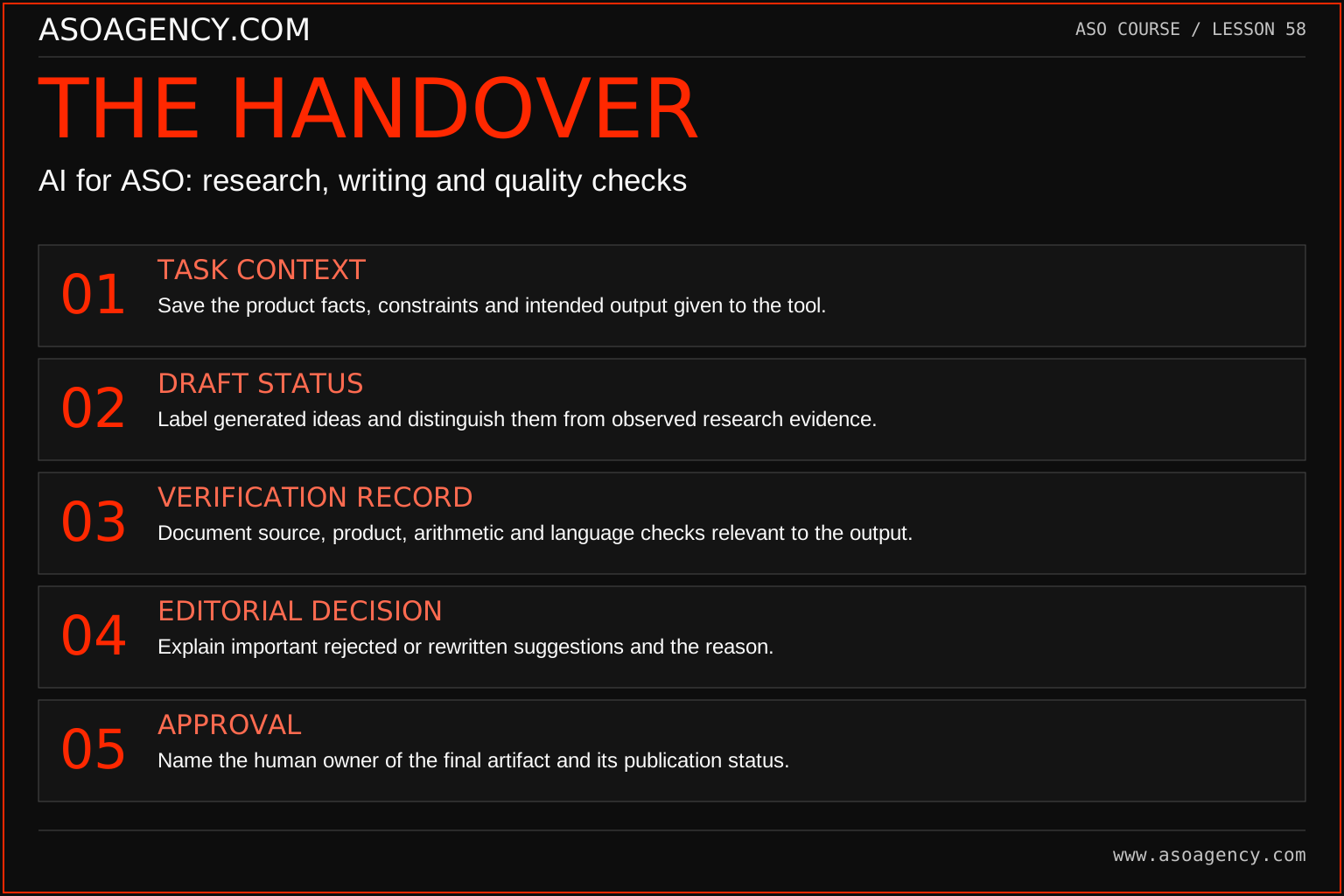
Task context
Save the product facts, constraints and intended output given to the tool.
Draft status
Label generated ideas and distinguish them from observed research evidence.
Verification record
Document source, product, arithmetic and language checks relevant to the output.
Editorial decision
Explain important rejected or rewritten suggestions and the reason.
Approval
Name the human owner of the final artifact and its publication status.
Your ASO assignment
Use your own app and evidence, or work through the teaching case. Keep your observations separate from assumptions and explain the reasoning behind your decisions.
- Write a prompt that includes five product constraints.
- Audit an AI draft for unsupported claims and invented evidence.
- Document the edits and human approval needed before release.
Scenario challenge
Audit a draft containing a fabricated source, an unsupported feature and a correct arithmetic example. Explain why each requires a different check and why correcting one does not validate the others.
Assess your work
- Generated suggestions are not presented as customer observations.
- Every important factual claim has verified support.
- Human review remains responsible for the published result.
Common mistakes to catch
- Publishing plausible citations without opening them.
- Using AI confidence as a substitute for local-language expertise.
Knowledge check
An AI tool predicts a 40% conversion lift from a new subtitle. What should you do?
Read the answer and reasoning
Reject the unsupported forecast unless a valid evidence model and relevant data justify it. Treat the subtitle as a hypothesis, review its truth and meaning, and choose an appropriate evaluation method. Fluency is not predictive validation.
Sources and further reading
Platform references reviewed 29 September 2026. These sources support platform capabilities and constraints; the teaching frameworks, assignments and illustrative cases are original course material.
- Apple — App Store search — Search presentation, relevant keywords and metadata guidance.
- Google Play — Metadata policy — Accurate, relevant metadata and prohibited presentation.
Your ASO lesson notes
Use this space for your assignment, evidence and handover. Select Save to keep a draft in this browser, or download a copy to take with you.
Notes stay on this device and are not submitted to ASO Agency.
Complete your assignment with the App store metadata checker.
Loading your progress…
Progress is saved only in this browser. It does not sync across devices. Mark a lesson complete after doing its exercise.