ASO course · lesson 31 of 60
ASO creative strategy: plan your store assets
Connect audience insight, product proof and a single creative hypothesis.
By Gabriel Machuret · Editorial methodology
Before you start: The audience brief, keyword map and product-truth register.
Module 6: Creative strategy and production
Plan about 50 minutes for reading, practice and review
You will produce: A creative strategy brief with audience, problem, promise, proof and constraints.
Understand the decision
Choose a communication problem
A creative brief should identify what the audience currently misunderstands or fails to recognize. “Make it modern” is a taste direction; “show that this is a private journal rather than navigation” is a communication problem. Define the intended change in understanding before choosing colors, illustrations or device frames. This gives designers a decision to solve.
Build a proposition-proof pair
Pair the central benefit with evidence visible in the product. The proof might be a real workflow, an interface detail or a qualified demonstration. Avoid inventing testimonials, awards or performance numbers. If social proof is genuinely available, document permission and context. A claim should remain credible even after decorative elements are removed from the design.
Define constants and creative freedom
Tell the designer which product facts, brand elements and commercial conditions must remain fixed and where exploration is welcome. Include the audience, viewing context, locale, required exports and review owner. Good constraints focus creative work; over-prescribing every visual detail can prevent designers from solving the actual communication problem in a better way.
Apply the method in practice
Choose one communication problem
Use the audit and audience research to identify what visitors need to understand better. A creative strategy should explain the gap between the current message and the intended interpretation. “Make it modern” is a style preference, not a user problem. “People mistake the journal for navigation” identifies a task the design can address. Specify the audience, supported benefit, proof and objection. Keep the brief narrow enough that the resulting concept can be evaluated against a clear purpose.
Separate message, proof and visual treatment
The message is what you want understood. The proof is the product evidence that supports it. The visual treatment is how you present that evidence. A completed journal screen can prove memory keeping; a landscape photograph may establish mood but not explain the workflow. Both can be used deliberately, but they do different jobs. Ask the designer to explain the role of each element. This prevents a discussion about colors from replacing the more important question of whether the user can identify the product's value.
Define concept evaluation before production
Agree how the team will review the concept: factual accuracy, comprehension, readability, brand consistency and production feasibility. These are acceptance checks, not proof of conversion uplift. If the creative will enter an experiment, record the behavioral hypothesis separately. Limit the number of simultaneous messages so the first asset has a clear hierarchy. Include required locales and formats before design begins because text expansion and device crops can change the composition substantially.
Platform references for this work: Apple — Creating your product page · Google Play — Add preview assets
Your step-by-step procedure
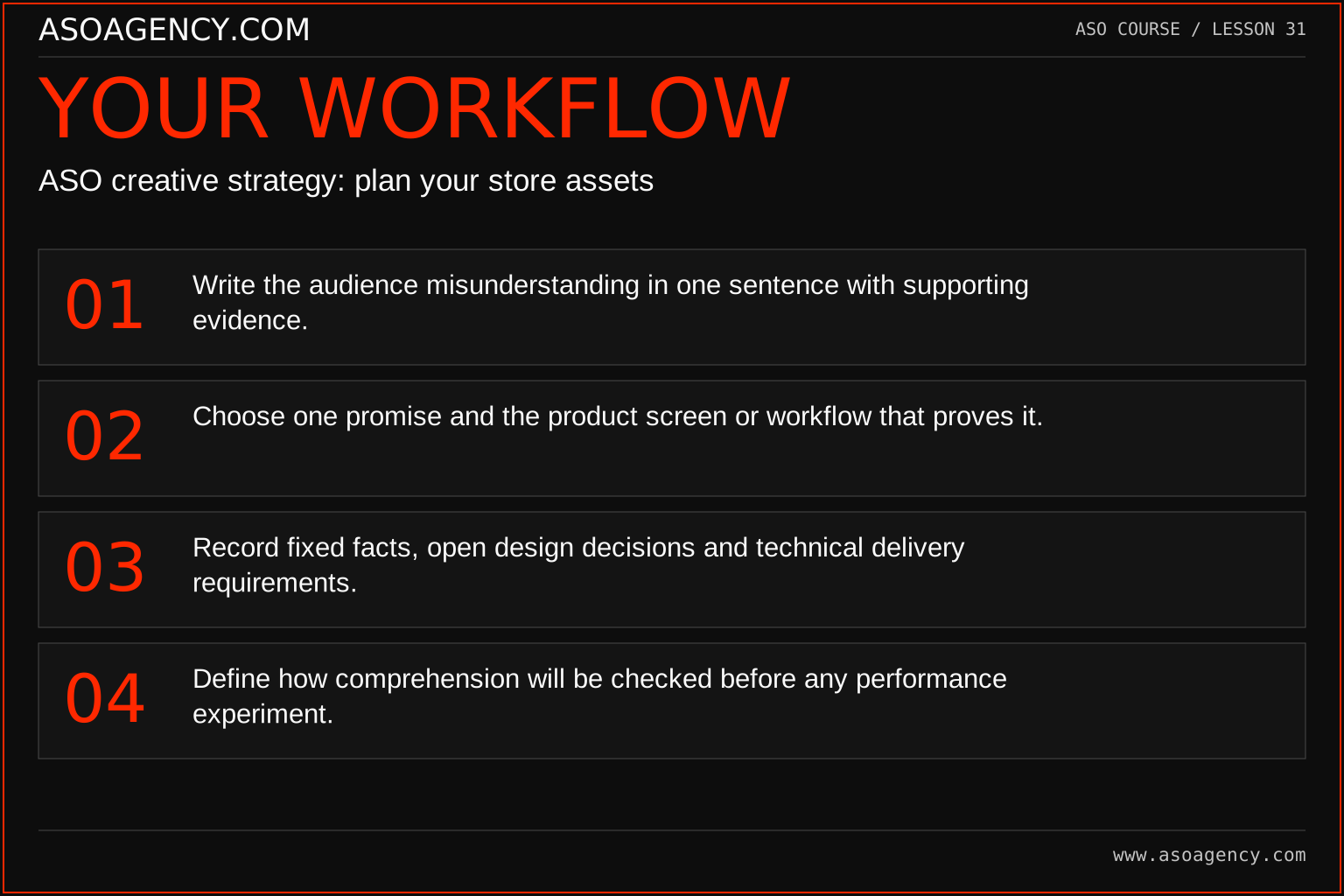
- Write the audience misunderstanding in one sentence with supporting evidence.
- Choose one promise and the product screen or workflow that proves it.
- Record fixed facts, open design decisions and technical delivery requirements.
- Define how comprehension will be checked before any performance experiment.
Worked example and interpretation
Trail Notes and numerical research scenarios are fictional teaching examples. Platform limits, where shown, come from the linked official references.
Trail Notes’ brief says: “A new visitor should recognize that the app preserves walking memories, not plans routes.” Proof is the journal entry and timeline workflow. Navigation imagery is excluded. Designers may explore a memory-led headline or an interface-led concept, but cannot add a map feature or fictional review stars to make the design more persuasive.
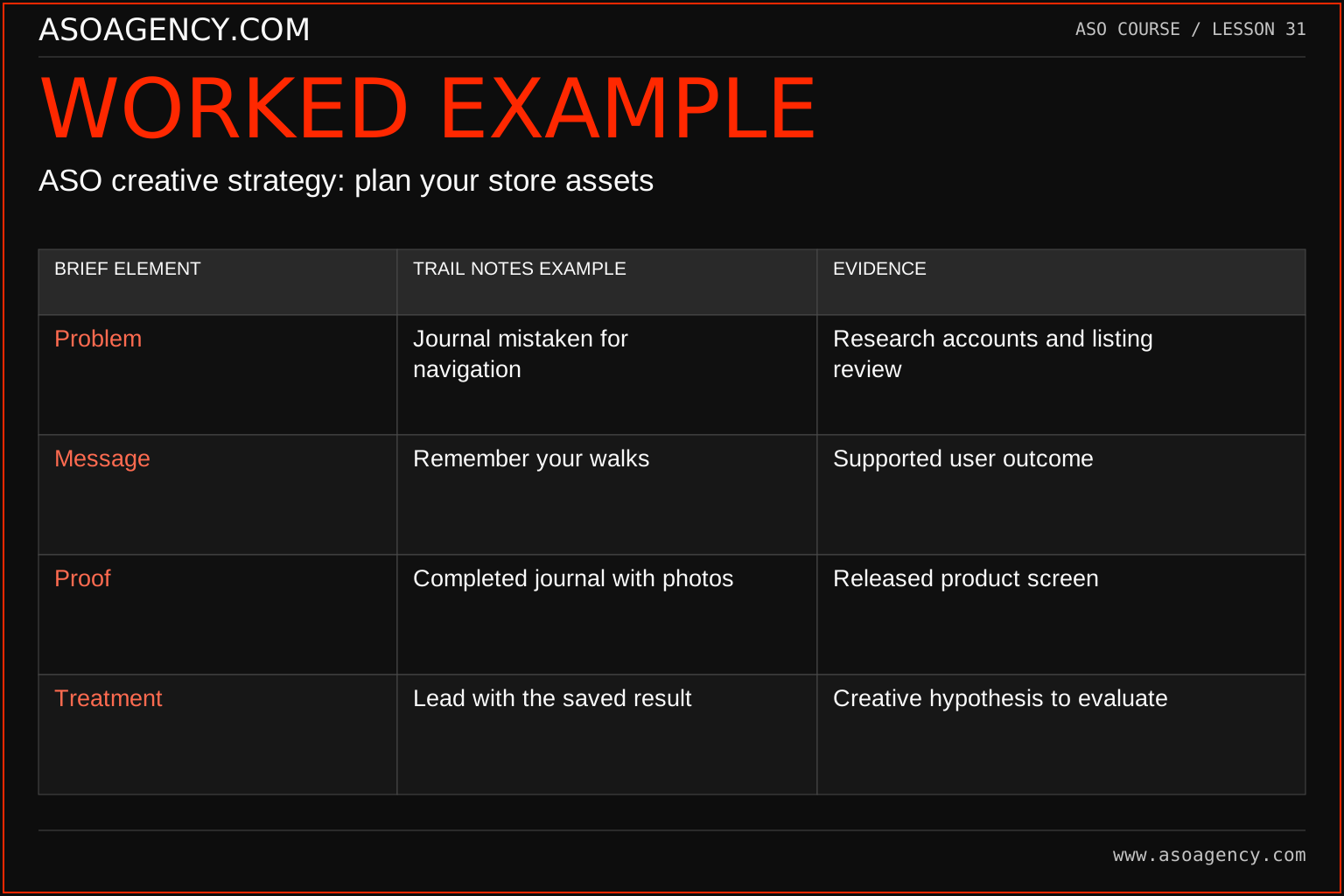
| Brief element | Trail Notes example | Evidence |
|---|---|---|
| Problem | Journal mistaken for navigation | Research accounts and listing review |
| Message | Remember your walks | Supported user outcome |
| Proof | Completed journal with photos | Released product screen |
| Treatment | Lead with the saved result | Creative hypothesis to evaluate |
The proposed treatment follows from the problem and proof. It is not automatically superior because it looks more explanatory. A reviewer can first check whether the concept communicates journaling, then decide whether it is suitable for an experiment. Keep factual approval separate from performance testing. If the app screen is outdated, correct that before interpreting any audience response to the concept.
Build a handover someone can use
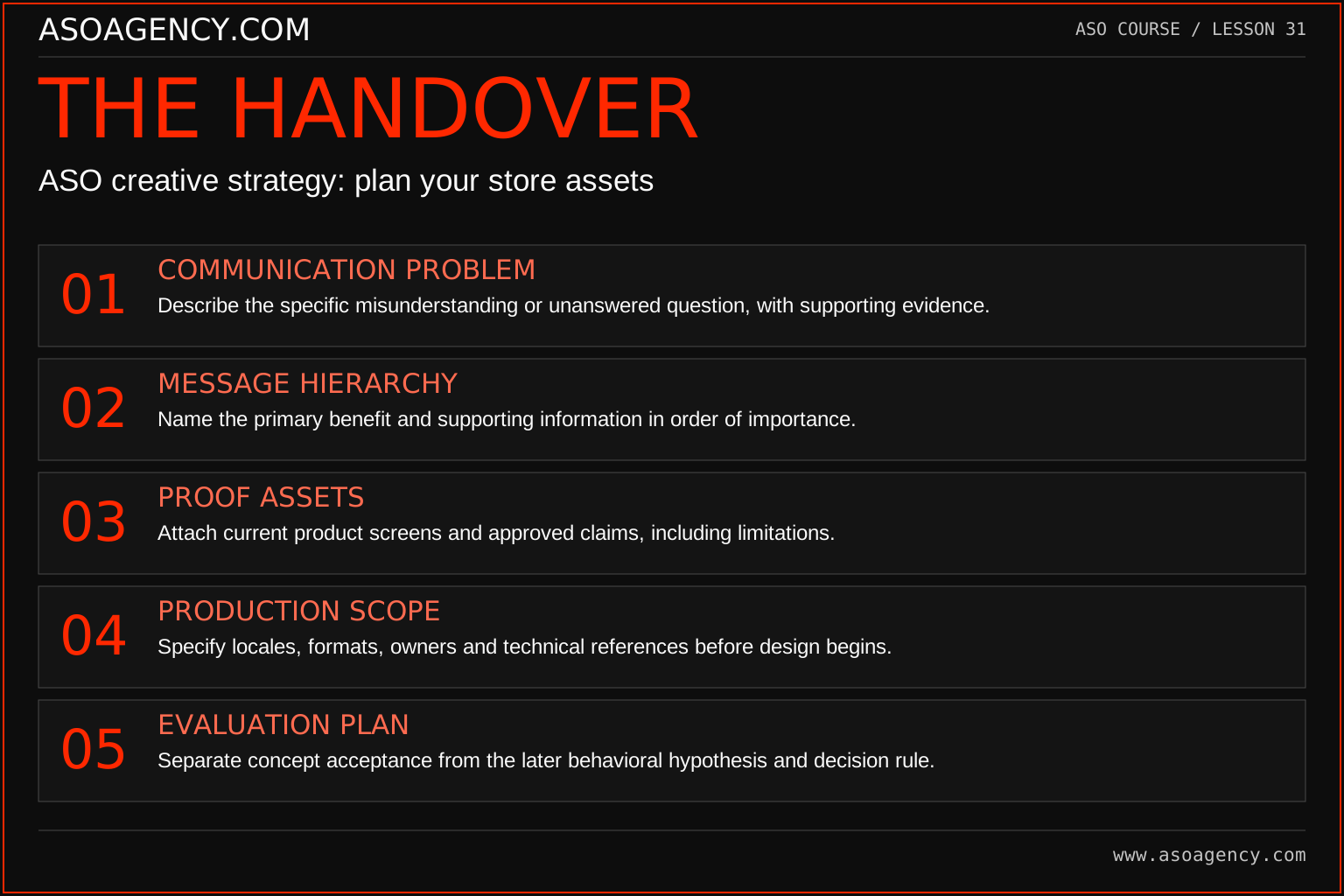
Communication problem
Describe the specific misunderstanding or unanswered question, with supporting evidence.
Message hierarchy
Name the primary benefit and supporting information in order of importance.
Proof assets
Attach current product screens and approved claims, including limitations.
Production scope
Specify locales, formats, owners and technical references before design begins.
Evaluation plan
Separate concept acceptance from the later behavioral hypothesis and decision rule.
Your ASO assignment
Use your own app and evidence, or work through the teaching case. Keep your observations separate from assumptions and explain the reasoning behind your decisions.
- Write a one-page creative strategy for your primary audience.
- Attach three pieces of product proof and identify any gaps.
- Define a comprehension question that does not lead the respondent.
Scenario challenge
Compare two briefs: “use brighter colors” and “show that entries can be revisited after a walk.” Explain which one guides a testable communication decision and how color could support it without becoming the objective.
Assess your work
- The communication problem is specific and evidence-informed.
- Every central claim has product proof.
- Design freedom and nonnegotiable facts are both clear.
Common mistakes to catch
- Starting with a visual trend before identifying the audience problem.
- Using fabricated social proof to fill an empty evidence section.
Knowledge check
The design looks premium but viewers cannot explain what the app does. What failed?
Read the answer and reasoning
The communication objective has not been met. Revisit the hierarchy and proposition-proof relationship before testing for conversion. Aesthetic quality can support clarity, but it does not substitute for understanding the product and its intended use.
Sources and further reading
Platform references reviewed 29 September 2026. These sources support platform capabilities and constraints; the teaching frameworks, assignments and illustrative cases are original course material.
- Apple — Creating your product page — Product-page fields and presentation guidance.
- Google Play — Add preview assets — Icons, feature graphics, screenshots and video requirements.
Your ASO lesson notes
Use this space for your assignment, evidence and handover. Select Save to keep a draft in this browser, or download a copy to take with you.
Notes stay on this device and are not submitted to ASO Agency.
Complete your assignment with the ASO experiment planner.
Loading your progress…
Progress is saved only in this browser. It does not sync across devices. Mark a lesson complete after doing its exercise.