ASO course · lesson 15 of 60
How to prioritize ASO keywords
Make a repeatable prioritization method that exposes assumptions rather than hiding them in a score.
By Gabriel Machuret · Editorial methodology
Before you start: Demand and competitive-feasibility notes for your shortlist.
Module 3: Keyword evaluation and strategy
Plan about 50 minutes for reading, practice and review
You will produce: A prioritization sheet with eligibility decisions, rating anchors and sensitivity notes.
Understand the decision
Use eligibility before weighting
First exclude unsupported, misleading or unresolved candidates. Then compare eligible terms on product relevance, audience value, evidence strength and feasibility. A weighted average can otherwise let a huge demand estimate compensate for a product the app does not provide. Eligibility is a boundary; weights are a judgment call inside that boundary.
Write definitions for every rating
If you use a simple high/medium/low rubric, explain what each label means. High relevance might require a central shipped workflow, while medium relevance describes a secondary supported use case. Keep the evidence beside the rating. Two analysts should be able to explain their disagreement in terms of assumptions, rather than arguing about unexplained decimal scores.
Test the stability of the decision
Change the uncertain ratings and see whether the same candidates remain priorities. A fragile ranking deserves more research or a smaller commitment. Also consider concentration: several highly rated phrases may all describe the same narrow job. The best final allocation is a coherent portfolio, not necessarily the first ten rows of a sorted spreadsheet.
Apply the method in practice
Apply hard gates before weighted preferences
Create gates for supported capability, relevant audience and acceptable claims. A failure means reject or defer; do not let a high demand score compensate for a missing function. After the gates, compare candidates using criteria that match the objective, such as intent fit, demand evidence, differentiation and opportunity cost. Define what high, medium and low mean in words. A rubric helps consistency only when two reviewers can understand the same criteria and explain disagreements.
Keep evidence confidence outside the score
A high rating based on a guess should not look equivalent to a high rating based on multiple observations. Add a confidence note and source reference for each important judgment. If reviewers disagree, identify whether they differ on the evidence or on business priorities. Those require different resolutions: more research may resolve the first, while a sponsor decision may resolve the second. Avoid decimal precision that implies a calibrated predictive model. The purpose is a defensible selection process, not a mathematically impressive ranking.
Select a portfolio that fits the message
The highest-scoring individual terms may repeat the same concept or create an incoherent visible listing. Review the shortlist as a whole. Does it describe one useful promise? Does it leave room for the brand and natural language? Which concept is displaced when another is included? Record the marginal reason for each addition rather than optimizing each row in isolation. Freeze the rubric before evaluating the final candidates so weights are not quietly changed to justify a favorite phrase.
Platform references for this work: Apple — App Store search · Google Play — Metadata policy
Your step-by-step procedure
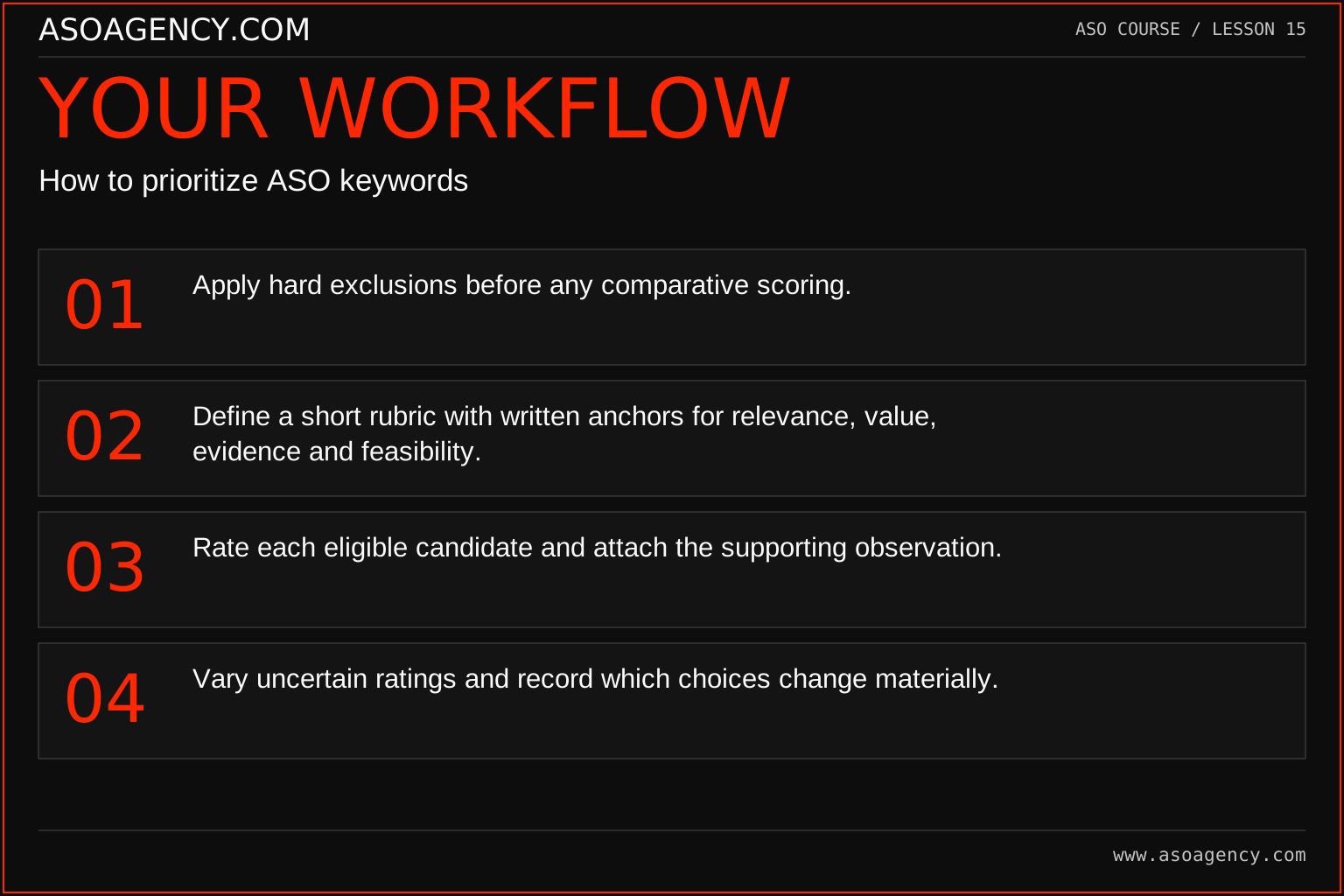
- Apply hard exclusions before any comparative scoring.
- Define a short rubric with written anchors for relevance, value, evidence and feasibility.
- Rate each eligible candidate and attach the supporting observation.
- Vary uncertain ratings and record which choices change materially.
Worked example and interpretation
Trail Notes and numerical research scenarios are fictional teaching examples. Platform limits, where shown, come from the linked official references.
Trail Notes rates private journaling high for relevance because it is the central workflow, but medium for demand evidence because only interviews support it. Route planning is ineligible rather than assigned a low relevance score. When the demand assumption changes, journaling remains central because it describes the product. The team can explain its choice without pretending a weighted number predicts a ranking.
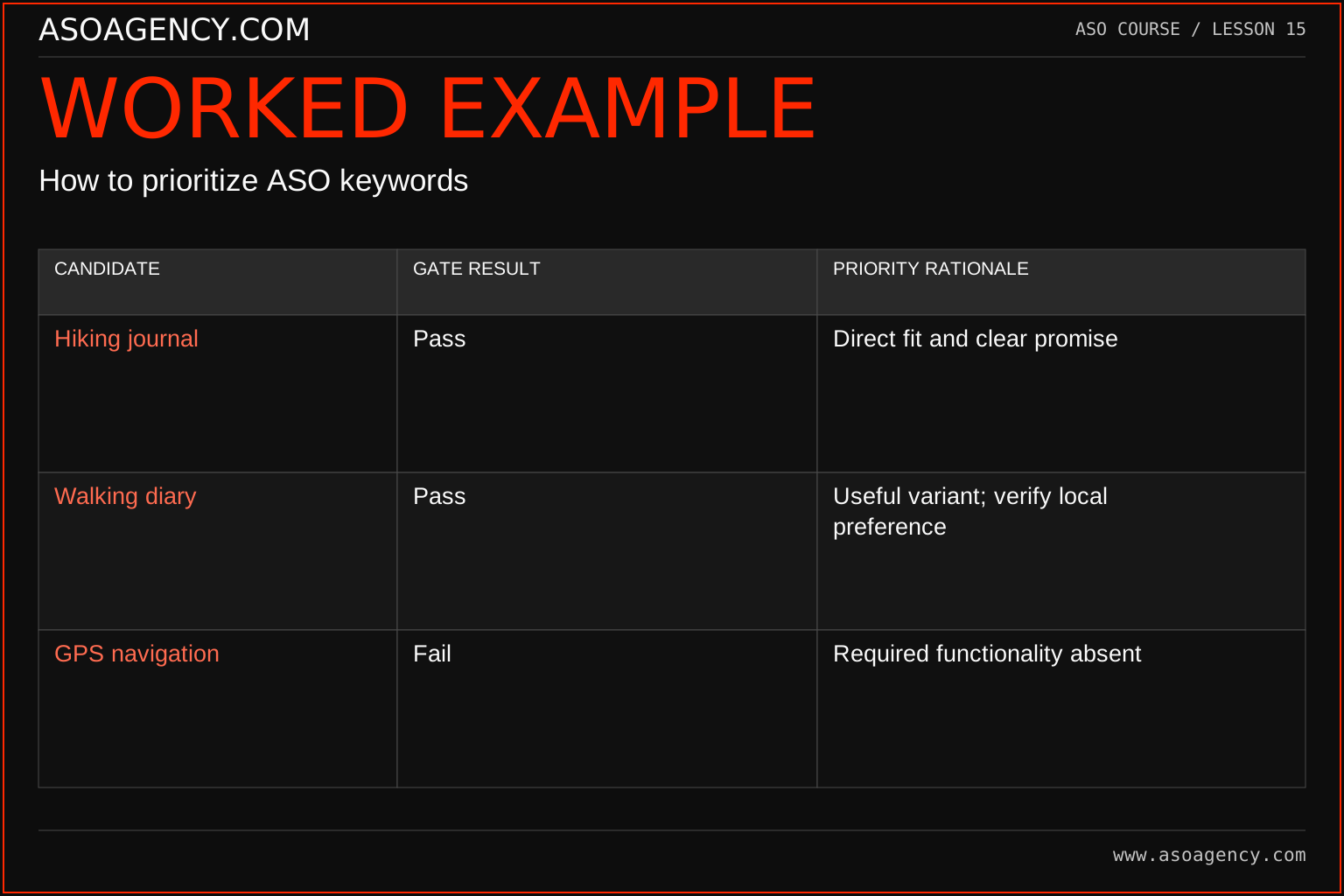
| Candidate | Gate result | Priority rationale |
|---|---|---|
| Hiking journal | Pass | Direct fit and clear promise |
| Walking diary | Pass | Useful variant; verify local preference |
| GPS navigation | Fail | Required functionality absent |
Both passing terms can remain research candidates without both occupying every visible field. If space is limited, choose the expression that best fits the audience and surrounding copy, then document how other concepts are covered elsewhere. The rejected term never reaches the weighted comparison. This is a deliberate design choice: no amount of estimated demand should turn an inaccurate product promise into a high-priority recommendation.
Build a handover someone can use
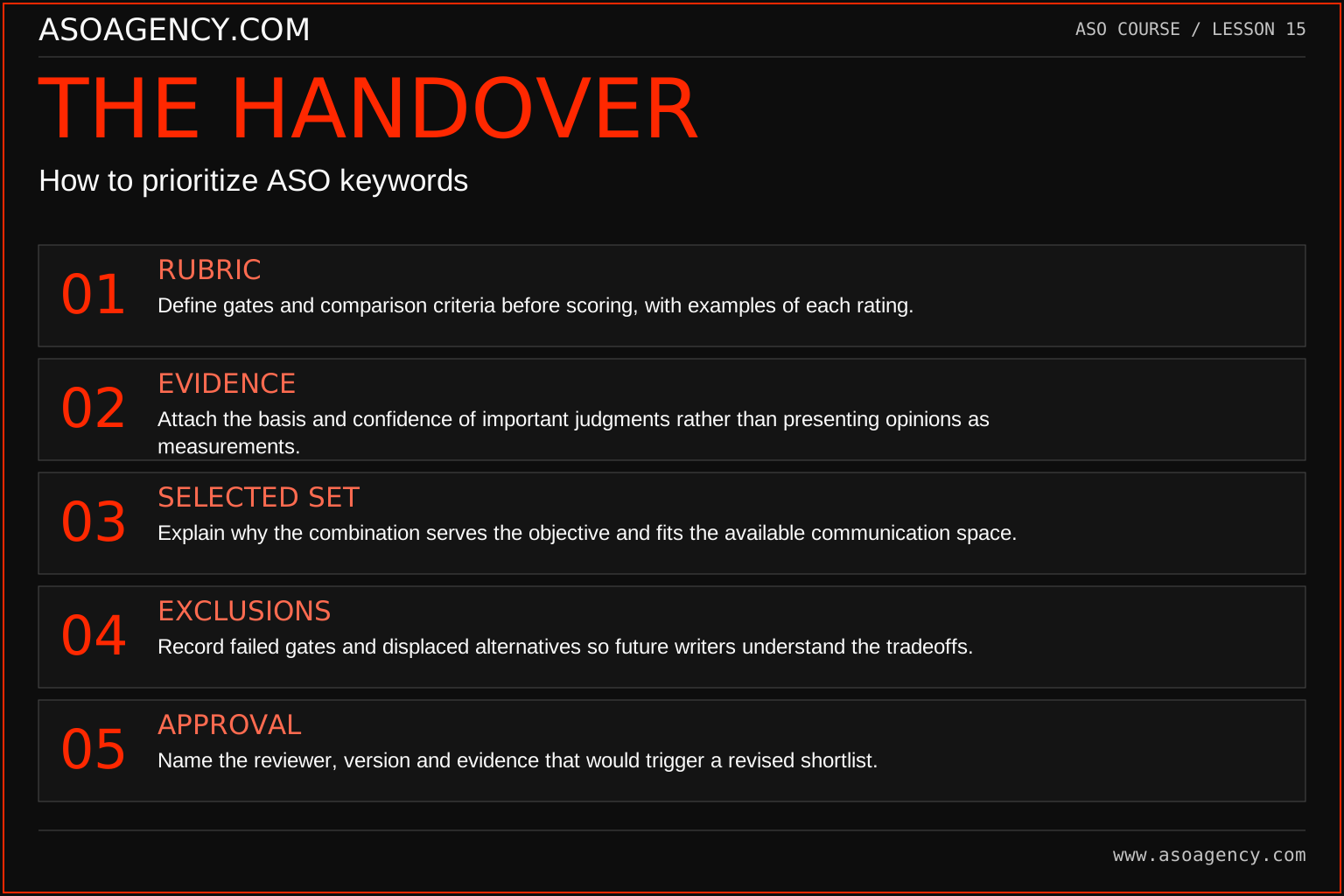
Rubric
Define gates and comparison criteria before scoring, with examples of each rating.
Evidence
Attach the basis and confidence of important judgments rather than presenting opinions as measurements.
Selected set
Explain why the combination serves the objective and fits the available communication space.
Exclusions
Record failed gates and displaced alternatives so future writers understand the tradeoffs.
Approval
Name the reviewer, version and evidence that would trigger a revised shortlist.
Your ASO assignment
Use your own app and evidence, or work through the teaching case. Keep your observations separate from assumptions and explain the reasoning behind your decisions.
- Write your rubric before rating the shortlist.
- Have a second reviewer rate three candidates using the same definitions.
- Resolve disagreements and record a sensitivity check.
Scenario challenge
Design a three-criterion rubric for a journaling app and apply a product-fit gate first. Then show how two relevant synonyms could tie on score while only one belongs in the app name.
Assess your work
- Unsupported promises cannot qualify through a high total score.
- Ratings have explicit definitions and evidence.
- The final portfolio communicates a coherent product.
Common mistakes to catch
- Adjusting weights until a preferred term wins.
- Reporting a subjective weighted score as measured market demand.
Knowledge check
Two reviewers disagree sharply about a keyword’s relevance. Should you average their scores?
Read the answer and reasoning
First identify the source of disagreement: different user intent, product capability or market context. Resolve or record that assumption before averaging anything. A numerical compromise can conceal an unresolved product truth that matters more than the score.
Sources and further reading
Platform references reviewed 29 September 2026. These sources support platform capabilities and constraints; the teaching frameworks, assignments and illustrative cases are original course material.
- Apple — App Store search — Search presentation, relevant keywords and metadata guidance.
- Google Play — Metadata policy — Accurate, relevant metadata and prohibited presentation.
Your ASO lesson notes
Use this space for your assignment, evidence and handover. Select Save to keep a draft in this browser, or download a copy to take with you.
Notes stay on this device and are not submitted to ASO Agency.
Complete your assignment with the App Store keyword-field builder.
Loading your progress…
Progress is saved only in this browser. It does not sync across devices. Mark a lesson complete after doing its exercise.